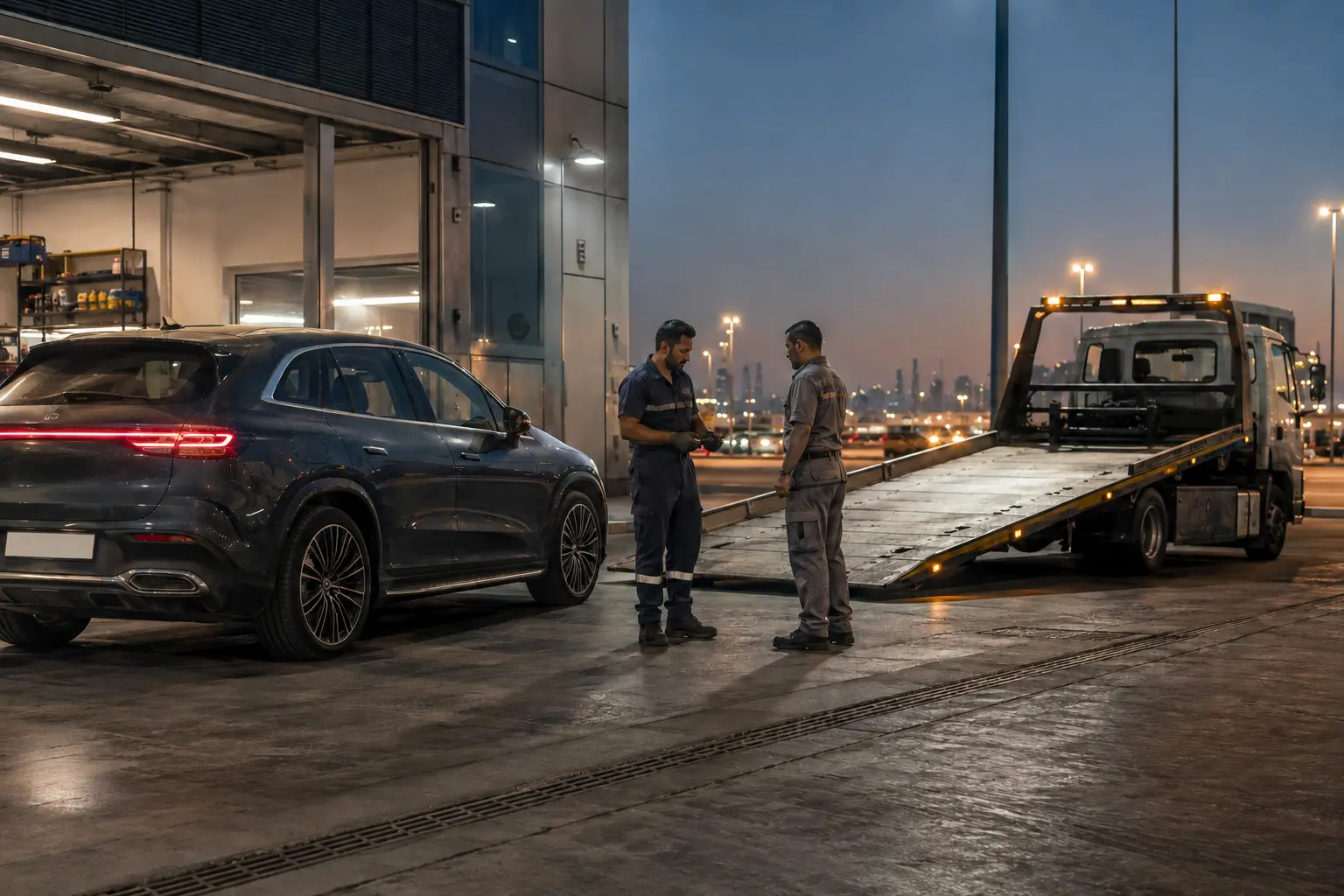
Roadside assistance matched to the actual fault
Battery trouble, a flat tyre, missing fuel, a lockout or a warning light may need different equipment. Share the symptom, vehicle and live location so dispatch can choose the safest useful response.
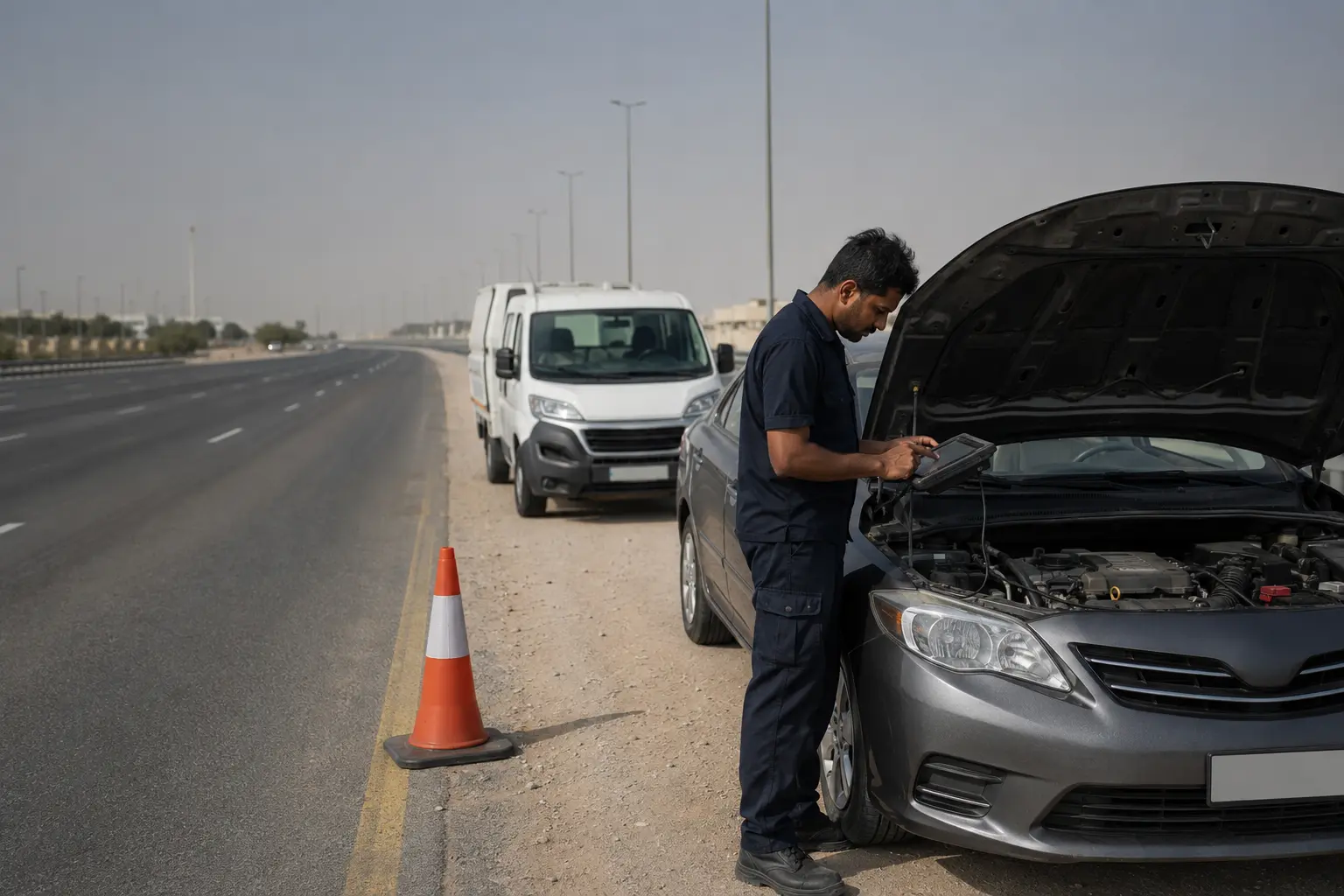
On-location help is not one standard callout
A precise description helps avoid sending a response that cannot solve the problem. If conditions are unsafe or the vehicle cannot continue reliably, roadside assistance can become a recovery or towing job.
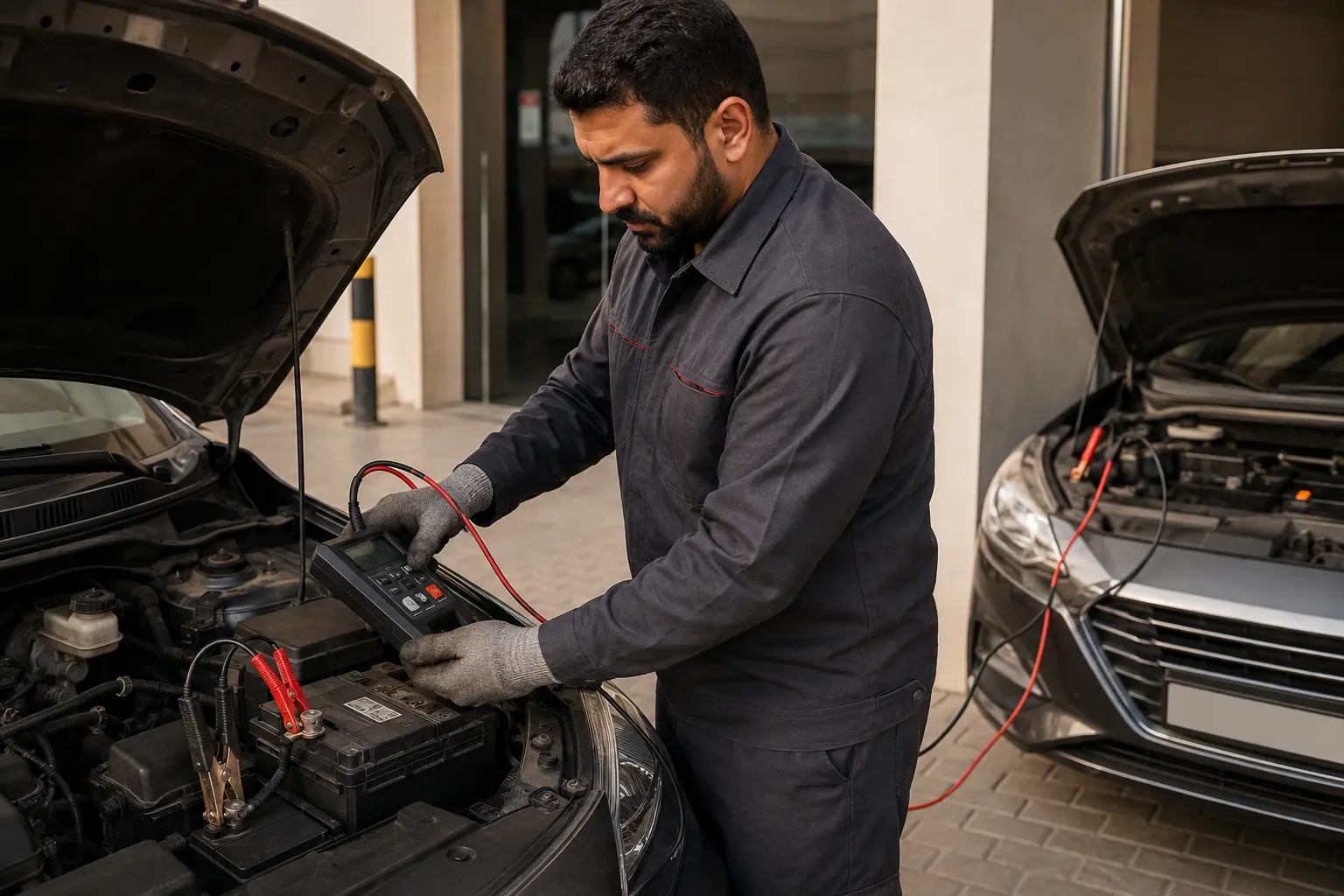
No crank or clicking
Dashboard lights, sounds and battery age help separate a low-voltage problem from a starter or electrical fault. See dedicated battery replacement help.
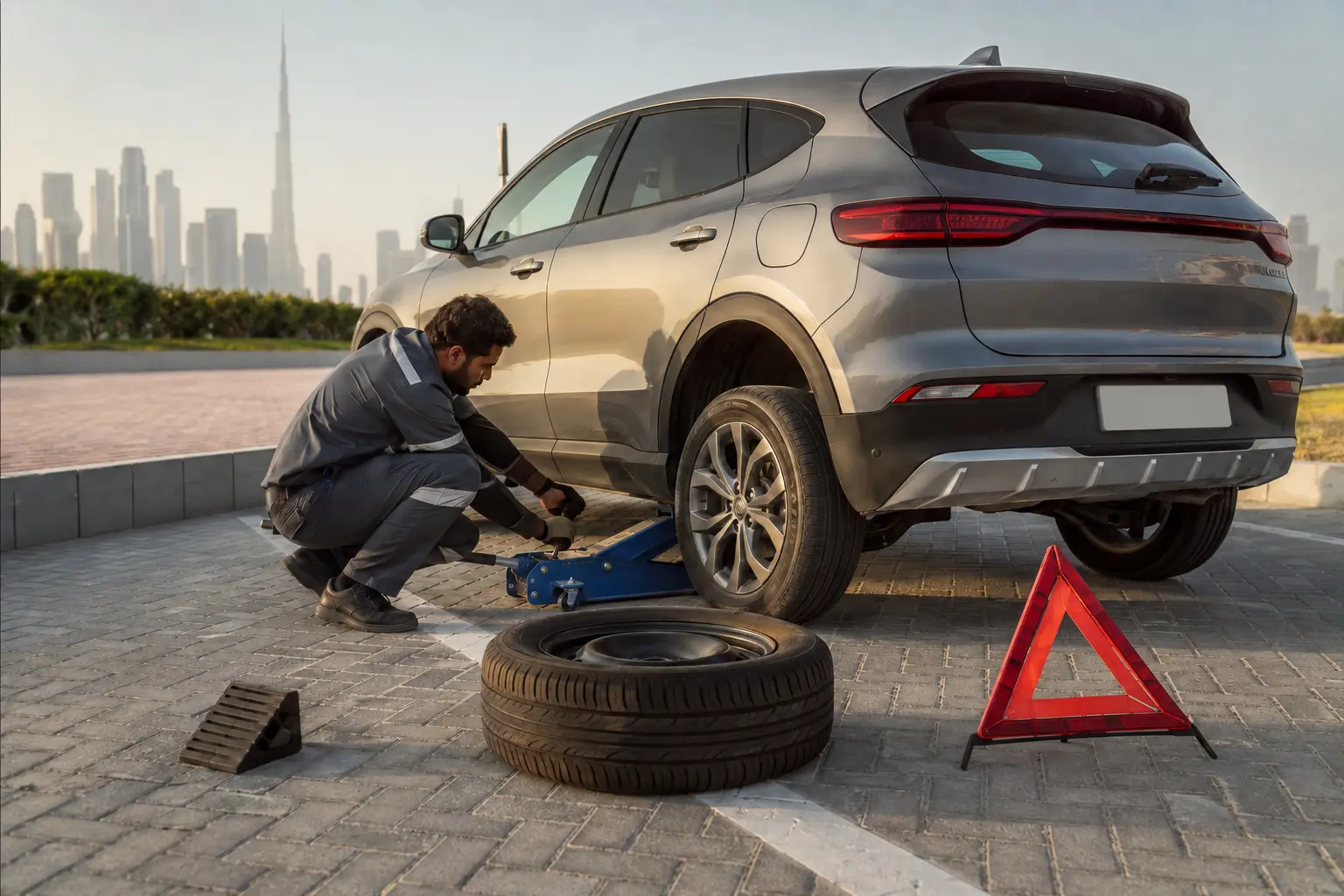
Flat tyre or wheel damage
Share the tyre position, spare availability and visible wheel damage. A damaged rim, suspension concern or unsafe road position may require transport instead of a roadside change.
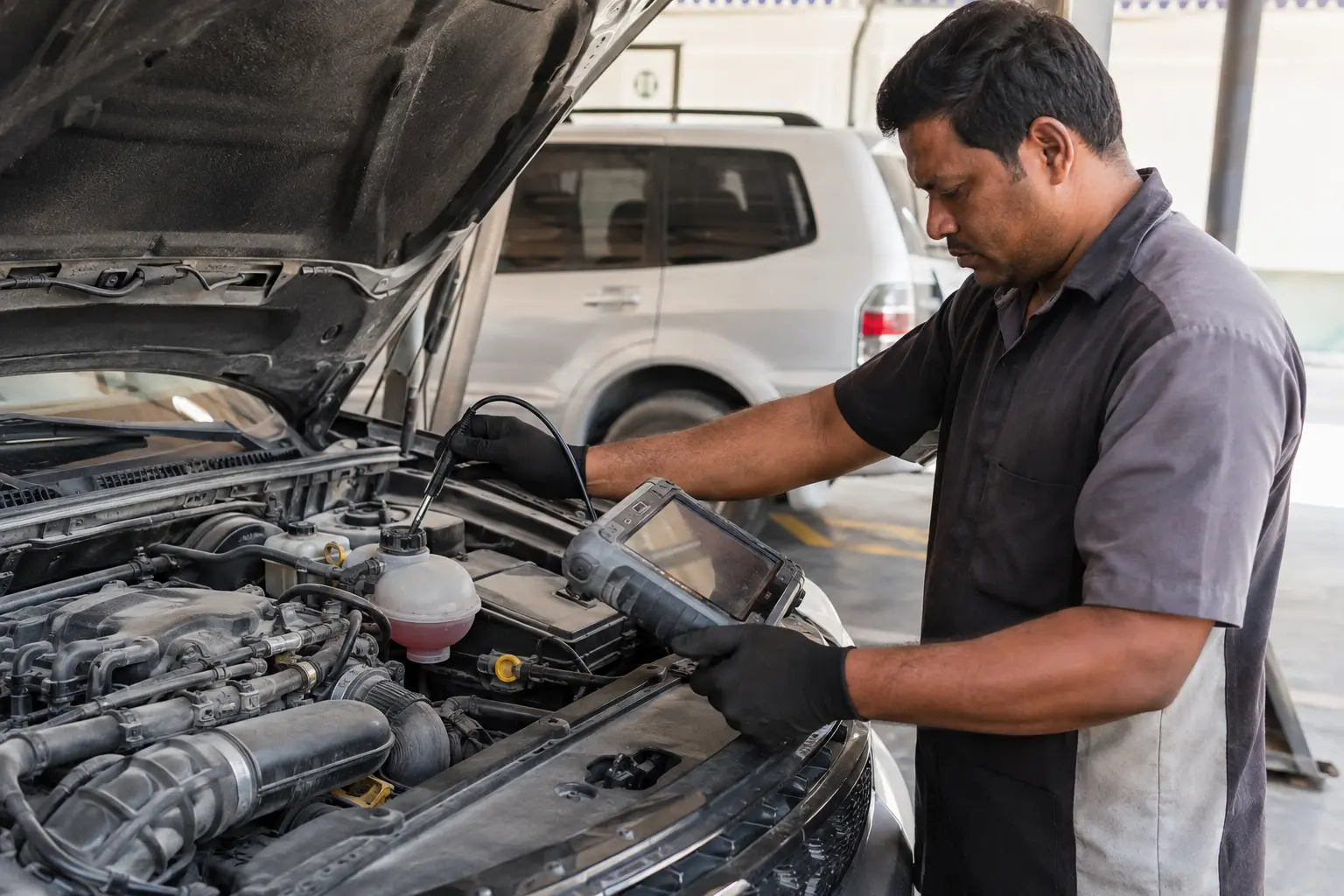
Warning light or overheating
Stop if temperature rises, fluid leaks or steering and braking feel abnormal. Do not open a hot cooling system or keep restarting the engine to test it.
Fuel shortage or lockout
Confirm fuel type before requesting fuel delivery. For inaccessible keys, send the vehicle make, model, year and exact key situation to lockout assistance.
The safe next step depends on the fault and location
A minor issue can sometimes be handled where the car stopped. Damage, traffic exposure, limited access, high-voltage warnings or an uncertain mechanical fault can make towing the responsible option.
Assistance may be suitable
- The vehicle is stable in a safe working area
- The battery symptom is clear
- The tyre and wheel are not visibly damaged
- The fuel type is confirmed
- There is adequate access around the vehicle
Recovery may be safer
- There is collision, wheel or suspension damage
- Fluid is leaking or temperature remains high
- Steering, braking or gear selection is uncertain
- The vehicle is exposed to moving traffic
- An EV or hybrid shows a high-voltage warning
From first message to safe continuation
Protect people
Use a safe position where possible and follow police or road-authority guidance.
Share the pin
Send direction of travel, exit, parking level or gate instructions.
Describe the fault
Explain what happened and what the vehicle does now.
Confirm access
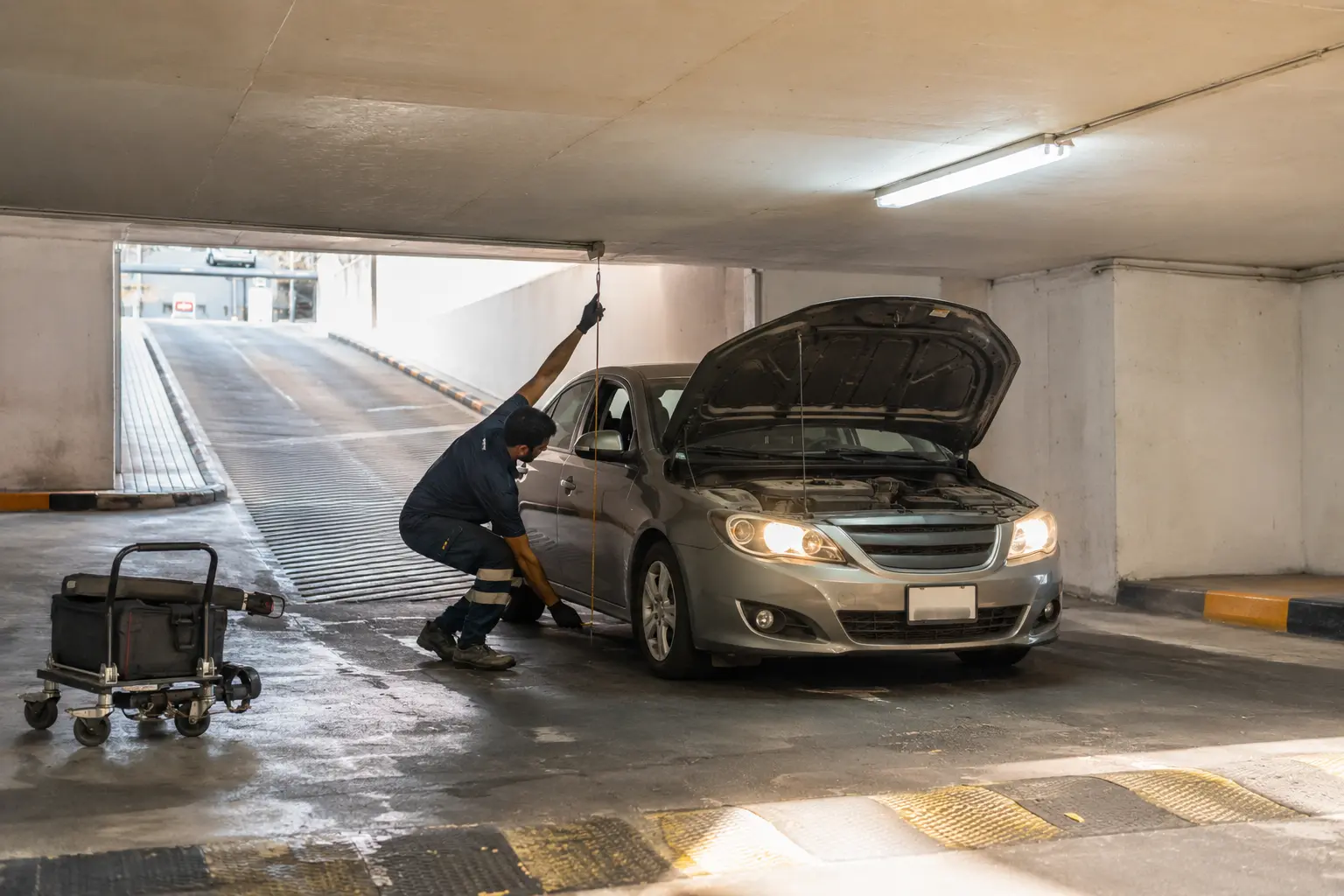
Height, ramp angle and traffic exposure can change the response.
Assist or recover
Continue only when the vehicle and location are safe.
Some locations need a different plan
Motorway shoulder
Keep people away from live traffic and follow authority instructions. Roadside work may be unsuitable in an exposed position.
Tunnel or restricted road
Emergency and road operators may control access. Share the exact direction and nearest marker.
Basement parking
Send the entrance height, ramp photos, parking level and whether the vehicle can roll and steer.
Extreme heat
Tell dispatch if children, older passengers or pets are present so immediate personal safety is prioritized.
EV or hybrid warning
Do not touch damaged orange cables, wet high-voltage components or a smoking battery area. Move people away and request emergency guidance.
Roadside assistance pricing depends on the real job
A quote should reflect the fault, vehicle, access and whether recovery becomes necessary. Share clear details before dispatch instead of relying on a generic price.
Location and route
Distance, traffic direction and access affect dispatch.
Vehicle type
Size, clearance, drivetrain and condition influence equipment.
Fault and parts
Testing, consumables or replacement parts change the scope.
Site restrictions
Basements, gated sites and unsafe shoulders need planning.
Time and availability
Current traffic and suitable operator availability affect timing.
Recovery escalation
Towing or specialist recovery is quoted as a separate scope.
Roadside help can lead to a safer specialist response
Towing service
For a vehicle that cannot continue safely.
Flatbed towing
For loading-sensitive, low or damaged vehicles.
Accident recovery
For collision-damaged or unsafe vehicles.
Winching service
For sand, ditch or difficult extraction.
Roadside assistance answers
Send the location, vehicle, symptom and access details together for the clearest guidance.
Does roadside assistance always include towing?
No. The first aim is to identify whether the issue can be handled safely on location. Towing is arranged when roadside work is unsafe, unsuitable or unsuccessful.
What location details should I send?
Send a live pin, direction of travel, nearest exit, parking level, gate instructions and any height restriction.
Can roadside assistance help in basement parking?
Possibly. Share the entrance height, ramp angle, turning space, vehicle position and whether it can roll, steer and select neutral.
Should I drive after a jump-start?
A successful restart does not prove the charging system or battery is healthy. Follow the technician’s assessment and do not continue if warning lights, overheating or abnormal steering and braking remain.
What happens if the fault cannot be fixed roadside?
The next safe response can be towing, flatbed transport, accident recovery or specialist extraction, depending on the vehicle and location.
Send the symptom before a vehicle is dispatched
One clear message with the live location, vehicle, fault and access details helps match the first response to the actual problem.