Sports car recovery in Dubai
Sports car recovery built around low clearance
A disabled performance car needs more than a generic tow request. Tell dispatch the exact model, wheel condition, transmission state, visible damage and access limits so the recovery method can be planned before equipment arrives.
- Share the model and modification details
- Show every damaged wheel and body corner
- Photograph the loading area and access route
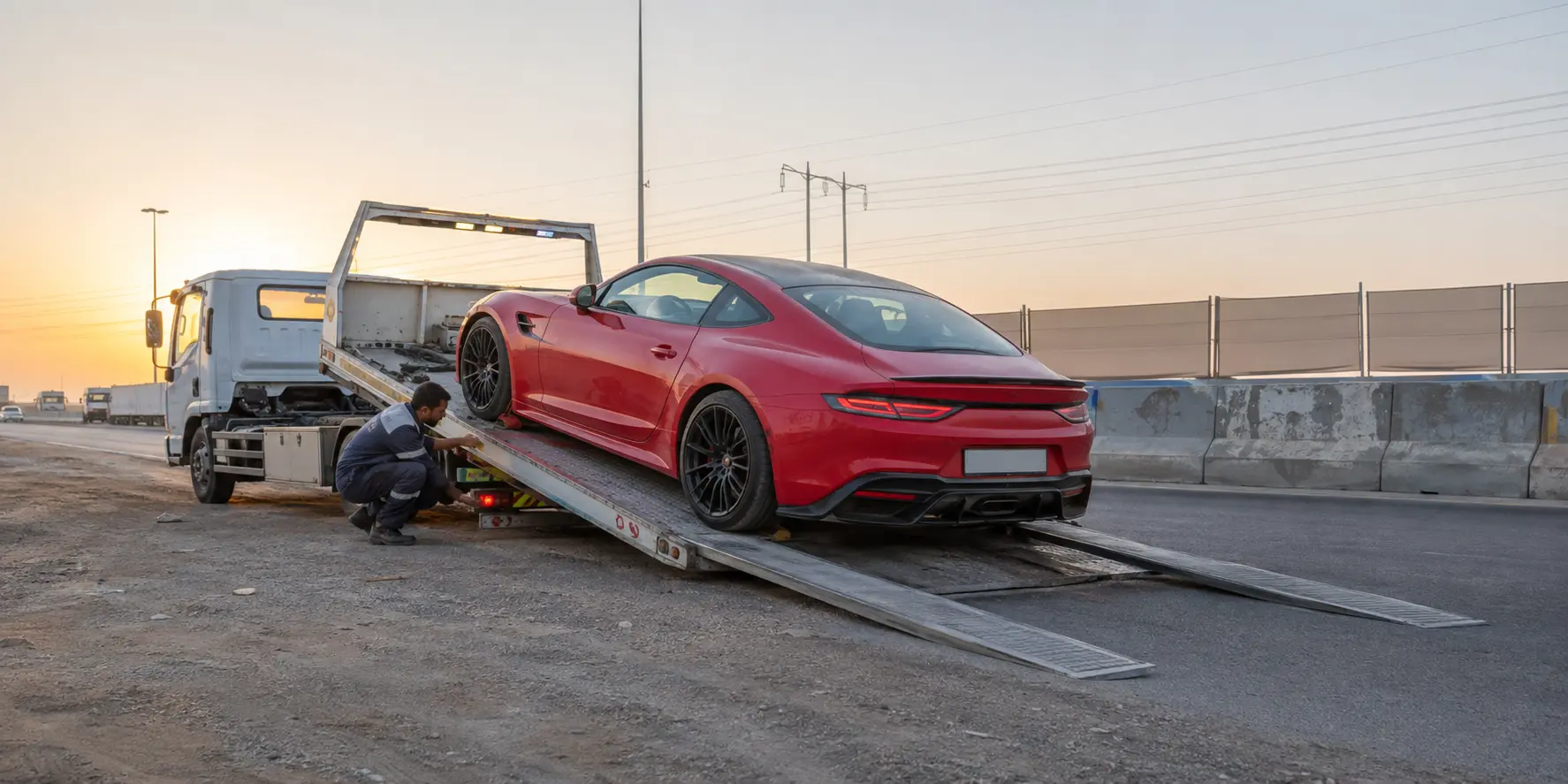
Before dispatch
The recovery starts with the right details
Sports cars vary sharply in overhang, ride height, drivetrain, parking-brake logic and approved recovery points. A model name alone is not enough when a wheel is locked, the suspension has collapsed or a splitter sits close to the road.
Send a live location, recent photos and honest condition notes. Dispatch can then distinguish a straightforward controlled load from a job that needs wheel skates, a different approach, restricted-access planning or an on-scene reassessment.
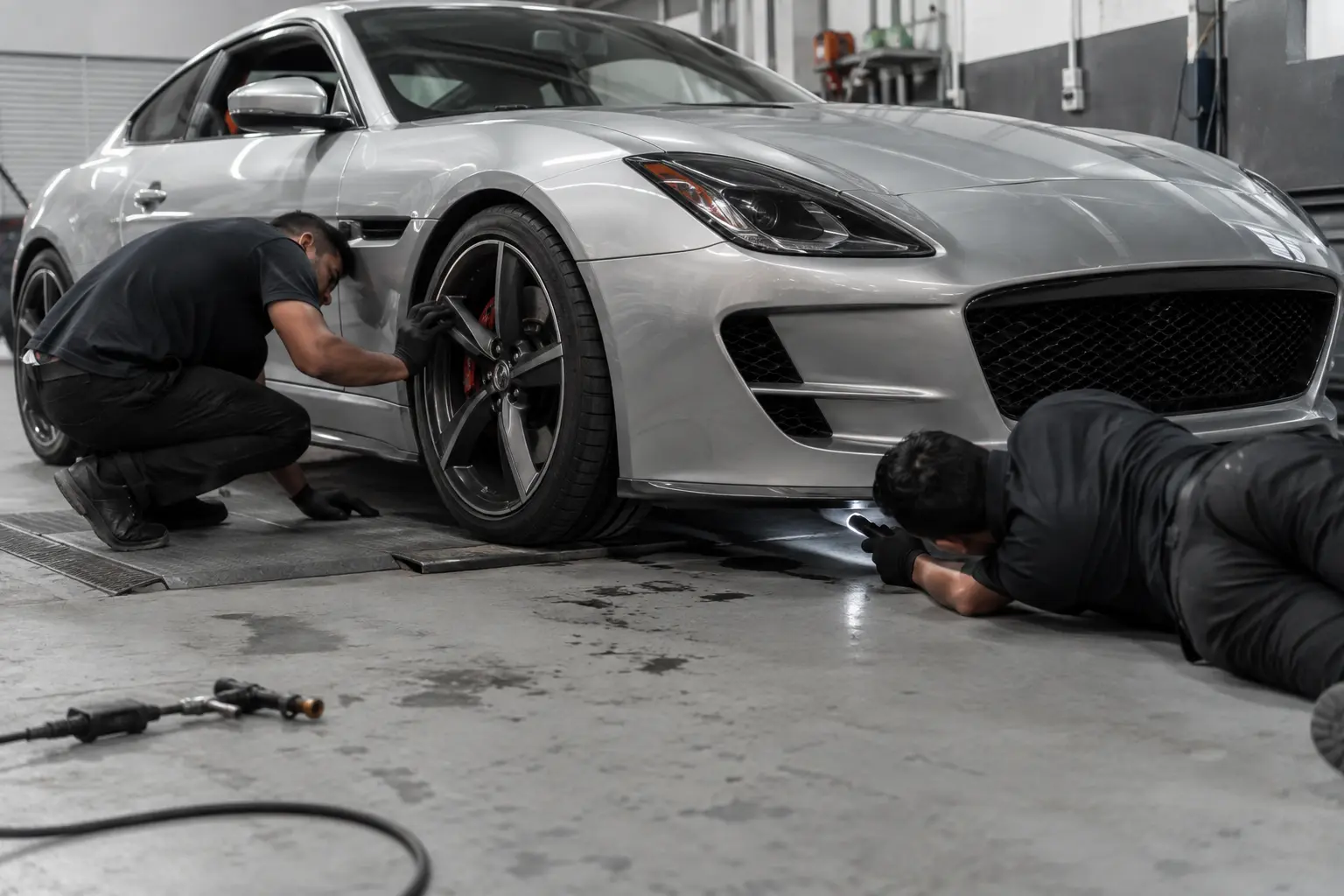
Vehicle state
Does it start, select neutral, steer and release the parking brake? Which wheels roll freely?
Visible damage
Show tyres, rims, suspension, splitter, diffuser and any fluid below the vehicle.
Access geometry
Show the road, basement ramp, gate, corners, ceiling limit and usable straight-line space.
Safe destination
Confirm the workshop entrance, receiving contact and opening hours before loading begins.
Controlled loading
Protect the car through the full movement
The correct setup depends on the actual vehicle and scene. No single truck, ramp angle or attachment method is suitable for every sports car.
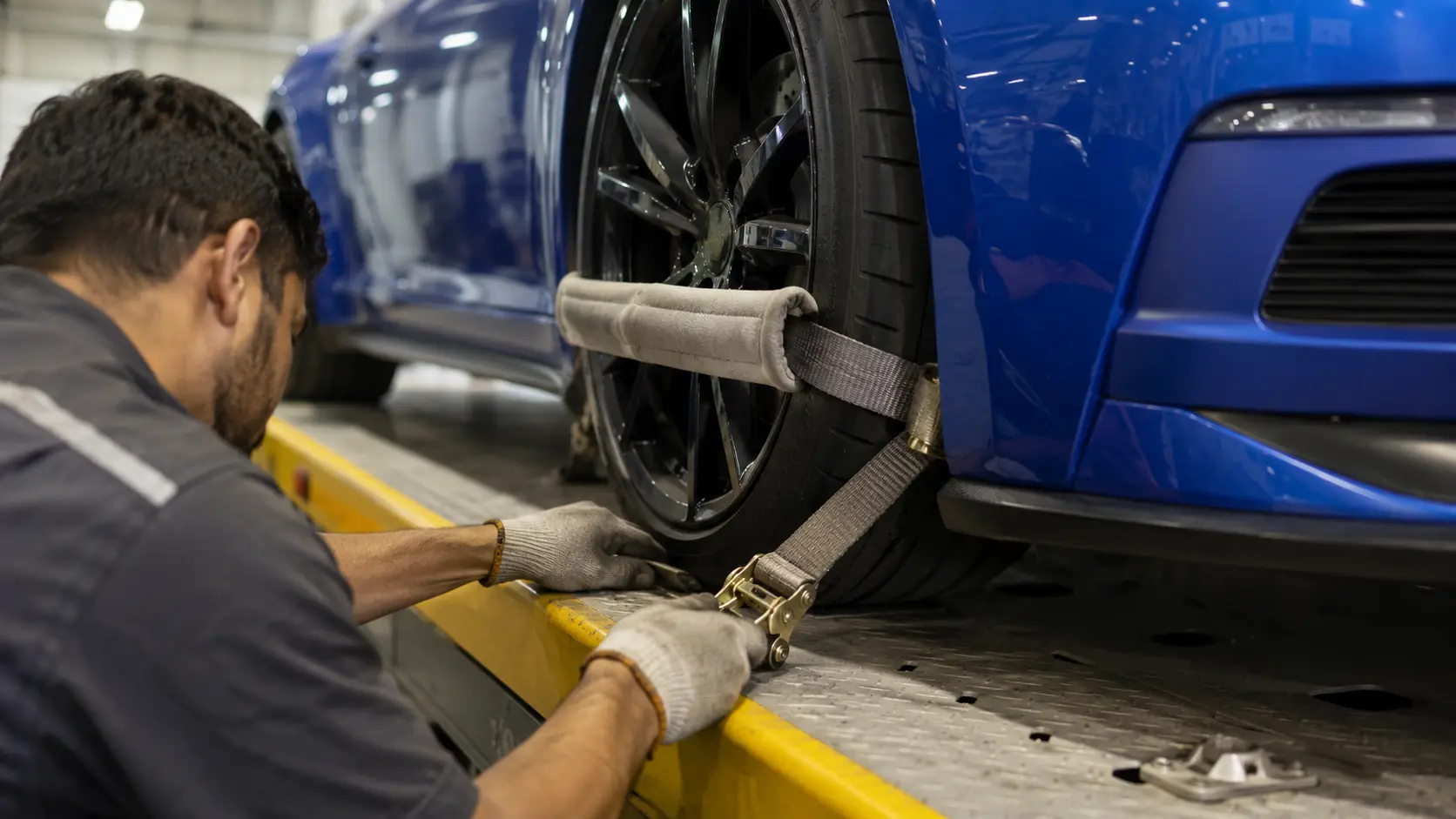
- 01
Confirm movement
Check which wheels roll, whether steering is available and whether the vehicle can enter neutral according to its condition and guidance.
- 02
Set the approach
Use available space and suitable approach geometry to reduce the chance of contact at the splitter, sill, undertray or diffuser.
- 03
Control the load
Keep the loading line stable and stop if clearance, wheel position or access changes. A photo assessment does not replace the operator’s on-scene decision.
- 04
Restrain and recheck
Choose contact and restraint points that respect the vehicle and recheck clearances before transport.
Recovery scenarios
When sports car recovery is the right service
The car should not continue under power
Warning lights, overheating, oil-pressure concerns or a no-start condition may make workshop transport safer than repeated restart attempts.
A wheel cannot roll normally
A split tyre, bent rim or displaced wheel can change the loading method. Do not drag a locked or misaligned wheel without assessing support.
Ride height or direction is compromised
A collapsed corner, steering fault or damaged control component can reduce clearance and prevent a simple straight pull.
The body or undertray may contact
Loose panels, fluid leakage and shifted components should be identified before movement. More severe incidents belong with accident recovery.
The vehicle cannot safely return by road
Share the venue access point, vehicle state and destination. Coverage and entry requirements must be confirmed for the actual location.
The recovery truck cannot approach normally
Low ceilings, steep ramps, narrow gates and tight turns can require staged planning before onward towing is possible.
Damaged wheels
Do not turn one damaged corner into a second problem
A wheel that is folded, locked, off-centre or sitting against bodywork should not be treated like a normal rolling wheel. Tell dispatch whether the tyre is intact, whether the car can steer, and whether suspension or brake parts are touching the ground.
Visible fluid leaks, unstable bodywork, severe structural damage, battery damage, fire risk or an unsafe traffic position can require emergency services, scene control or specialist equipment before recovery continues.
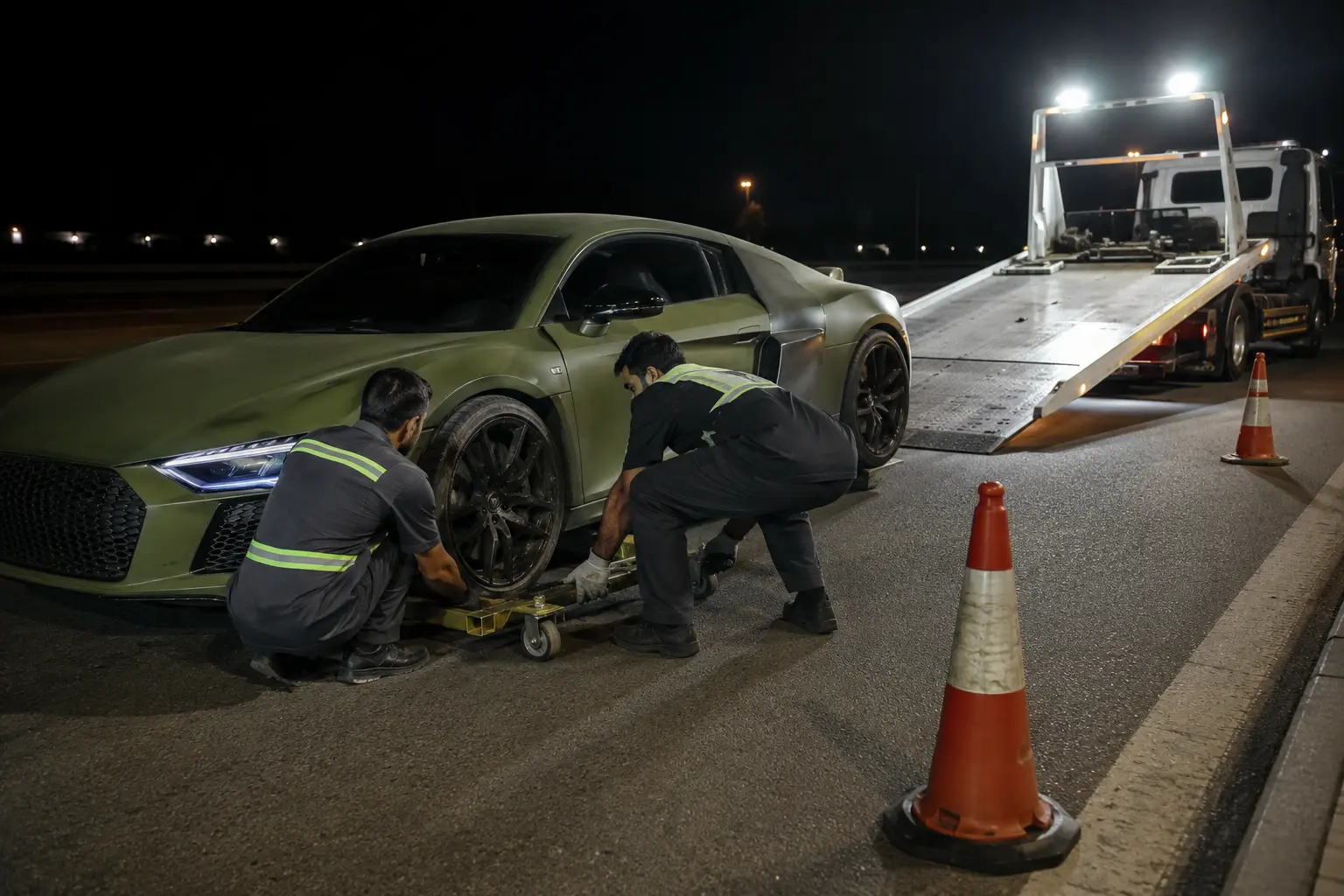
Basements and ramps
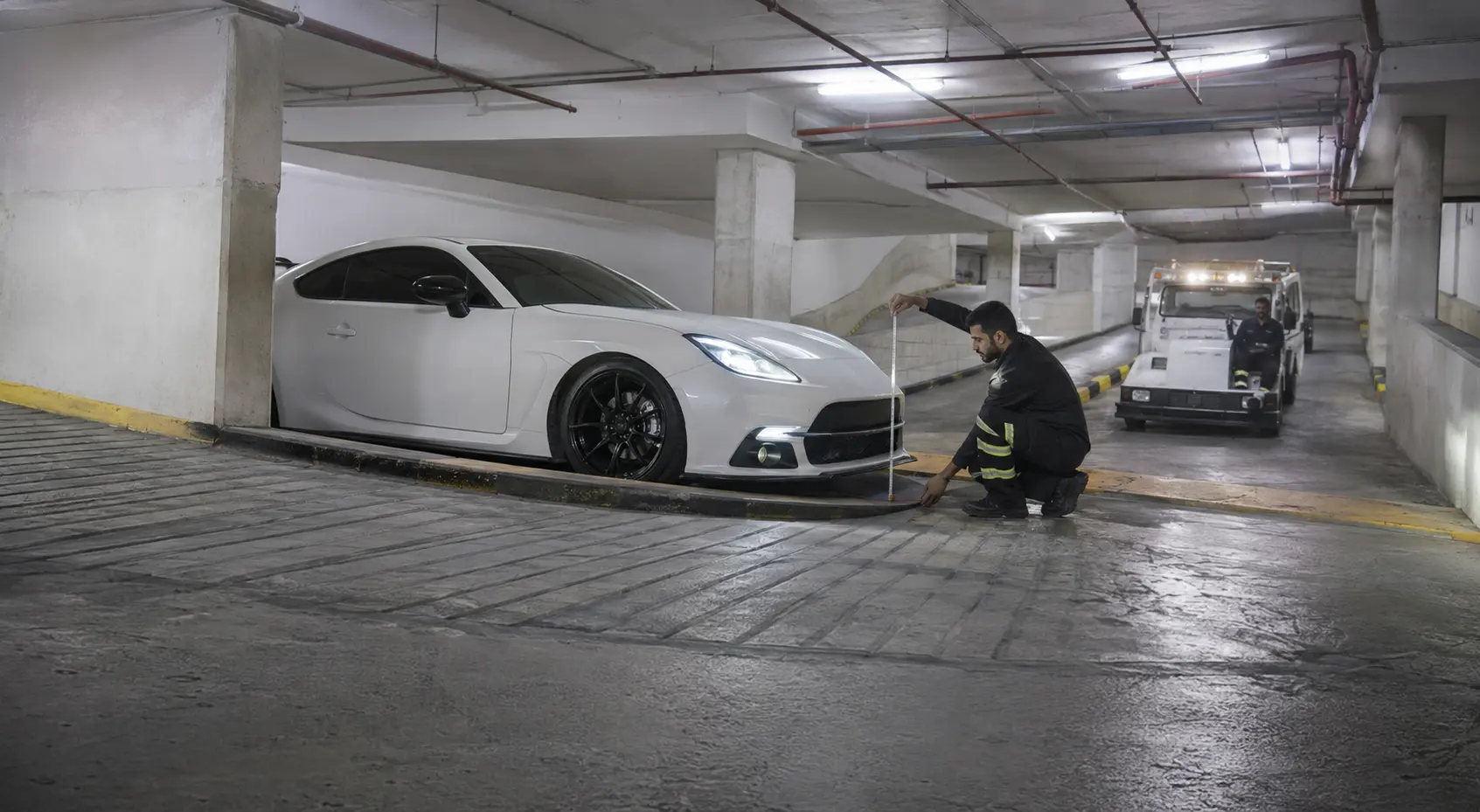
Restricted access must be measured first
A car may be visible and still be unreachable by a standard flatbed. Send the lowest height restriction, ramp gradient, breakover point, gate width, turning path, floor level and the car’s direction of travel.
- Height
- Lowest beam, pipe, shutter or sign
- Ramp
- Entry slope, crest, dip and surface
- Turning
- Pillars, corners and usable width
- Position
- Car orientation and rolling-wheel state
If the vehicle must first be moved to an accessible pickup point, that is a staged recovery decision. Do not assume a normal flatbed can enter every car park.
Choose the correct owner
Recovery, roadside help or planned transport
Each service has a different job. Using the right page avoids sending incomplete information or choosing a method based only on the vehicle’s value.
Job-specific quote
What changes a sports car recovery price
A useful quote depends on the pickup, condition and access. A headline price cannot represent a rolling car on level ground and a locked-wheel vehicle in a steep basement as the same job.
- Pickup and destinationDistance, route and receiving access
- Vehicle conditionRolling wheels, steering, drivetrain and damage
- Clearance and modificationsSplitters, ride height, overhang and body kits
- Access restrictionsBasements, ramps, traffic and positioning room
- Additional controlWheel support, staged movement or extra resources
Common questions
Answers before sports car recovery
Photos and exact vehicle details provide more useful planning than a generic “low car” description.
Can a very low sports car be recovered without scraping
The aim is to plan around actual clearance, access and condition, but no responsible operator should promise a universal zero-contact outcome before assessment. Send side, front and ramp photos so the approach can be reviewed.
Is a flatbed always used for a sports car
Flatbed transport is commonly considered for low-clearance or non-running cars, but the appropriate method depends on the exact vehicle, damage, access and destination. Review the dedicated flatbed towing service for broader method information.
Can you recover a sports car with a locked wheel
Potentially, after the locked wheel, suspension, steering and available space are assessed. Do not force the car to roll or drag a damaged wheel before a controlled plan is established.
What photos should I send before dispatch
Send the whole vehicle from each side, close views of every damaged wheel or body area, the road or bay around it, the access route, any ramp or height restriction and the destination entrance when available.
Can the car go directly to my chosen workshop
Usually the destination can be discussed before loading. Confirm the exact entrance, receiving contact, opening time and any low-clearance access at the workshop.
What if the car is leaking fluid after an impact
Keep people away, do not start or move the vehicle, and report the fluid and accident conditions. Emergency or scene-control requirements may take priority before recovery.
Request an assessment
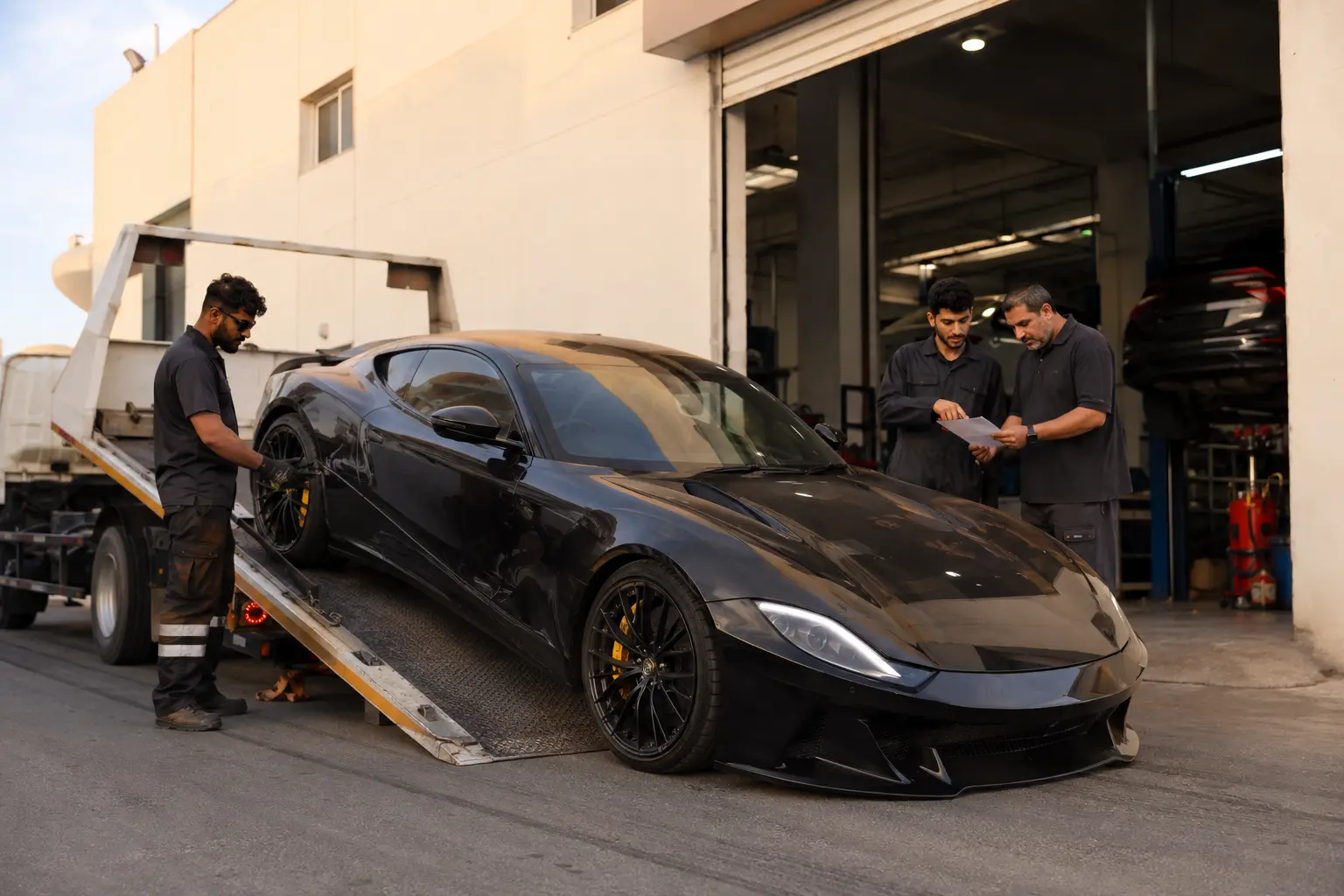
Send the car, condition and access
Include a live pin, model, wheel state, visible damage and clear access photos. Those details help dispatch plan the right recovery approach before movement begins.