24/7 towing and vehicle transport
Car towing service in Dubai
When a car cannot continue safely, the vehicle towing plan should match its condition, pickup access and destination. Send the live location, make and model, movement condition and drop-off point so the suitable towing method can be discussed before dispatch.
First decision
Towing starts with whether the car can continue safely
A vehicle does not need to be towed simply because it has stopped once. Equally, a car that restarts is not automatically safe to drive. Steering, braking, warning lights, fluid leaks, tyre or wheel damage and the place where the vehicle stopped all matter.
If the issue appears limited to a battery, fuel, tyre or lockout problem and the vehicle is in a safe location, roadside assistance may be the more specific service.
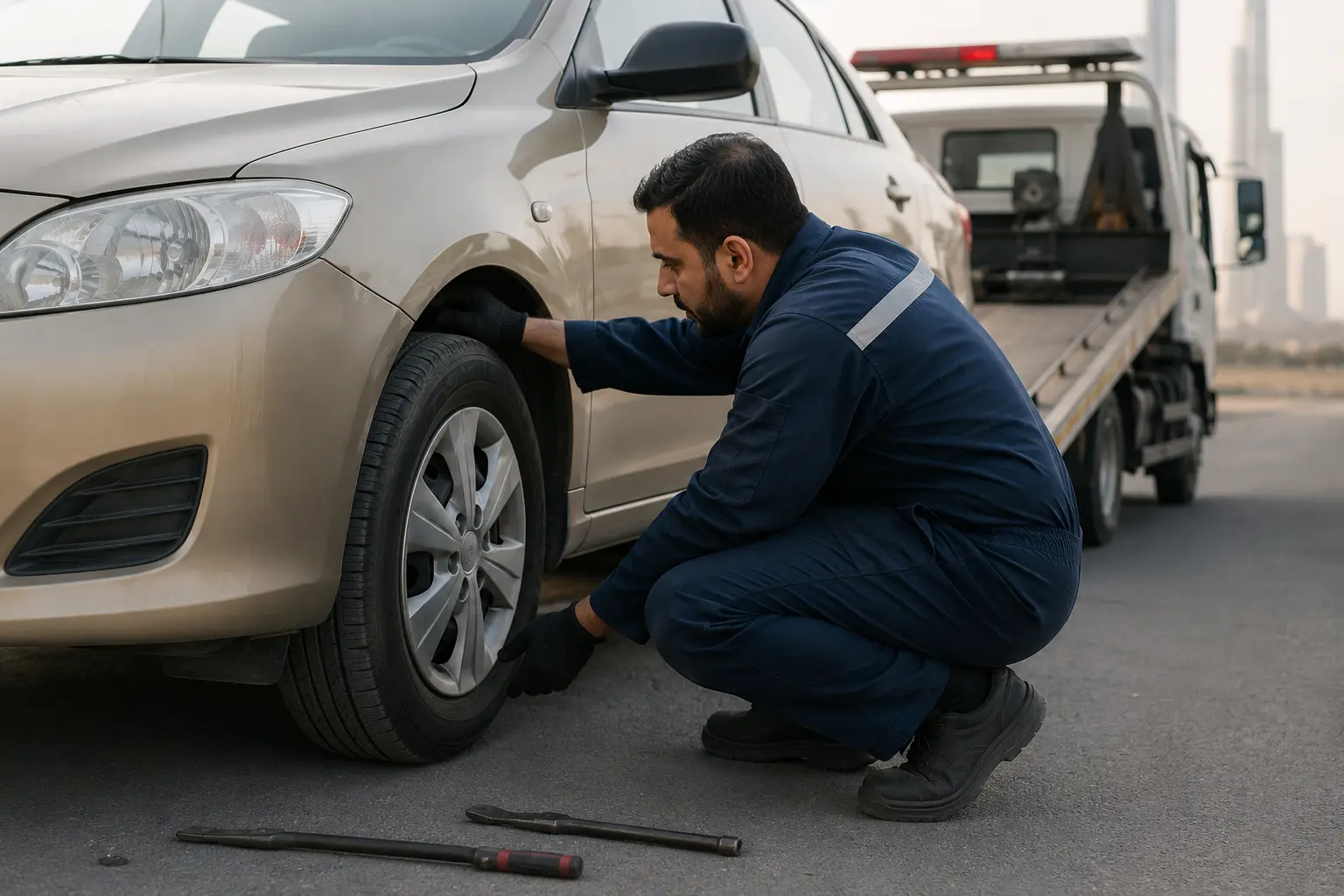
Resolve at the roadside when appropriate
Use a specific roadside service when the problem can reasonably be handled where the vehicle stopped and no additional safety issue is present.
Arrange towing when movement is unsafe
Transport is the better direction when the vehicle cannot be driven normally, the condition is uncertain, or the destination requires planned vehicle movement.
Towing situations
Choose the towing direction by situation, not by habit
General towing covers vehicle transport, but some conditions need a more specific recovery method. The goal is to identify that distinction before the truck arrives.
Mechanical or electrical breakdown
Share warning lights, noises, leakage and whether the engine starts. If the car cannot be driven normally, confirm where it should be transported.
Low-clearance or drivetrain-sensitive vehicle
Ride height, spoilers, wheel condition and drivetrain can affect loading. For vehicles that need all wheels carried, review flatbed towing.
Collision-damaged vehicle
Visible wheel, suspension, body or fluid damage changes the recovery plan. Use the accident recovery guidance when a collision is the reason for transport.
Locked wheel or suspension problem
Tell the dispatcher which corner is affected, whether the wheel can rotate, and whether the body is resting on the tyre or ground. Do not force the car to move.

Dispatch flow
From location pin to vehicle handover
The towing process is easier to manage when each decision is confirmed in sequence rather than assumed.
- 01Locate
Live pin, road direction, nearest access point and parking level.
- 02Classify
Vehicle type, condition, wheel movement, steering and braking.
- 03Match
Confirm the practical towing or recovery direction for the job.
- 04Secure
Position and secure the vehicle according to its condition and equipment.
- 05Deliver
Transport to the agreed destination and complete the receiving handover.
Technical handover
What changes the towing plan
You do not need mechanical expertise. These practical observations help the dispatcher understand whether normal positioning is possible and what access constraints exist.
| Condition | What to tell the dispatcher | Why it matters |
|---|---|---|
| Engine and power | Starts normally, starts briefly, no power, or unknown | Vehicle power may affect steering, braking, neutral selection and positioning. |
| Wheel movement | All wheels roll, one wheel locked, tyre damaged, wheel displaced | Locked or damaged wheels can change how the vehicle is positioned for transport. |
| Steering and brakes | Normal, limited, warning present, damaged, or not tested | Do not rely on uncertain steering or braking during loading or short movement. |
| Ground clearance | Standard, lowered, body kit, air suspension dropped, front splitter | Clearance and ramp angle can affect the loading method. |
| Pickup access | Open roadside, basement, narrow lane, gate, sand, steep ramp | The tow truck needs a workable approach, turning space and a safe operating area. |
| Destination | Exact workshop, home, storage point or inter-emirate address | The receiving location affects route planning, quote scope and handover. |
Quote inputs
A towing quote is built from the actual job
A single fixed price cannot accurately describe every tow because the route, vehicle and loading effort are different from one request to another. Ask for the quote after sharing the real pickup, destination and vehicle condition.
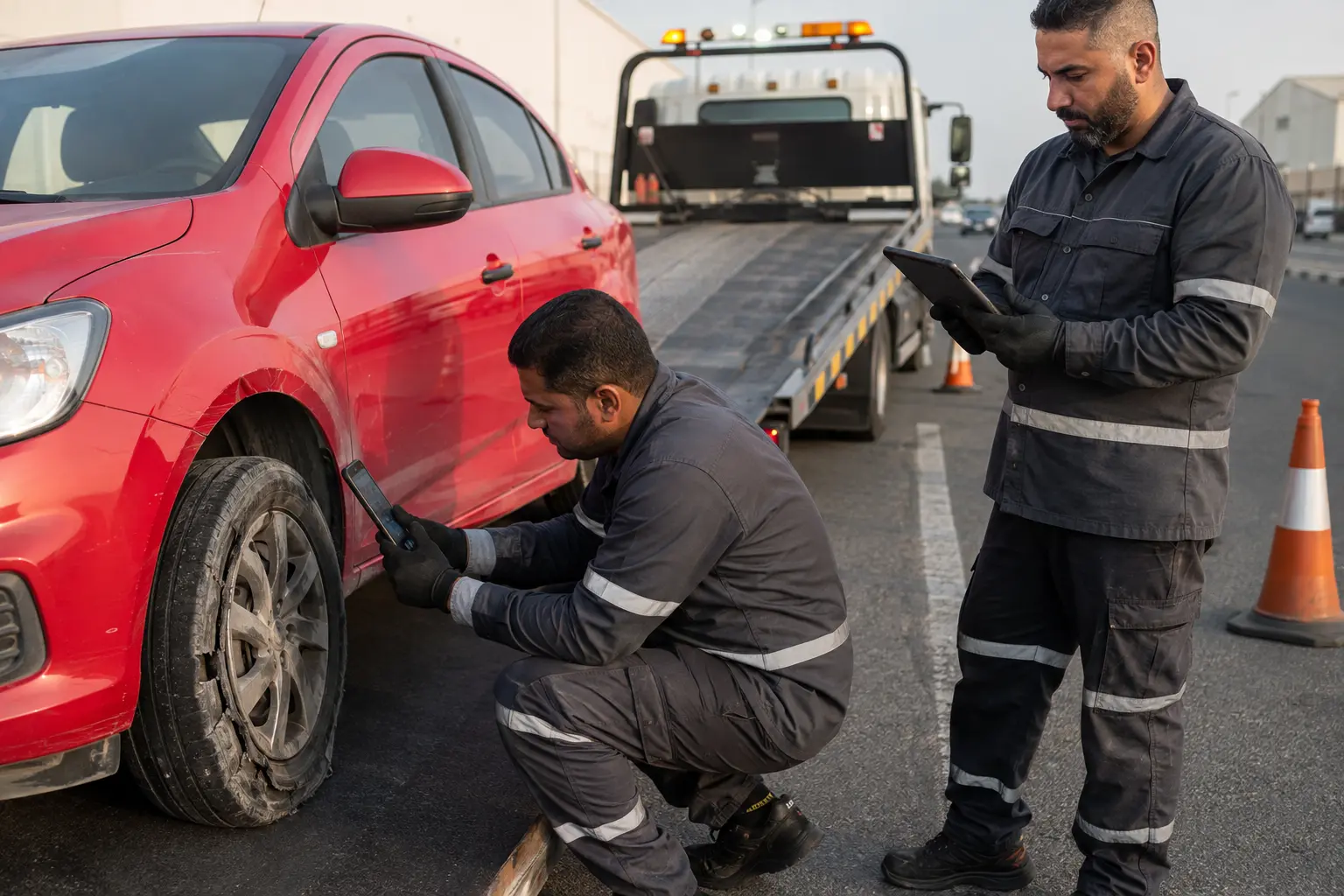
Pickup and destination
Distance, direction and whether the trip remains in Dubai or continues to another emirate affect the route.
Vehicle size and condition
A normal sedan, SUV, van, low car or damaged vehicle can require different handling and equipment.
Access and positioning
Basement restrictions, blocked wheels, tight turns, sand or difficult positioning can add recovery work before transport begins.
Receiving handover
Workshop opening hours, gate access and the ability to receive the vehicle should be confirmed before dispatch.
Dubai pickup environments
The location can change the job before the vehicle moves
Share more than an area name. A live pin, direction of travel, building access and photos can be more useful than saying only Marina, Deira, Business Bay, Al Quoz or another district.
Road direction matters
On divided roads, the side and direction of travel can change the practical route to the vehicle. If the car is exposed to live traffic, prioritize safety and authority guidance.
Height and turning space matter
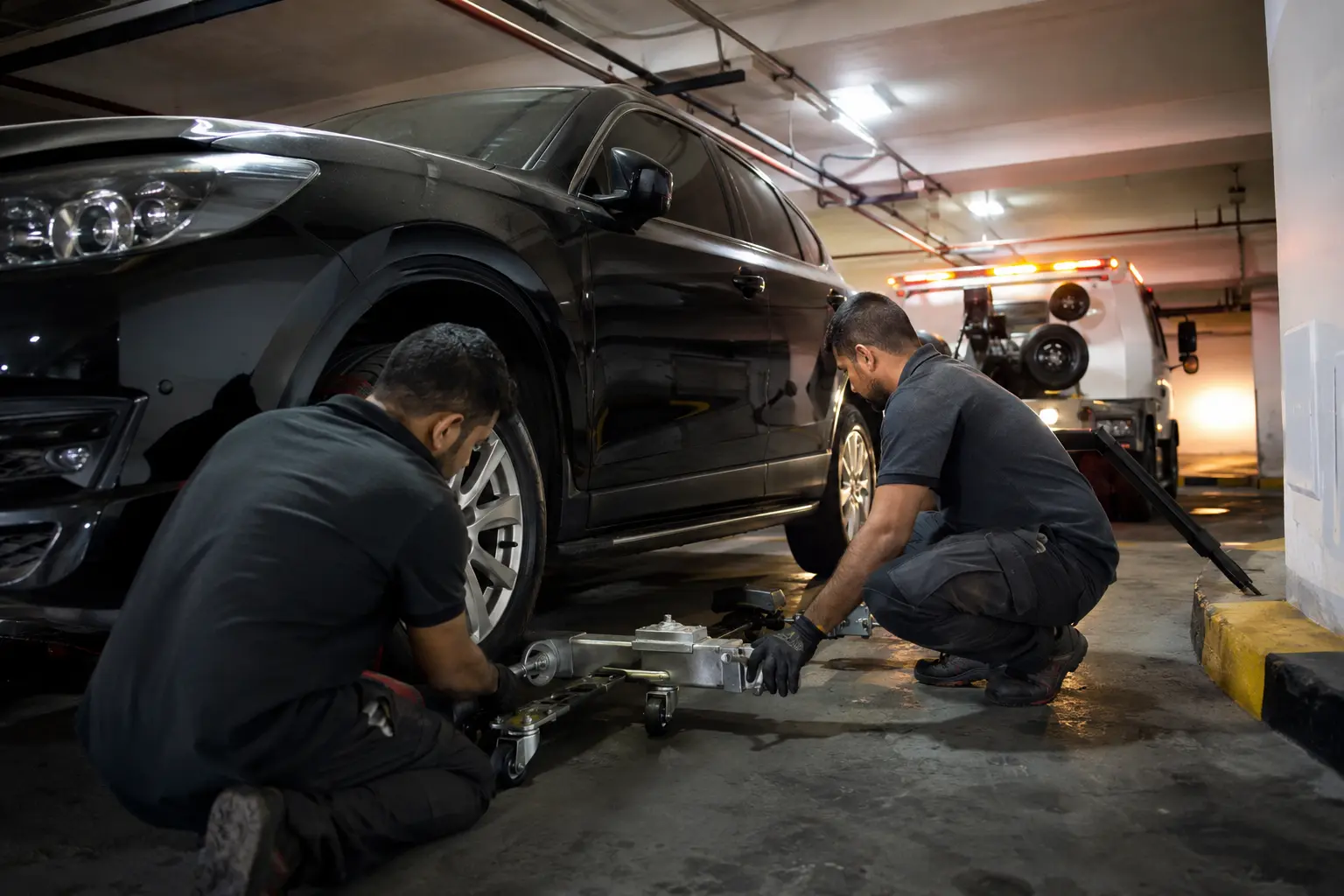
Send the entrance clearance, parking level, ramp photos and vehicle position. A standard tow truck may not be able to reach every basement.
Extraction may come first
A vehicle stuck off the hard surface may need controlled recovery before towing. Use the winching service page for that specific situation.
Route and receiving hours matter
For transport beyond the immediate Dubai area, provide both complete addresses. Planned inter-emirate movement is covered in long-distance towing.
Before and after transport
Prepare the pickup and the receiving point
Small handover details prevent avoidable delays at both ends of the towing journey.
- Keep the vehicle key available and tell the dispatcher if it is missing or locked inside.
- Remove essential valuables and documents you will need immediately.
- Arrange building, security, gate or loading-bay access where required.
- Do not push a car with uncertain steering, braking or wheel condition.
- Confirm the exact destination and a contact who can receive the vehicle.
- Check workshop or storage opening hours and any after-hours handover process.
- Share entrance restrictions at the destination if the truck needs controlled access.
- Keep the agreed towing scope and destination consistent unless a change is confirmed.
Towing questions
Answers before you book
For the fastest practical guidance, send the location, vehicle details, movement condition and destination together.
What information should I send for car towing in Dubai
Send the live pickup location, vehicle make and model, what happened, whether the car starts, rolls, steers and brakes, visible wheel or body damage, access restrictions and the destination.
Do I need towing if the car starts again
Not always. A restart does not confirm that the vehicle is safe to drive. Warning lights, steering, braking, leakage, temperature, tyre or wheel condition and the original fault should still be considered.
When should I ask about flatbed towing
Flatbed transport may be relevant for low-clearance, drivetrain-sensitive, premium, modified or damaged vehicles, but the final loading approach still depends on the vehicle condition and pickup access.
Can a car be towed from a basement
Possibly, but the entrance height, ramp angle, turning space, parking level and vehicle condition must be understood first. Send measurements and clear access photos before dispatch.
What affects towing arrival time in Dubai
Traffic, the pickup location, road direction, truck availability, access restrictions and the type of recovery required all affect timing. Share the live pin for current guidance rather than relying on a fixed estimate.
Arrange car towing
Send the location, condition and destination
Those three details are the fastest starting point for matching the towing plan to the actual job.