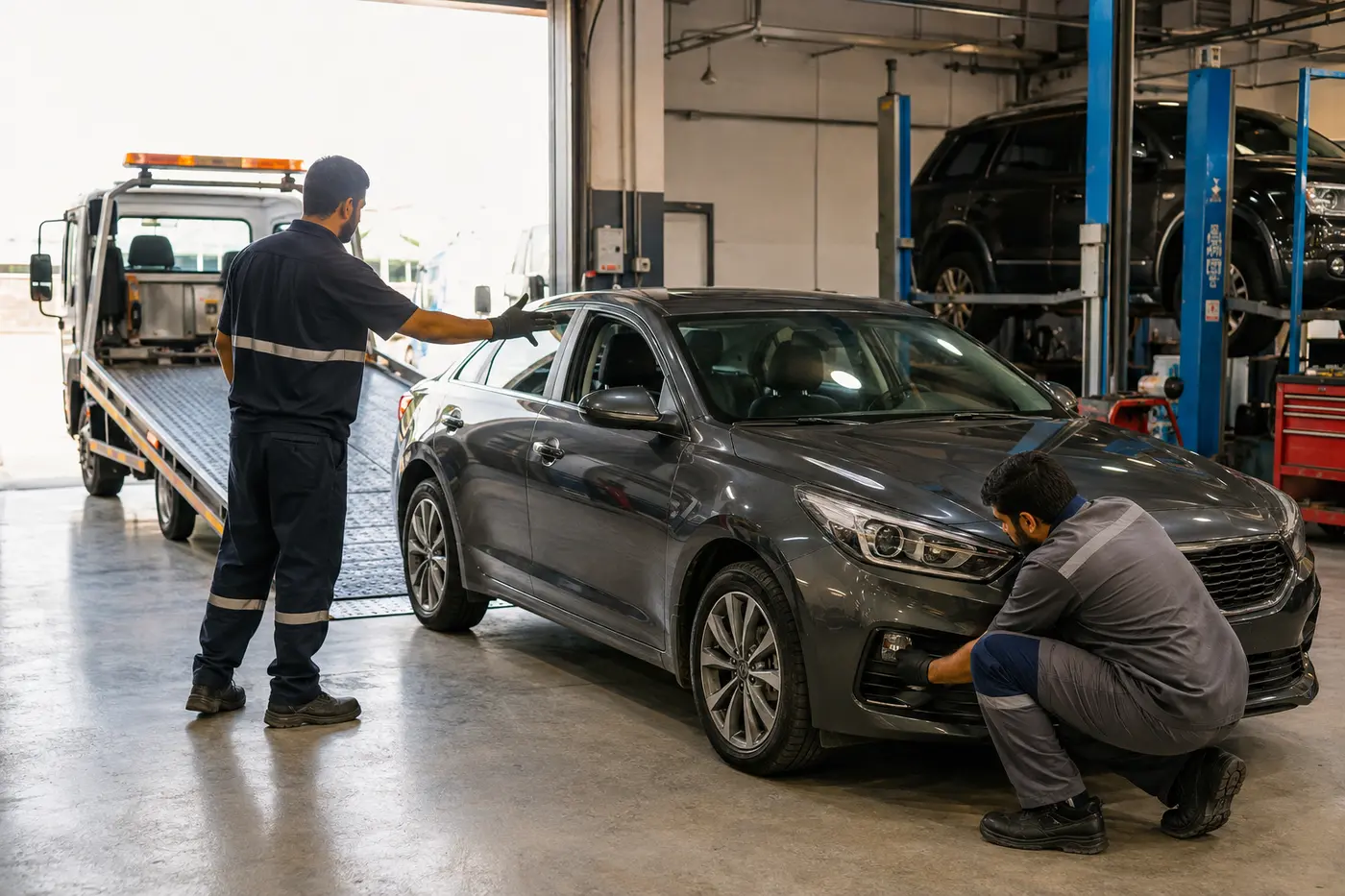
Flatbed towing that keeps every wheel off the road
Arrange flatbed transport for a disabled, damaged, low-clearance or all-wheel-drive vehicle. Share the vehicle, condition, pickup point and destination so the loading method can be assessed before dispatch.
When a flatbed is the right choice
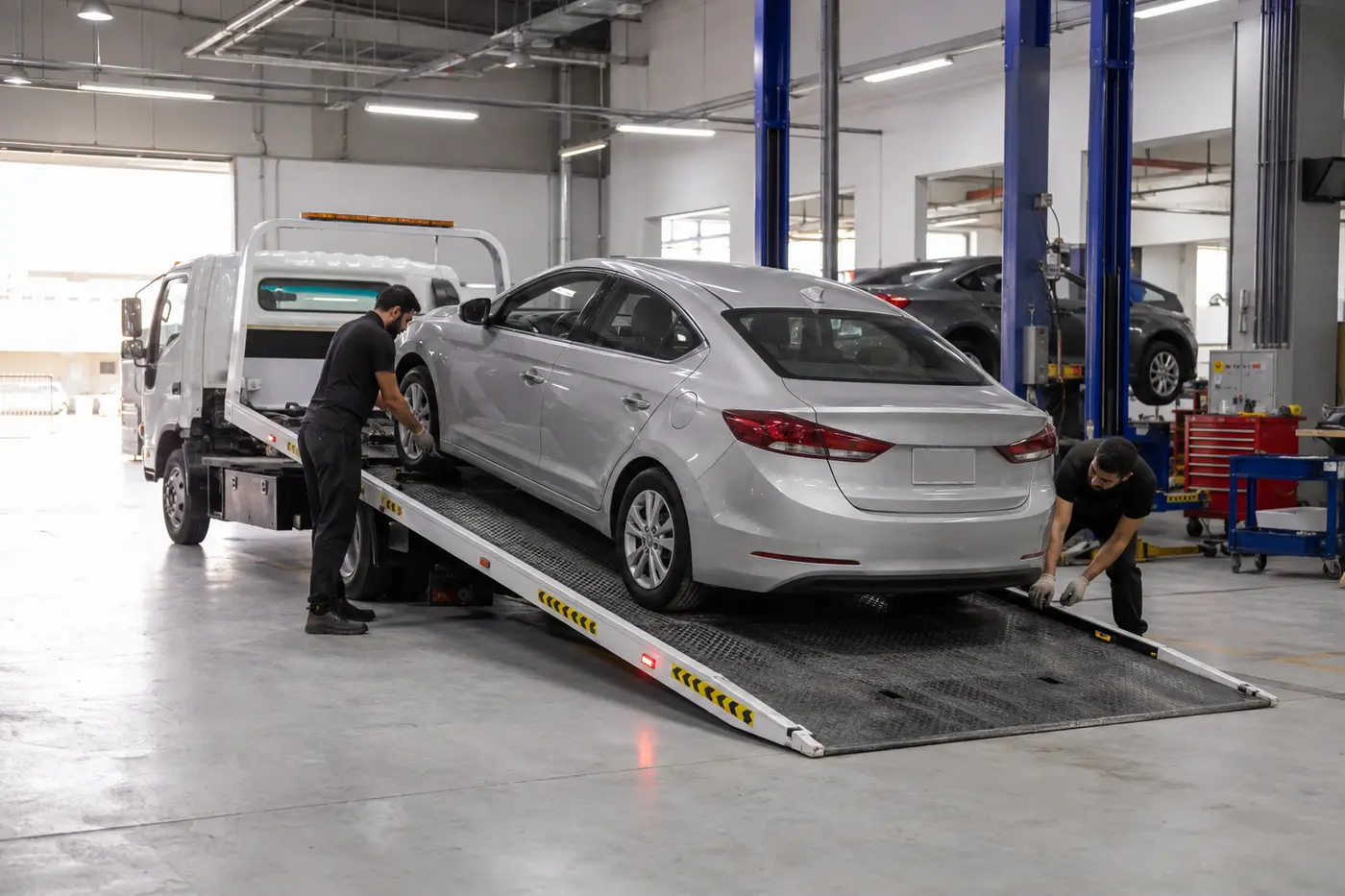
Flatbed towing carries the vehicle on the truck platform instead of leaving one axle rolling on the road. Suitability still depends on the vehicle condition, access space, clearance and the equipment available for the job.
Non-running vehicles
A vehicle that will not start or cannot move normally may require winch-assisted loading after its condition is assessed.
Low ground clearance
Sports and lowered vehicles need careful approach-angle planning to reduce contact during platform loading.
Drivetrain protection
Keeping all wheels off the road can be appropriate where rolling an axle could affect the drivetrain.
Collision damage
Damaged wheels, steering or suspension can change how the vehicle must be stabilized and loaded.
The vehicle condition changes the plan
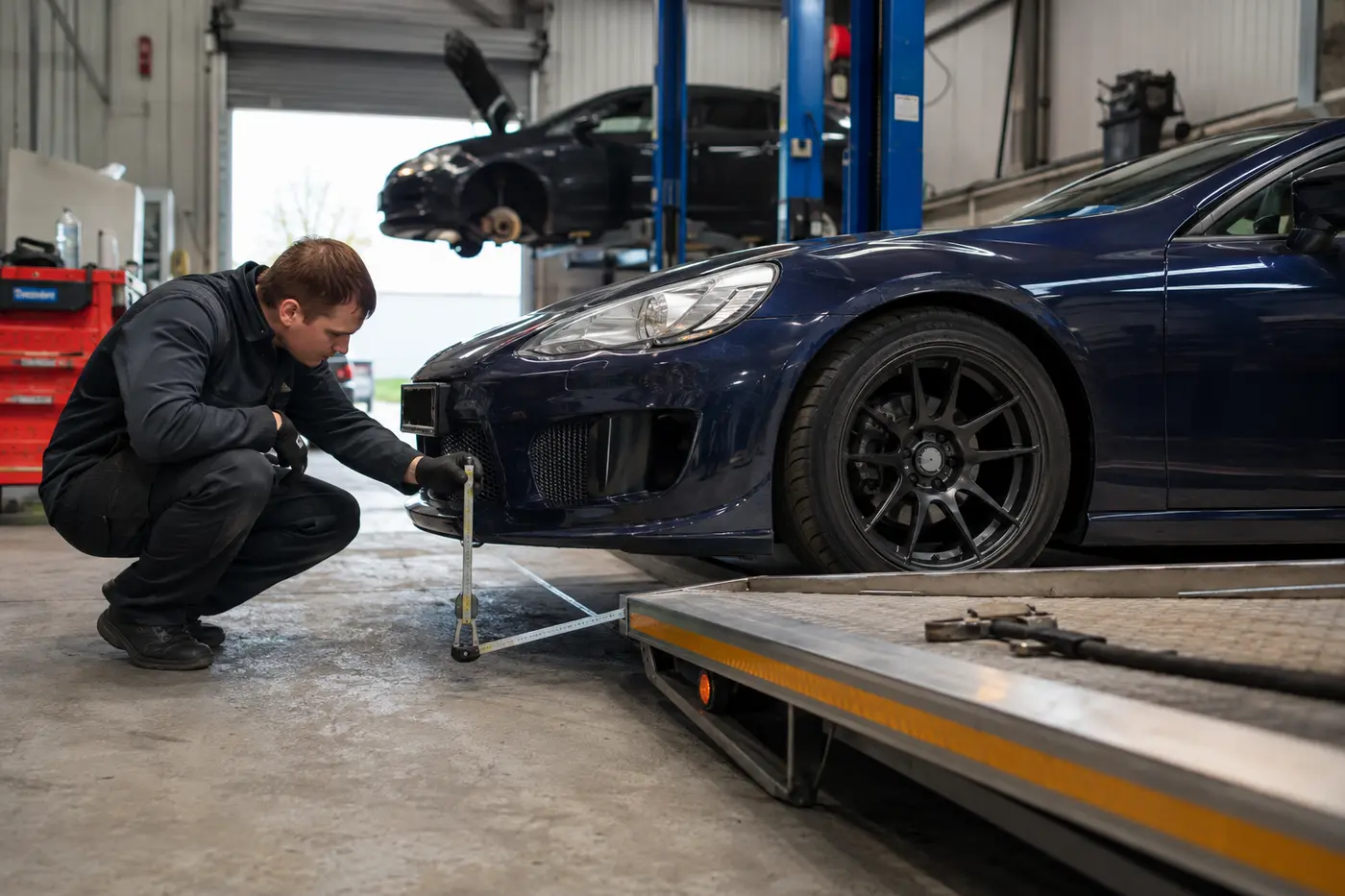
This affects alignment with the platform and whether additional recovery positioning may be needed.
Locked, damaged or missing wheels require disclosure before arrival so the loading approach can be discussed.
Basements, narrow lanes, soft ground and height barriers can limit where a flatbed can safely position.
Lowered suspension, body kits and non-standard dimensions can change clearance and securement requirements.
Share visible leakage, loose parts and steering or suspension damage before the truck is dispatched.
From location details to safe drop-off
Share the situation
Send the live location, vehicle details, condition, destination and access restrictions.
Confirm the method
The dispatcher reviews whether flatbed loading fits the vehicle and site conditions.
Load and secure
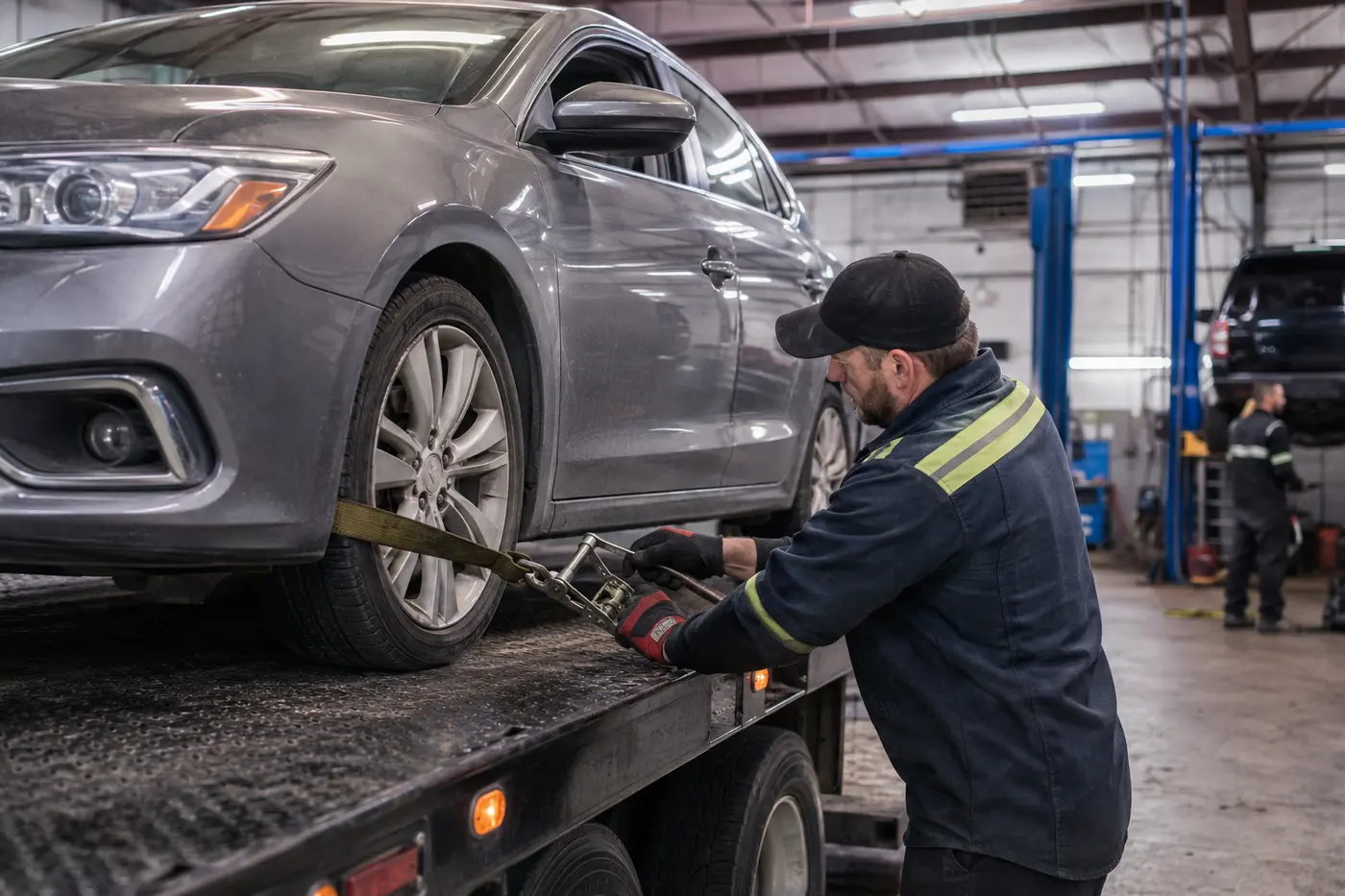
The vehicle is positioned on the platform and secured at suitable points for transport.
Complete delivery
The driver follows the agreed destination and coordinates the receiving handover.
What affects a flatbed towing quote
A useful quote starts with the actual job details. We do not publish a fixed price without knowing the route, vehicle condition and loading constraints.
Distance and destination
Pickup and drop-off locations affect route time and total transport distance.
Vehicle size and condition
Dimensions, weight category and whether the vehicle rolls or steers affect the plan.
Access and recovery effort
Restricted access or additional positioning can require more time than a normal roadside pickup.
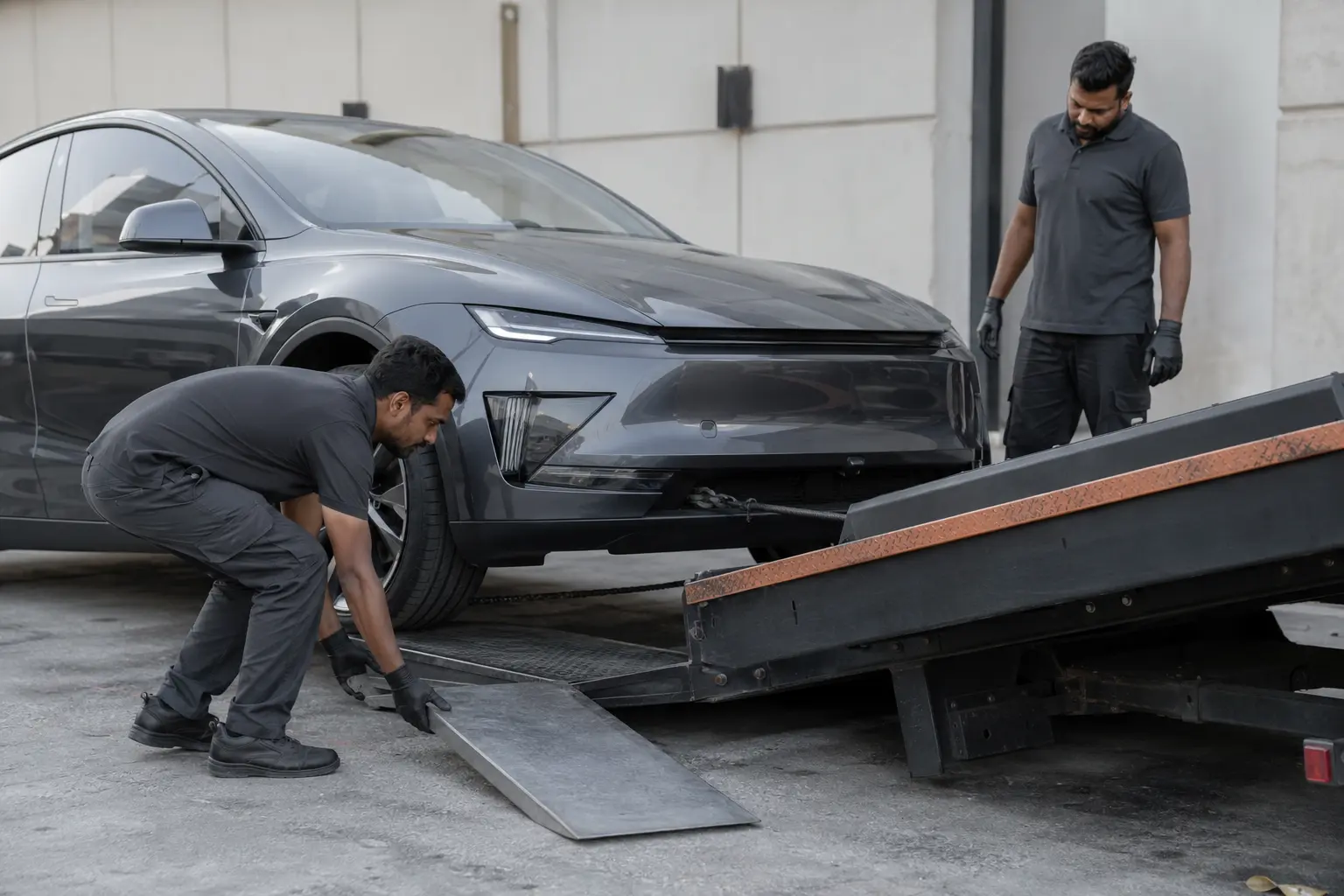
Flatbed transport still needs a vehicle check
A flat platform is not automatic proof that every vehicle can be loaded in every location. The vehicle dimensions, weight category, wheel condition, ground clearance and access route must fit the available equipment and site.
Share clear photos when the vehicle has collision damage, missing wheels, collapsed suspension, loose body parts or visible leakage. This allows the dispatcher to identify when normal flatbed loading may need additional recovery planning.
Oversize or unusual vehicles
Dimensions and weight must be confirmed instead of assuming standard-car capacity.
Locked or damaged wheels
Wheel condition affects positioning and should be disclosed before dispatch.
Basement pickups
Height limits and turning space can prevent a flatbed from reaching the vehicle.
Unsafe roadside positions
Road authority or police instructions take priority where the scene is exposed.
Related transport options
General towing service
Start here when you need towing but are unsure which truck or method fits the vehicle.
Long-distance towing
For scheduled or inter-emirate vehicle movement where route distance is the main requirement.
Accident recovery
For collision-damaged vehicles where scene conditions and damage control guide recovery.
Before you book
Does every breakdown require a flatbed
No. The suitable towing method depends on the vehicle, fault, condition and access. Share the details so the job can be assessed.
Can a flatbed carry a low-clearance car
It may be suitable, but the approach angle, body modifications, wheel condition and available loading equipment must be considered before dispatch.
What information should I send
Send the make and model, live pickup location, destination, photos if damaged, whether it rolls and steers, and any access restrictions.
Can you arrange inter-emirate transport
Route availability and the appropriate transport plan can be discussed after receiving the pickup, destination and vehicle details.
How is the vehicle secured
The securement method depends on the vehicle and equipment. Suitable vehicle securement points are used after the vehicle is positioned on the platform.
Request the right flatbed for the vehicle
Share the make and model, current condition, pickup location, destination and whether the vehicle can roll and steer.