Controlled vehicle extraction in Dubai
Winching service in Dubai
When a vehicle is stuck in sand, mud, a roadside drop or a restricted parking area, the first job is to assess access, attachment points and the safest pull direction. Send your live pin, vehicle details and clear photos so the recovery requirement can be reviewed before dispatch.
Do this first
Stop making the vehicle harder to recover
Repeated acceleration can dig tyres deeper into soft sand or mud, increase grounding and change a manageable extraction into a more complex recovery.
Passengers and bystanders should stay away from straps, cables, vehicles and the expected pull direction. A professional assessment should define the working zone.
Tell dispatch whether the vehicle is tilted, grounded, close to a wall or drop, leaking fluid, or has a damaged wheel. Do not crawl beneath an unstable vehicle to inspect it.
Recovery scenarios
Different stuck positions need different plans
Winching is not a generic tow. The anchor position, pull angle, surface, vehicle weight and available working space determine whether a direct pull is appropriate or the vehicle must be repositioned in stages.
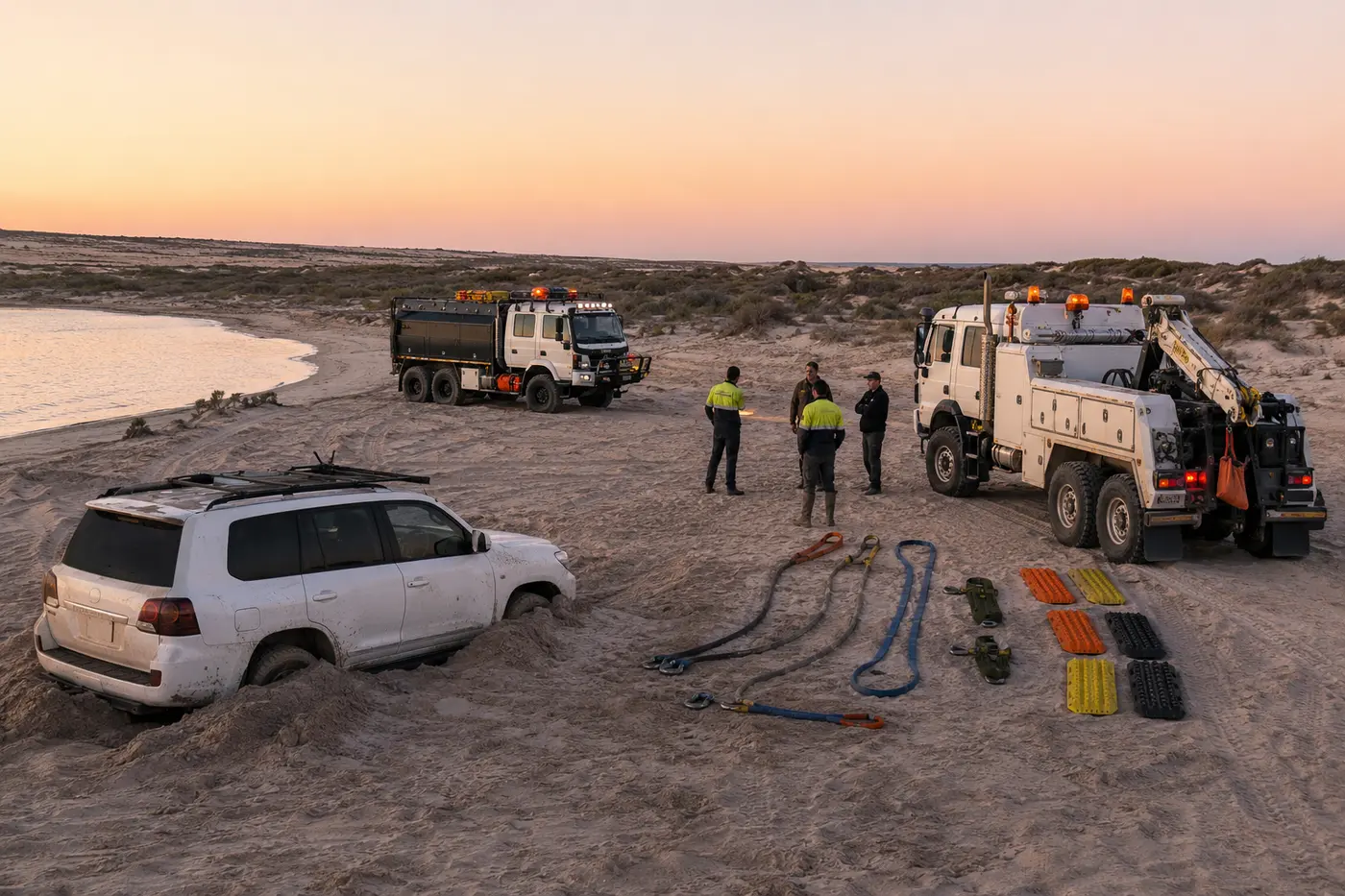
Sand and desert access
Share the exact pin, nearest firm route, depth around each wheel, whether the chassis is resting on sand and whether the vehicle is level or leaning. Traction preparation and a controlled pull may be considered after the recovery path is assessed.
Mud and wet verges
Mud can hide wheel depth, soft shoulders and unstable edges. Photos should show the approach for the recovery vehicle as well as the stuck vehicle, because an anchor on equally soft ground may not support a safe pull.
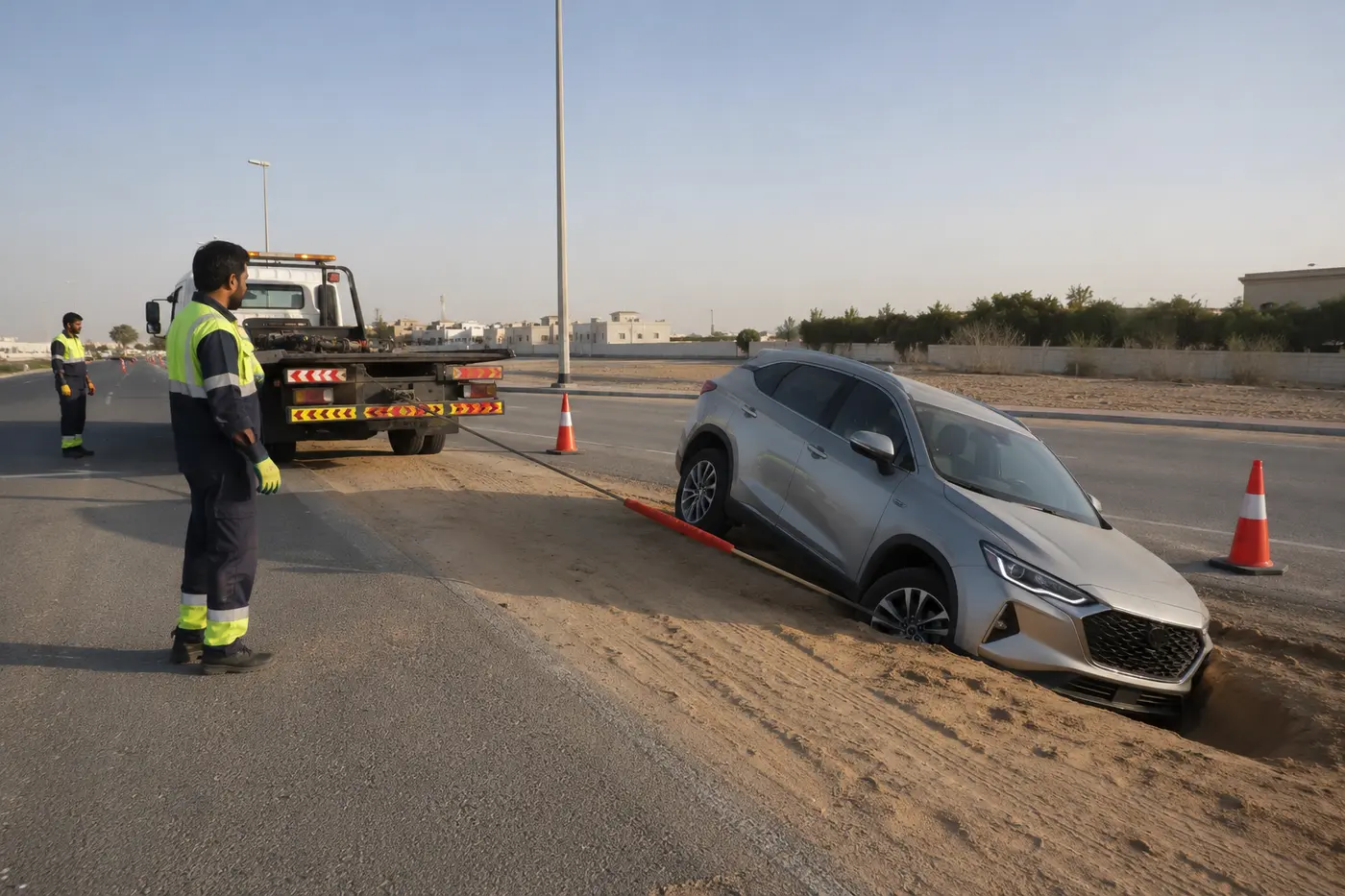
Ditch and wheel-drop recovery
A wheel below road level can load suspension and body components unevenly. The operator needs to see the drop, slope, nearby traffic, underside clearance and whether a straight recovery line is possible.
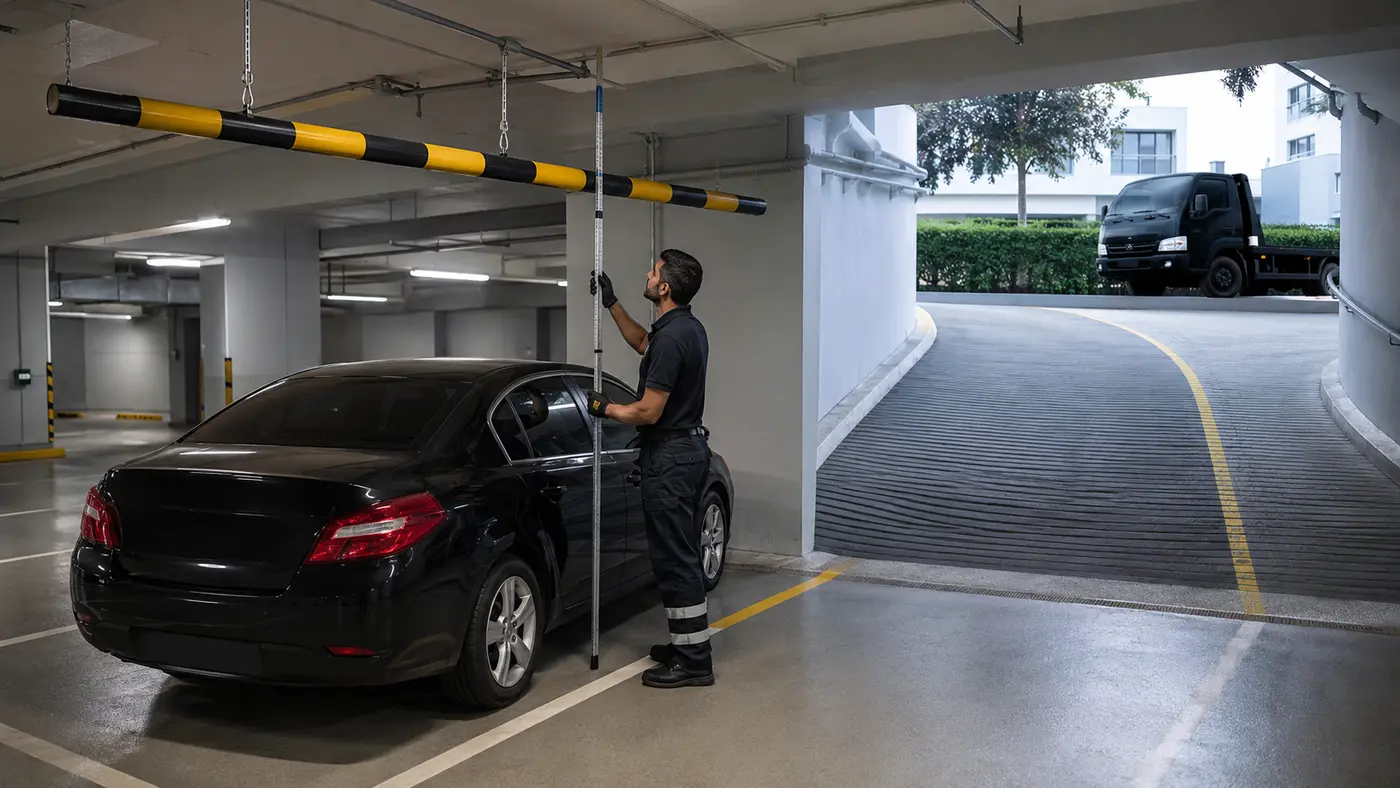
Basement and tight parking
Low ceilings, steep ramps and tight turns may prevent a normal recovery truck from reaching the car. Clearance measurements, parking level, route photos and wheel condition help define whether a smaller setup or staged movement is required.
Equipment and attachment
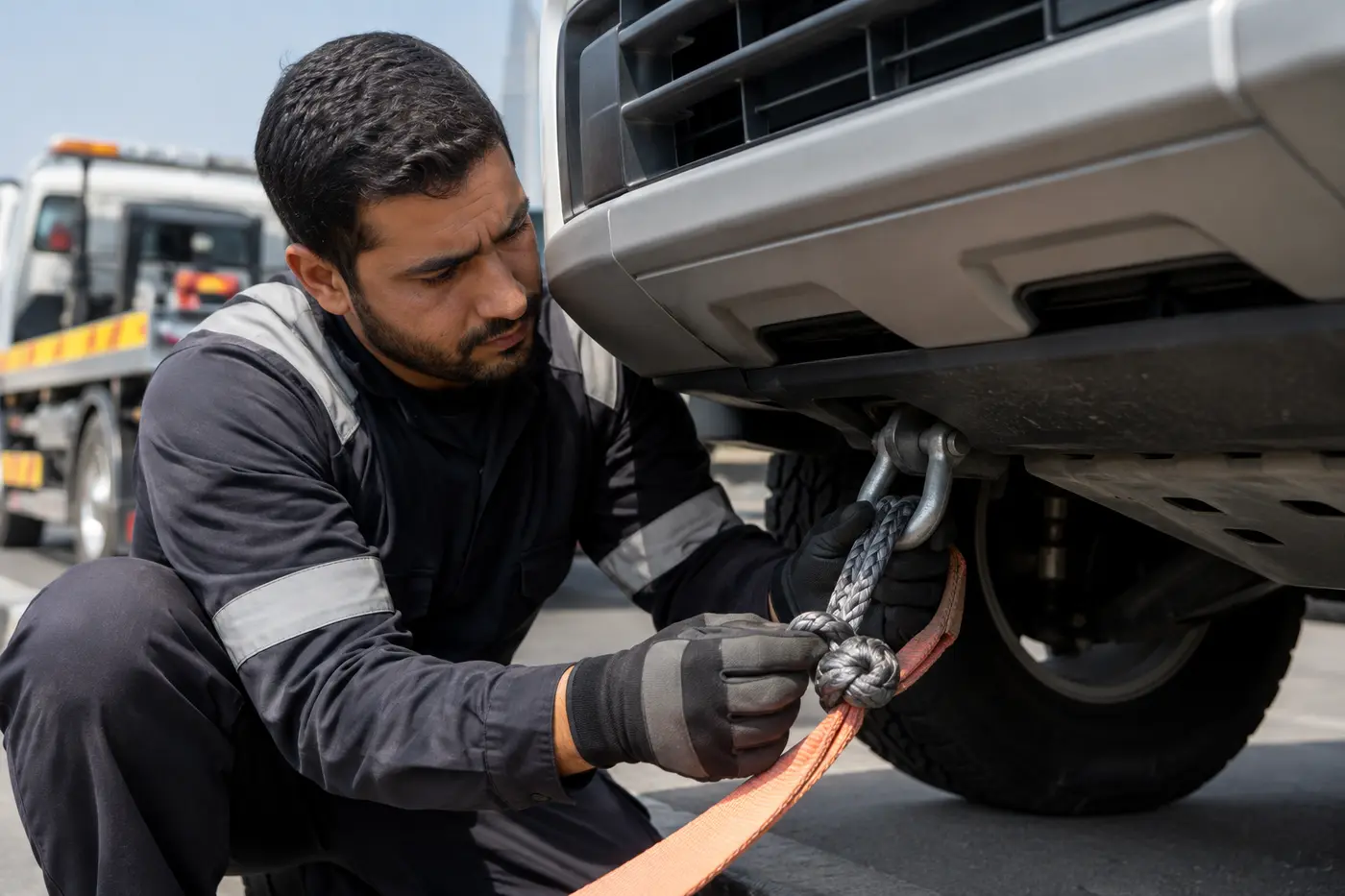
The connection point matters as much as the winch
Recovery equipment is selected for the vehicle, load and geometry of the job. Depending on the assessed situation, a setup may involve a winch, rated straps, shackles or soft shackles, a line damper, traction aids, wheel skates or an additional anchor. Availability and suitability must be confirmed for the actual callout.
The operator should identify a manufacturer-approved or structurally suitable point. Cosmetic tow-eye covers, bumpers, suspension arms and unknown metal points are not safe assumptions.
A straight, stable pull is generally easier to control than a severe side angle. If the line cannot be arranged safely, the setup may need repositioning or an additional anchor.
People should remain outside the line path and vehicle movement area. Equipment is inspected and the vehicle is reassessed after each controlled movement.
Recovery sequence
Assessment before tension
The process is deliberately staged. Movement is paused whenever the angle, vehicle position or ground condition changes enough to require another decision.
Locate
Confirm the live pin, access route and safe working area.
Assess
Review ground, tilt, weight, wheel position and obstacles.
Rig
Select a suitable attachment and controlled pull direction.
Move and check
Apply controlled movement, stop and reassess the position.
Release or tow
Confirm the vehicle is stable, or arrange onward transport if needed.
Complex recovery
When a second truck or anchor may be needed
One recovery vehicle is not automatically enough for every job. An additional truck or anchor may be considered when there is no safe single pull direction, the primary truck cannot establish stable positioning, the vehicle is heavily grounded, the load is unusually heavy, or the vehicle could slide, rotate or lean during movement.
A single controlled pull
May be possible where firm positioning, a suitable attachment point, a workable angle and a clear recovery path are all present.
Additional control required
May be needed for poor access, severe bogging, a side slope, rollover risk, staged extraction, heavy vehicles or a change of direction.
The final setup is a site decision. Photos improve dispatch planning but do not replace the operator’s on-scene assessment.
Parking recovery limits
A basement is an access problem first
A disabled car may be easy to reach on foot but impossible for a standard recovery vehicle to approach. Send measurements and route photos before dispatch.
Roadside extraction
Wheel-drop recovery needs traffic and load control
When one or more wheels leave the hard surface, the vehicle may be supported unevenly. Do not push from the road or attach a rope to an unknown point. Share the road direction, wheel position, drop depth, nearby traffic and whether the car is resting on its body or suspension.
If the vehicle has collision damage, leaking fluid or an unsafe wheel position, use the more specific accident recovery guidance. Once the vehicle is extracted, a separate flatbed towing assessment may be appropriate if it should not be driven.
Quote factors
Winching prices depend on the recovery
A fixed headline price cannot represent every extraction. Ask for a job-specific quote after sharing the location, vehicle, position and access.
| Factor | What changes the job | What to send |
|---|---|---|
| Location and route | Distance, road direction, remote access and the nearest firm approach. | Live pin and route notes. |
| Vehicle and load | Size, weight, drivetrain, clearance and whether the vehicle is loaded. | Make, model and vehicle type. |
| Depth and angle | How deeply wheels or the chassis are grounded, and whether the vehicle is leaning. | Wide and close photos from safe positions. |
| Access and anchoring | Working space, ground stability, pull direction and a suitable recovery-vehicle position. | Approach photos and known restrictions. |
| Additional resources | A second truck, staged movement, special positioning or onward towing. | Describe obstacles, damage and destination. |
Service coverage
Confirm coverage from the live pin
Requests are assessed from the actual pickup location, access and recovery requirement. Do not rely on a fixed “near me” promise or assume a local branch. Send the location for current dispatch guidance.
After the extraction
If the vehicle is stable and safe to drive, the recovery may end on firm ground. If it has a damaged tyre, steering issue, warning light, fluid leak or impact damage, do not assume the extraction solved the underlying problem.
Use car towing in Dubai for onward transport, or review all specialist options on the car recovery services page.
Winching questions
Answers before dispatch
Send the pin, photos and vehicle details together for a more useful assessment.
What should I send for sand recovery in Dubai
Send a live location pin, the nearest firm access route, vehicle make and model, which wheels are buried, whether the chassis is grounded, and clear photos showing the vehicle and surrounding terrain.
Can you winch a car from a basement
It depends on entrance height, ramp angle, turning room, vehicle position, wheel condition, ventilation and building access. A standard recovery truck cannot enter every basement, so measurements and route photos are needed first.
Where should a winch be attached to a vehicle
The operator should identify a manufacturer-approved or structurally suitable recovery point for the assessed load and direction. Do not assume a bumper, suspension arm or unknown metal loop is safe.
When is a second recovery truck required
An additional truck or anchor may be needed where a single safe pull direction is unavailable, the ground will not support stable positioning, the vehicle is heavily bogged or leaning, or controlled movement is needed from more than one direction.
What affects the cost of winching in Dubai
Location, vehicle weight, depth and angle, terrain, access, attachment options, recovery complexity, time, additional equipment or trucks, and any onward towing all affect the quote.
Should I keep trying to drive out of soft sand
No. Repeated wheel spin can dig the vehicle deeper and increase grounding. Stop, keep people clear of the recovery path and share the vehicle position with dispatch.
Request a recovery assessment
Send the pin, position and access
Those details help distinguish a direct winch pull from a staged or multi-vehicle recovery before dispatch.