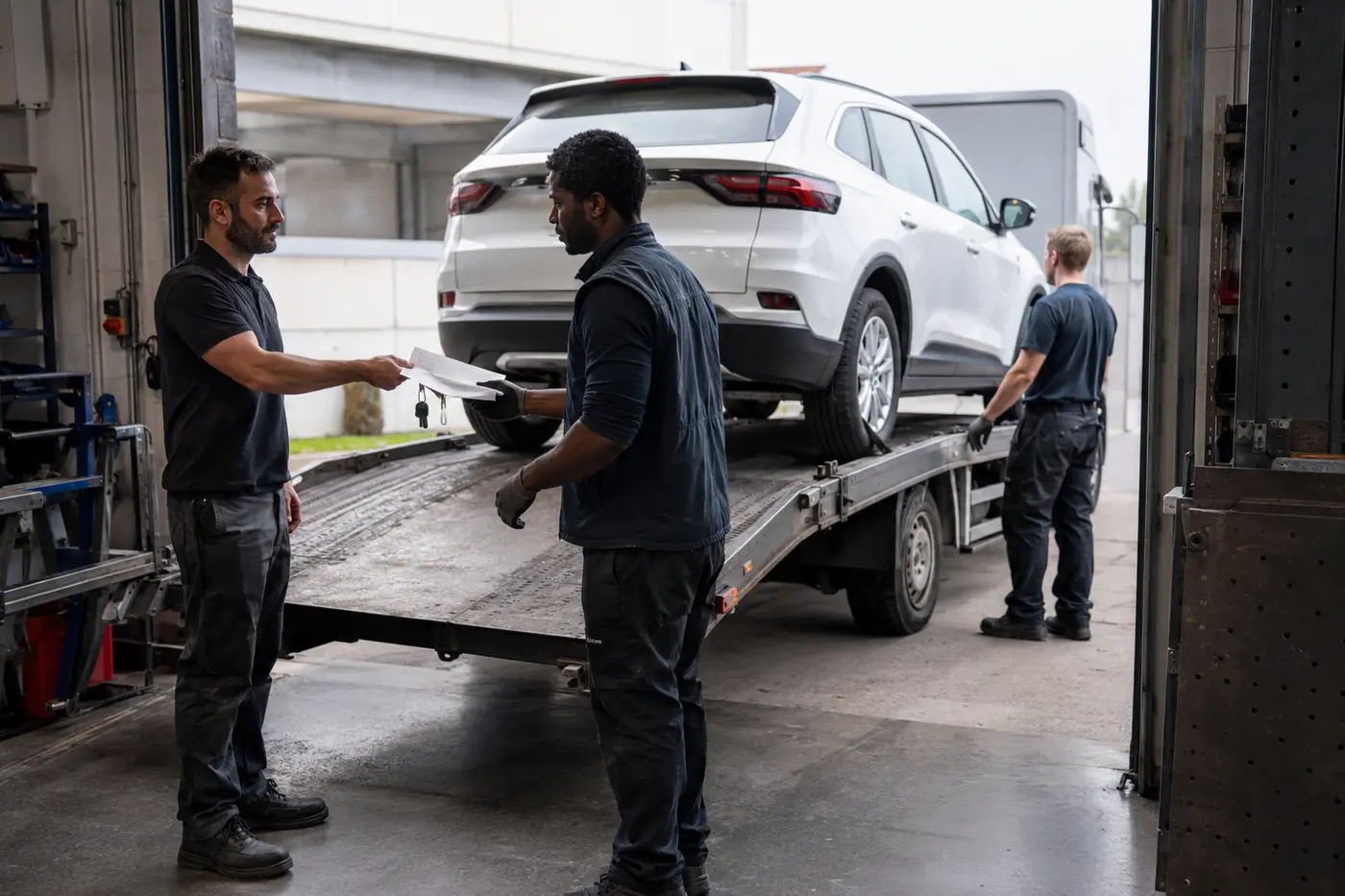
Inter-emirate towing planned around the route
Arrange vehicle transport between Dubai and another UAE destination with the route, vehicle condition, pickup access and receiving handover confirmed before movement.
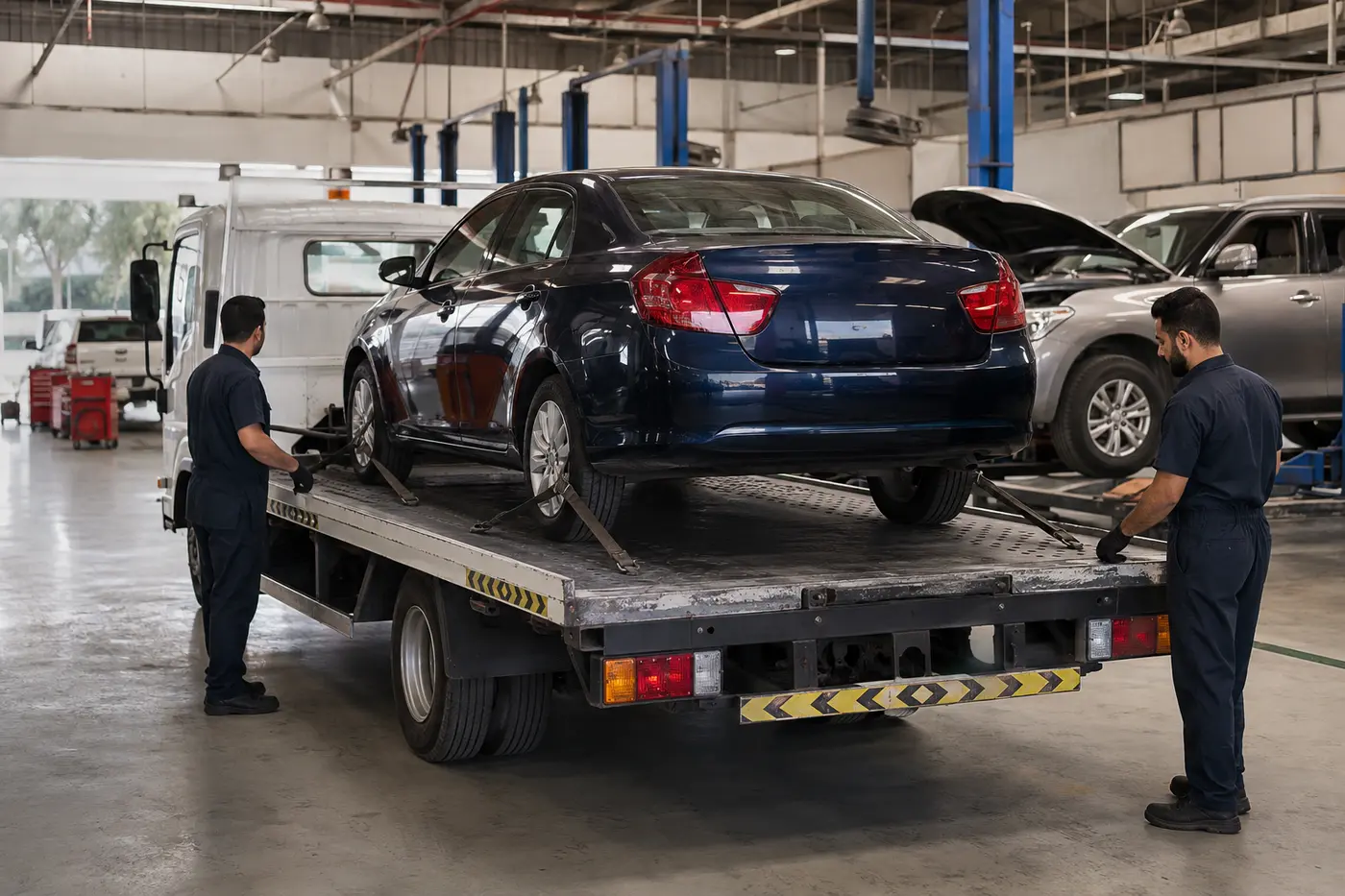
A long tow is a route and handover job
Distance is only one part of the quotation. Vehicle condition, loading method, pickup access, delivery timing and the person receiving the vehicle all affect the plan.
Pickup brief
Location pin, access window and site constraints.
Vehicle brief
Make, model, condition and whether it rolls or steers.
Route brief
Destination, scheduling and relevant route considerations.
Handover brief
Receiving contact, access and delivery authorization.
What changes the transport method
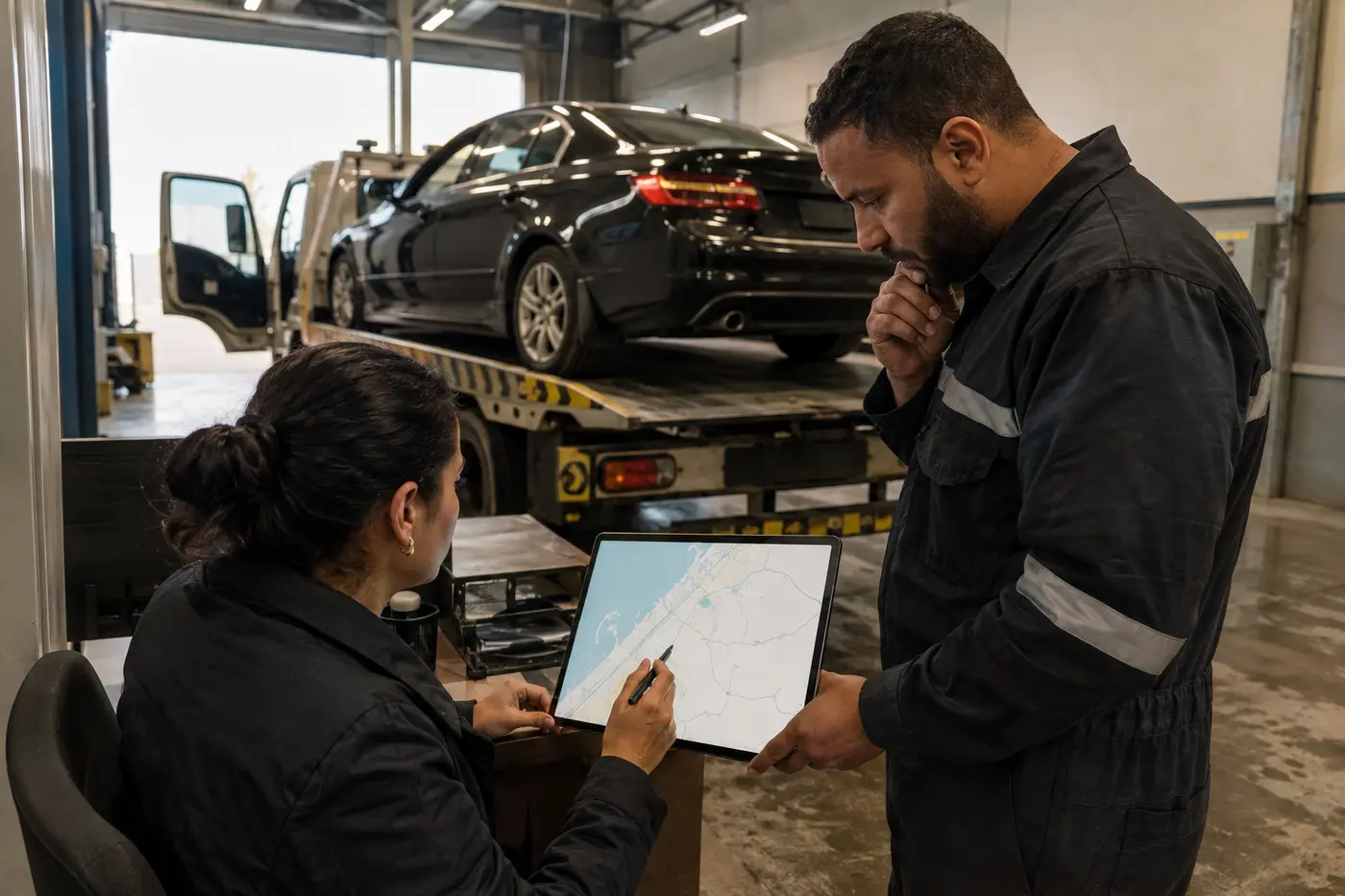
Vehicle condition
A non-running or collision-damaged vehicle may need a different loading plan from a driveable car.
Distance and schedule
Route length, timing and availability influence the quotation without requiring invented fixed prices.
Flatbed suitability
Low-clearance, drivetrain or damage considerations may make flatbed transport appropriate.
Pickup and delivery access
Basements, workshops, compounds and restricted sites must be disclosed before dispatch.
One record from pickup to delivery
Condition noted
Visible condition and disclosed faults help frame the handover.
Vehicle secured
The vehicle is prepared and secured according to the selected transport method.
Receiver coordinated
The destination contact and access window are confirmed before arrival.

Why a fixed distance price can mislead
Two journeys with the same kilometres can require different loading effort, vehicle space, access time and scheduling. A quote should be based on the actual route and vehicle brief.
Route distance
Pickup, destination and practical routing.
Vehicle size
Dimensions and transport suitability.
Loading condition
Rolling, steering, damage and access.
Schedule
Urgency, timing and receiving window.
Long-distance transport needs two ready locations
A successful journey depends on more than collecting the vehicle. The pickup must be accessible, the vehicle must be ready for loading, and the destination must have a responsible receiver and enough space for unloading.
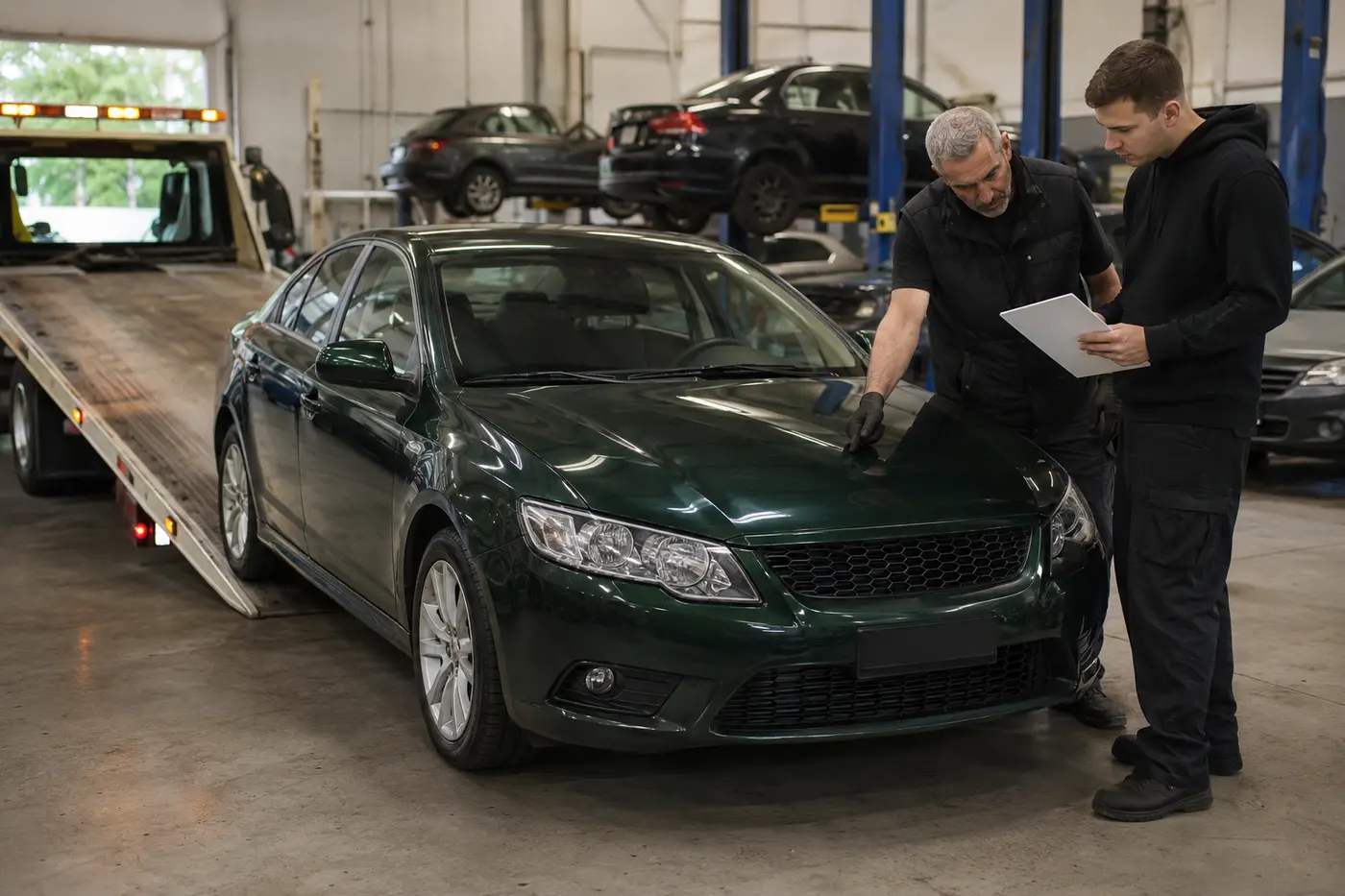
Before pickup
Remove unnecessary personal items, disclose faults, provide keys and confirm who can release the vehicle.
Condition information
Share photos of damage, warning lights, wheel problems, leakage or modifications that may affect loading.
Destination readiness
Confirm opening hours, gate or basement restrictions, unloading space and the receiving contact.
Schedule expectations
Agree the pickup window and communication process without treating a route estimate as a guaranteed arrival time.
Cancellation or route changes
Tell the dispatcher promptly if the destination, vehicle condition or access changes before collection.
Related towing options
Before confirming the route
What details are needed for a quote
Provide pickup and destination pins, vehicle make and model, condition, access restrictions and preferred timing.
Do you publish a fixed per-kilometre price
A useful quote considers route, vehicle, loading condition, access and schedule rather than distance alone.
Can a damaged vehicle travel long distance
Suitability depends on the damage, wheel and steering condition, leakage and the available loading method.
Who receives the vehicle
A receiving contact and destination access arrangement should be confirmed before transport begins.
Is flatbed towing available for long routes
The suitable method is confirmed after reviewing the vehicle and route details. Flatbed-specific cases are explained on the dedicated page.
Request an inter-emirate towing quote
Send both locations, the vehicle condition, preferred schedule and receiving contact details.