Motorcycle recovery across Dubai
Motorcycle recovery in Dubai with bike-safe loading
When a motorcycle cannot be ridden safely, the recovery method matters as much as the destination. Share the bike type, wheel condition, damage and exact access so dispatch can plan controlled loading and secure transport.
Recovery based on condition
A motorcycle is not loaded like a car
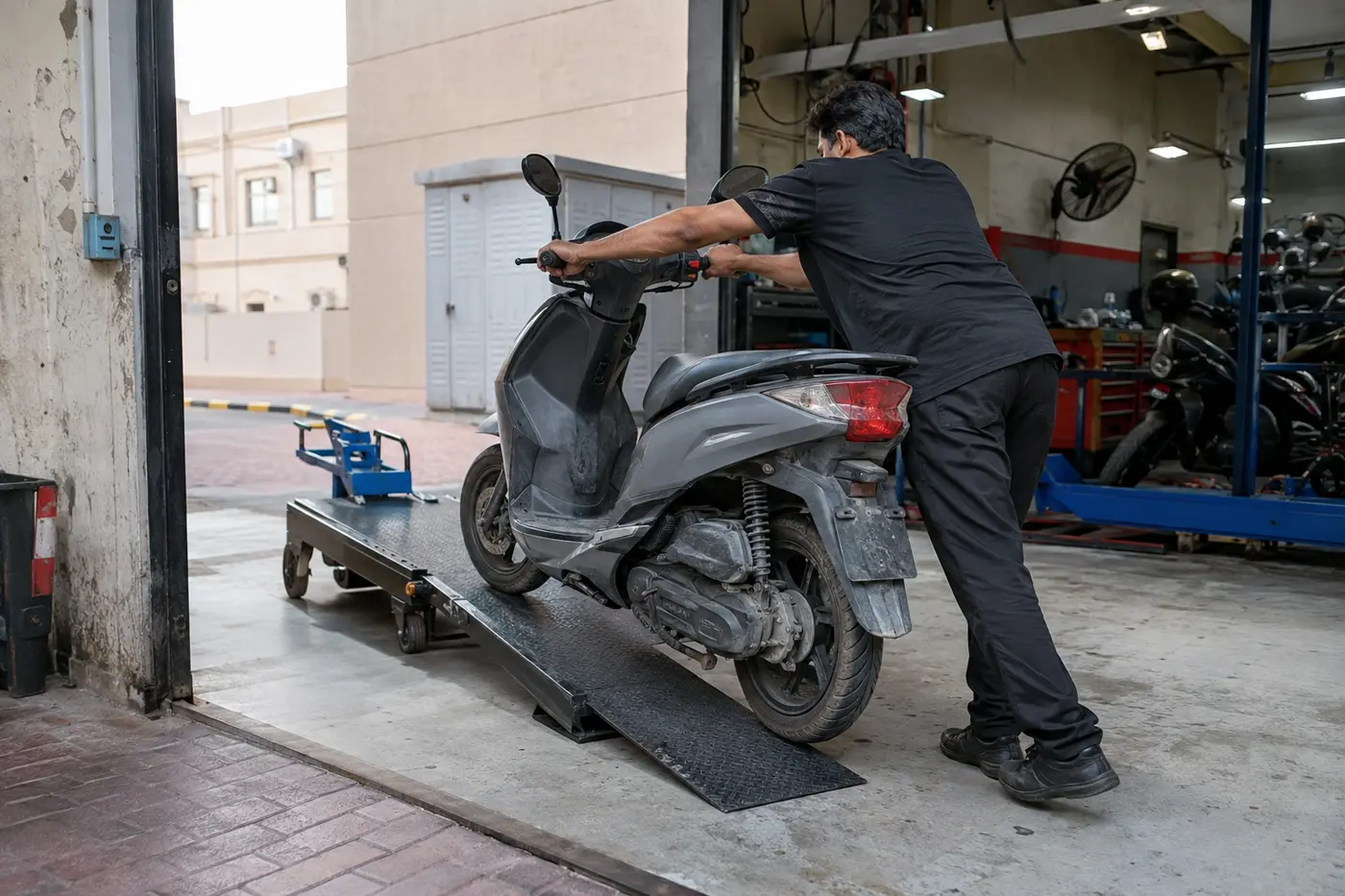
A bike has a small contact area, exposed controls and bodywork that can be damaged by poor restraint placement. Before dispatch, we ask whether the motorcycle is upright, whether the steering lock is engaged, whether each wheel rolls and whether there is crash damage, fluid leakage or loose bodywork.
That information helps determine whether the bike can be guided up a ramp, needs controlled movement, requires a wheel dolly, or should be escalated for a different recovery setup. The final method is confirmed after the operator sees the motorcycle and pickup area.
Controlled ramp loading may be suitable when wheels, steering and brakes allow safe movement.
A locked or damaged wheel needs planning so the bike is not dragged or forced.
Loose panels, bent controls, leakage and unstable stands must be assessed first.
Basement height, tight turns, gradients and permission can change the dispatch plan.
Bike-specific securing
Stable at the wheel and protected at contact points
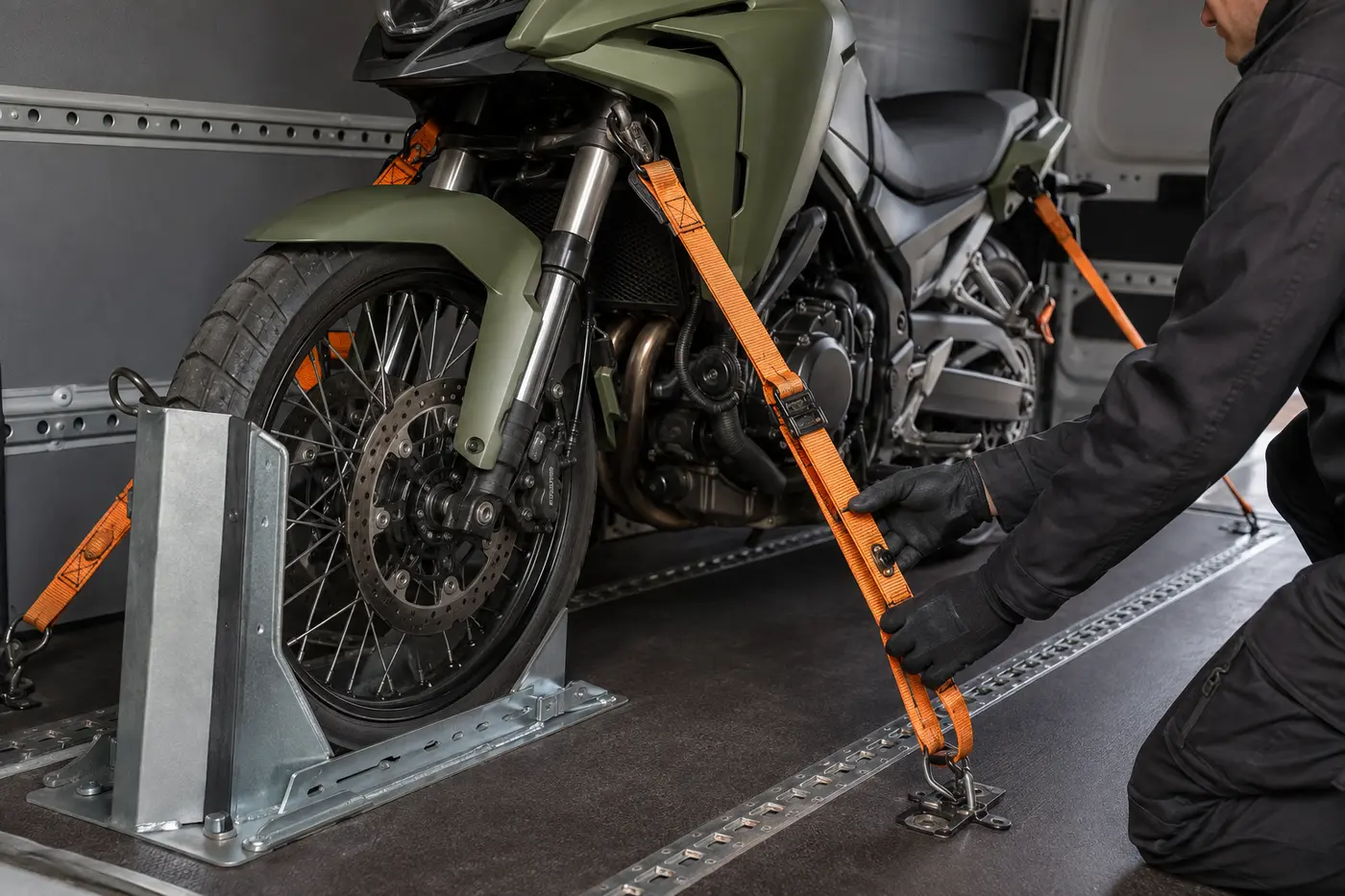
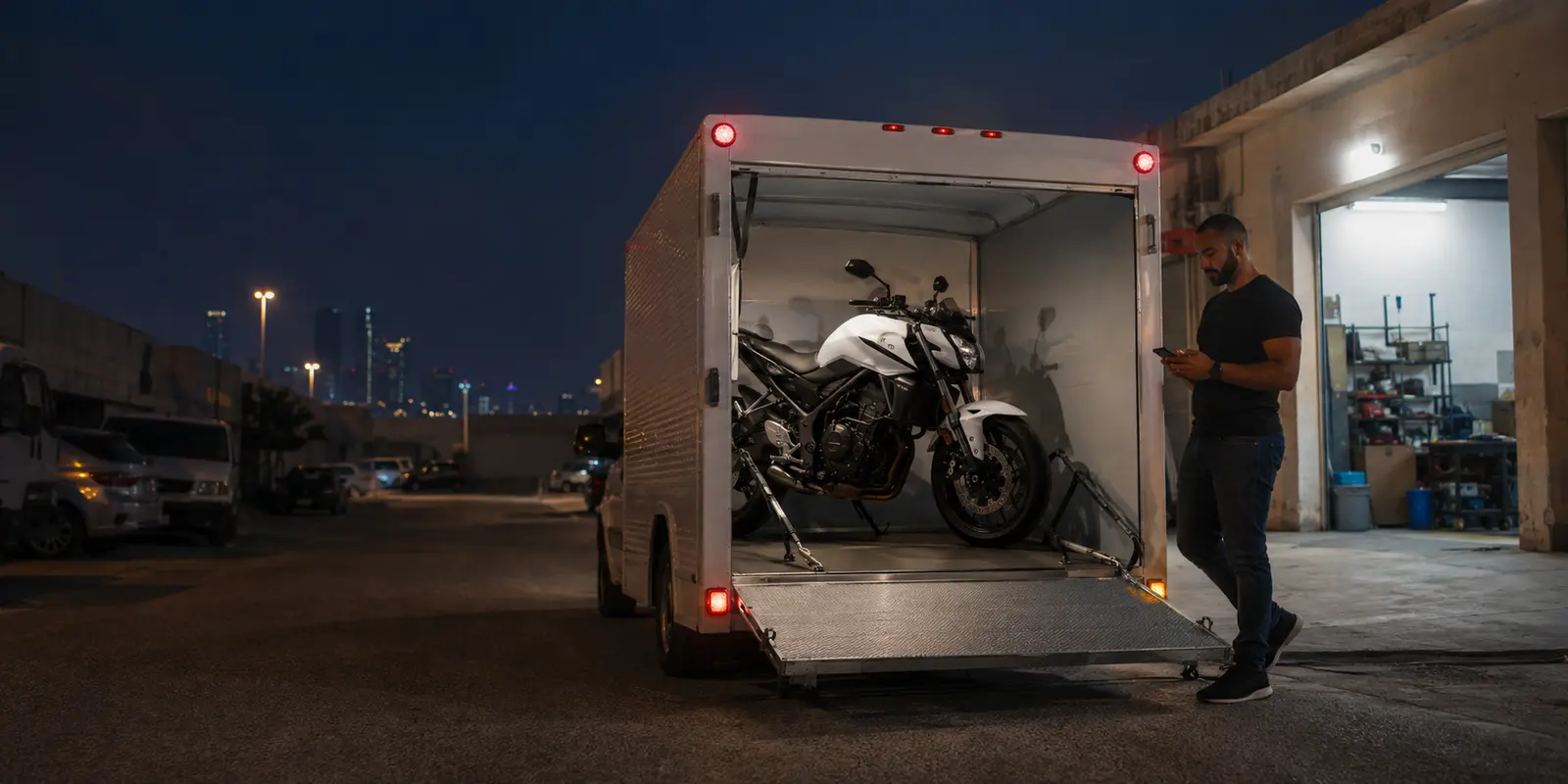
Secure motorcycle transport relies on controlled support and balanced restraint, not maximum strap tension. The exact attachment points depend on the motorcycle design and condition.
Inspect first
Check wheels, steering, stands, fairings, exhaust clearance, controls and visible leakage.
Control loading
Use a suitable approach angle and controlled movement that matches the bike’s condition.
Support the front
Seat the wheel securely where appropriate and keep the motorcycle upright without body pressure.
Balance restraint
Use safe structural points and keep straps clear of paint, cables, brake lines and fragile trim.
Motorcycle handling matrix
What changes the recovery plan
| Situation | Important details | Likely planning need |
|---|---|---|
| Scooter or commuter bike | Wheel movement, centre stand, steering lock and basement access | Compact loading approach with clear handlebar and body-panel protection |
| Sport or low-clearance bike | Fairings, belly pan, ramp angle, clip-ons and exhaust position | Low approach angle and carefully selected restraint points |
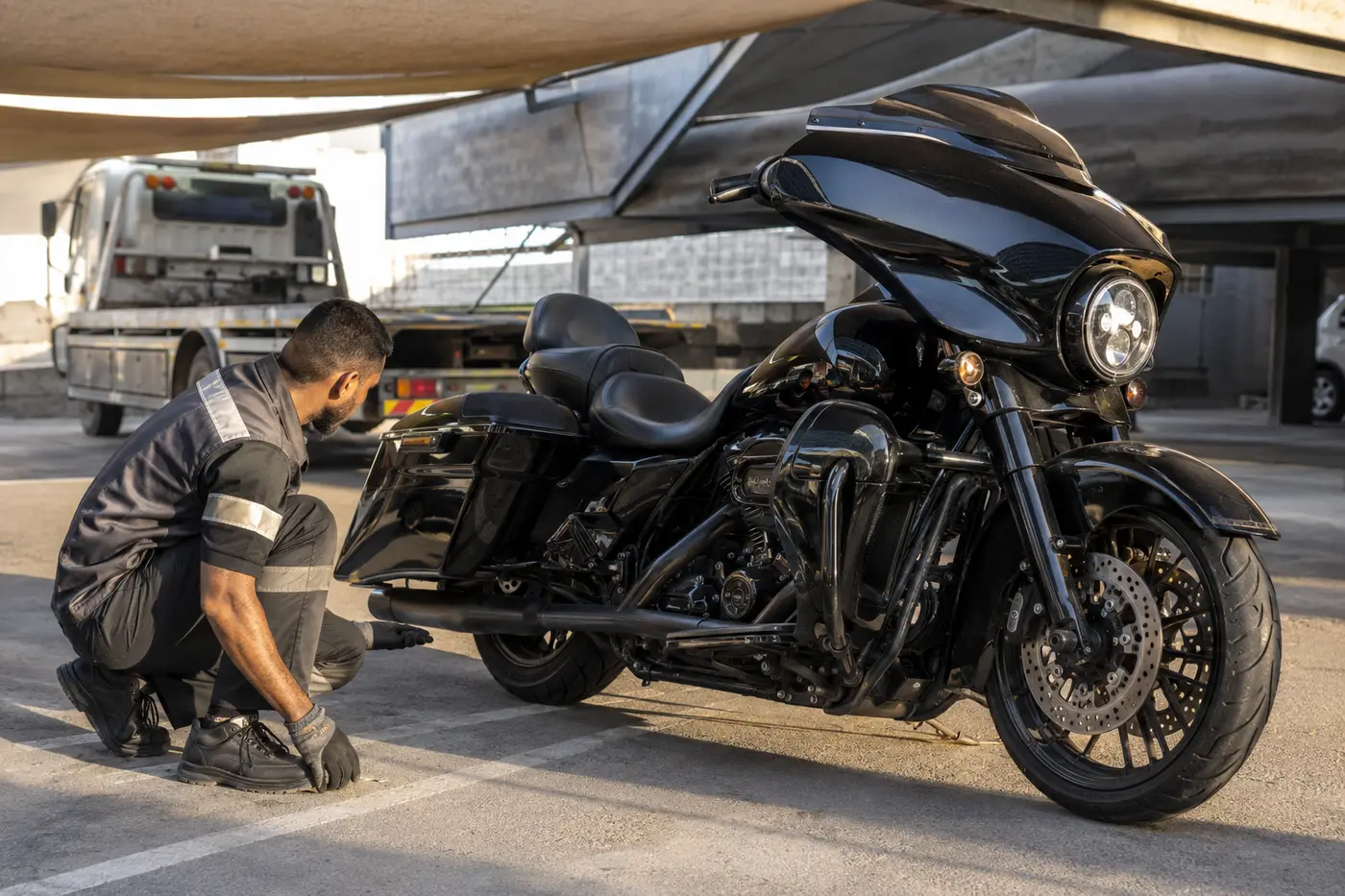
| Touring or cruiser motorcycle | Approximate weight, panniers, crash bars and available turning room | Capacity and access confirmation before dispatch |
| Flat, locked or damaged wheel | Which wheel is affected, steering movement and visible fork or swingarm damage | Controlled movement or wheel support rather than forced rolling |
| Collision-damaged bike | Leakage, loose parts, sharp edges, unstable controls and scene safety | Assessment and possible escalation before loading |
Non-rolling and damaged bikes
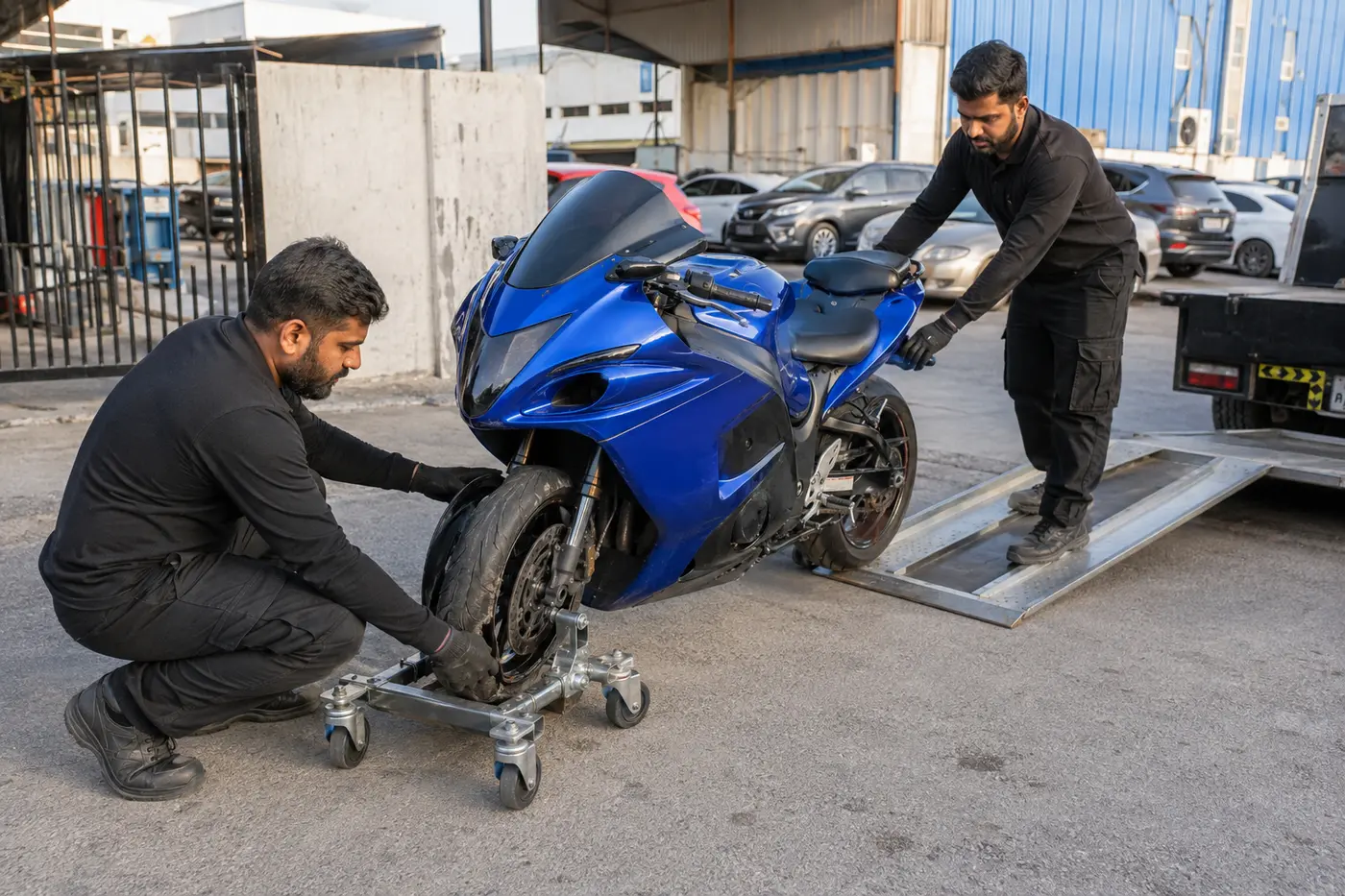
Do not force a locked wheel or damaged front end
If a wheel will not rotate, the steering is jammed, or the fork and handlebar alignment has changed, pushing can add damage or make the motorcycle unstable. Tell dispatch exactly which wheel is affected and whether the bike is upright.
Visible fuel or oil leakage, exposed sharp parts, severe frame damage or an unsafe traffic position may require a different response. The operator must be able to create a safe work area before loading begins.
From call to handover
A clear recovery process without guesswork
Share details
Send the live pin, bike type, wheel and steering condition, photos if safe, and destination.
Confirm access
Describe basement height, barriers, soft ground, narrow turns or any permission needed.
Load and secure
The operator checks the bike, chooses safe movement, then supports and restrains it for transport.
Deliver and hand over
The motorcycle is taken to the agreed workshop, home, storage location or other accessible destination.
Scope and service boundaries
Recovery transport, not roadside mechanical diagnosis
This page covers motorcycles and scooters that need safe collection and transport. Minor on-location support is handled under roadside assistance. More complex collision scenes may require accident recovery. For an overview of other vehicle services, see the services hub.
We do not claim every custom, oversized or severely damaged motorcycle can be handled without assessment. Unsafe live-traffic positions, active fuel leakage, inaccessible basements and unusually heavy builds may require escalation or a safer loading location.
Common questions
Motorcycle recovery answers
Can you recover a motorcycle with a locked wheel?
It may be possible, but dispatch needs to know which wheel is locked and whether the steering moves. The operator can then plan controlled movement rather than relying on the bike rolling normally.
Can a motorcycle be collected from basement parking?
Often yes, subject to height, ramp angle, turning space, access permission and a safe loading point. Share the parking level and entrance photos if possible.
Can you recover sport bikes and heavy touring motorcycles?
Bike type, approximate weight, clearance, accessories and condition must be confirmed. Larger or unusually heavy motorcycles may need a different dispatch setup.
Where can the bike be delivered?
Delivery can be arranged to an accessible workshop, home, storage facility or another agreed destination in Dubai or beyond, subject to route and handover confirmation.
What affects the motorcycle recovery price?
Pickup location, destination, access, motorcycle weight and condition, loading difficulty, required equipment, traffic and timing all affect the quote. Share accurate details for a relevant estimate.
Is motorcycle recovery available at night?
Dispatch is available 24/7. Actual response depends on location, traffic, access and the recovery setup required.
Ready to dispatch
Share the motorcycle condition and live location
Call or WhatsApp the bike type, wheel and steering condition, pickup access and destination. Accurate information helps plan a safer recovery.