Van recovery planned around size, load and access
A disabled van is not simply a larger car. Send the van model, live pin, condition, approximate load, pickup access and destination so the recovery method can be assessed before dispatch.
Why van recovery needs a condition check first
Panel vans, delivery vans and passenger conversions can differ significantly in length, height, weight distribution and driveline. A short empty van with freely rolling wheels may be straightforward. A loaded long-wheelbase van with a damaged wheel, locked transmission or low-clearance pickup point may need a different loading plan.
Car Recovery Dubai UAE uses the information and photos you send to assess the likely recovery method. The final equipment choice is confirmed against the actual vehicle, its condition and the site. This reduces the risk of sending a unit that cannot safely access or carry the van.
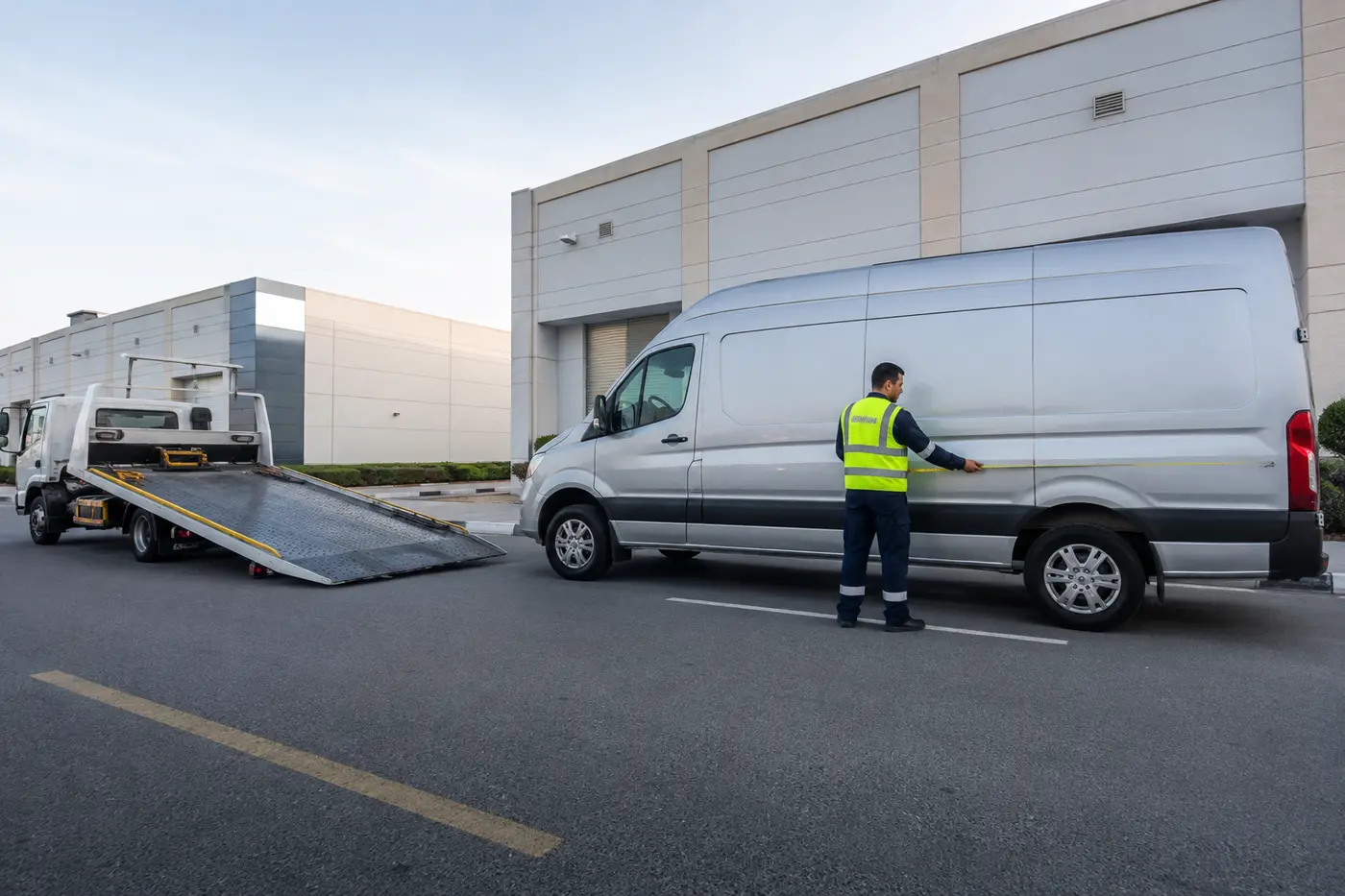
Six details that shape the recovery plan
Send accurate information rather than selecting a towing method yourself. The dispatcher can then assess the most suitable available option.
Vehicle identity
Make, model, year, body type, roof height and wheelbase help establish dimensions and likely recovery requirements.
Current weight
Confirm whether the van is empty or carrying tools, goods, refrigeration equipment, passengers or a conversion.
Wheel condition
Say whether all wheels roll and steer, or whether a tyre, hub, suspension part or axle appears damaged.
Driveline state
Locked transmission, engaged parking brake, all-wheel drive or suspected driveline damage affects movement and loading.
Pickup access
Basement height, ramp angle, narrow loading bays, soft ground and traffic exposure must be known before arrival.
Destination
Provide the workshop, yard, home or inter-emirate destination and confirm someone can accept the van.
What changes from one van to another
This guide explains why two vans at the same location may need different arrangements. It is an assessment guide, not a promise that every listed van can be recovered by every unit.
| Van or condition | What to send | Why it matters | Possible planning point |
|---|---|---|---|
| Compact or short-wheelbase van | Model, condition, destination | Usually easier to access, but damage and load still matter | Standard recovery assessment |
| High-roof or long-wheelbase van | Full side photo, roof height, wheelbase | Bed length, carrying capacity and overhead clearance must be checked | Suitable flatbed or commercial-capacity unit |
| Loaded delivery or refrigerated van | Estimated load and installed equipment | Actual weight and weight distribution can differ from an empty van | Load may need to be reduced or a larger unit assigned |
| Damaged or locked wheel | Close photos of each affected wheel | The van may not roll or steer normally | Winch, skates or controlled loading assessment |
| Camper or crew conversion | Conversion details, height and current weight | Added fittings can change weight, balance and clearance | Capacity must be confirmed before dispatch |
| Severe collision or structural damage | Wide scene and damage photos | Loose components, fluid leaks and distorted structure create added risk | Specialist accident-recovery assessment may be required |
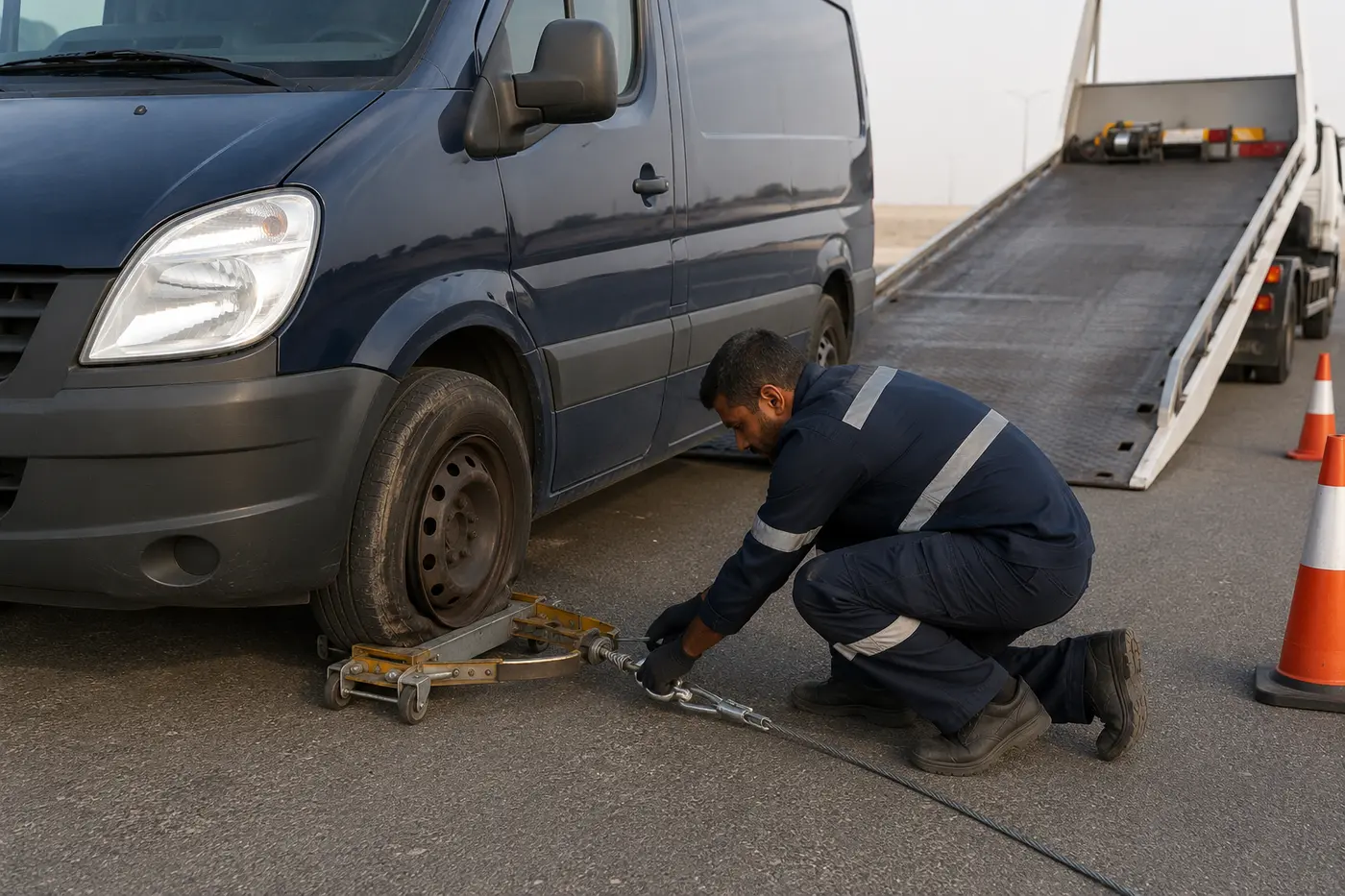
When the van cannot roll normally
A puncture alone does not always require recovery. However, a collapsed tyre, damaged suspension, broken hub, locked wheel or transmission fault can prevent safe movement. Pulling the van without addressing that condition can increase damage.
Depending on the assessment and available equipment, controlled winching, wheel skates or another loading aid may be considered. A heavily loaded or structurally damaged van may need cargo reduction, a second unit or a specialist commercial recovery arrangement.
For a van stuck in sand, mud, a roadside drop or another extraction situation, review our dedicated winching service. This page remains focused on disabled-van recovery and transport.
A recovery process with fewer surprises
Send the evidence
Share your live pin, van details, load, condition, access photos and destination.
Confirm the plan
The dispatcher reviews likely capacity, access, loading method and quotation factors.
Prepare the van
Secure loose cargo, keep people clear and provide keys where available. Do not enter an unsafe traffic lane.
Load and hand over
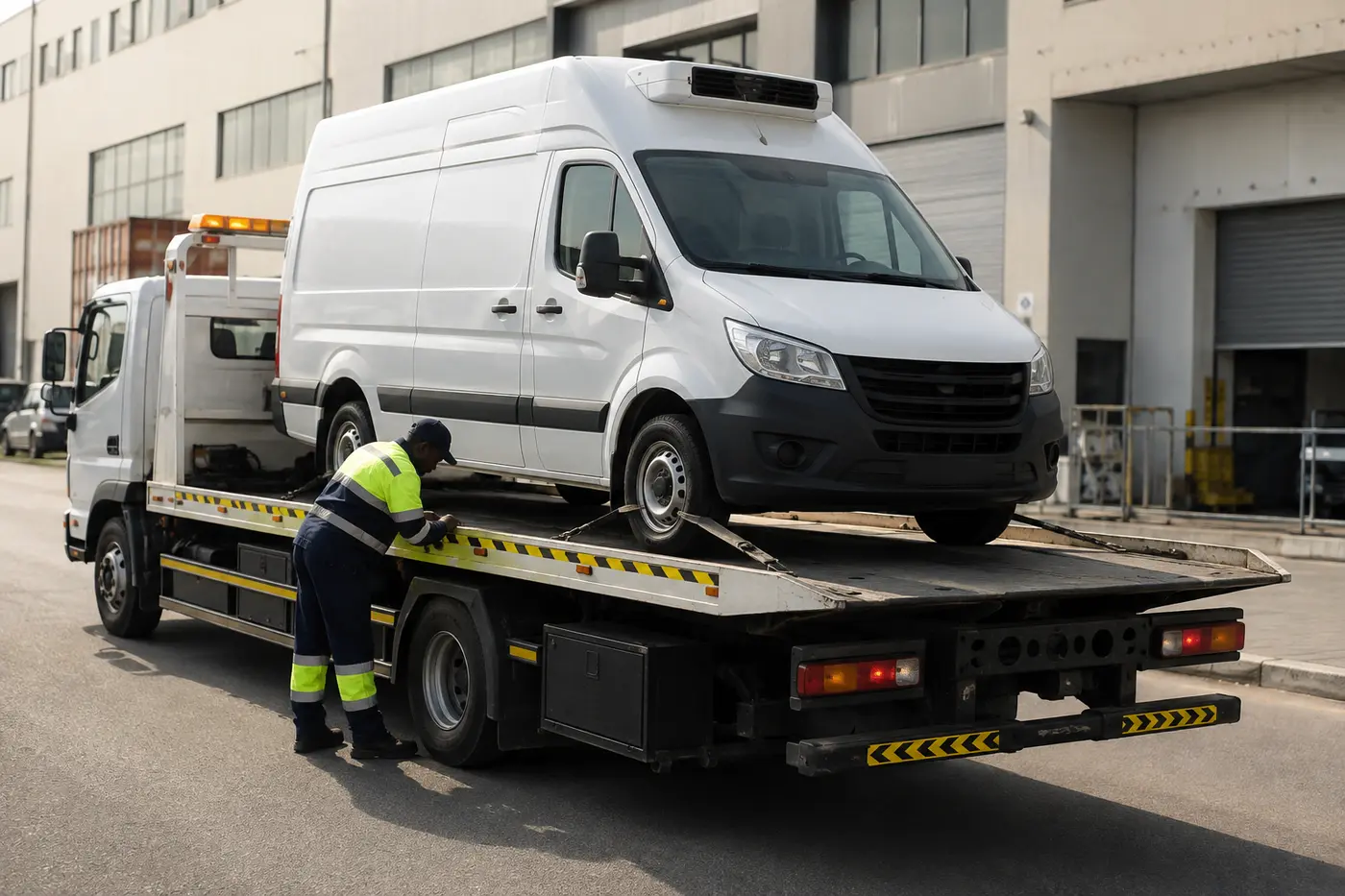
The operator reassesses on arrival, loads within safe limits and confirms delivery with the receiving location.
Basements, loading bays and restricted sites
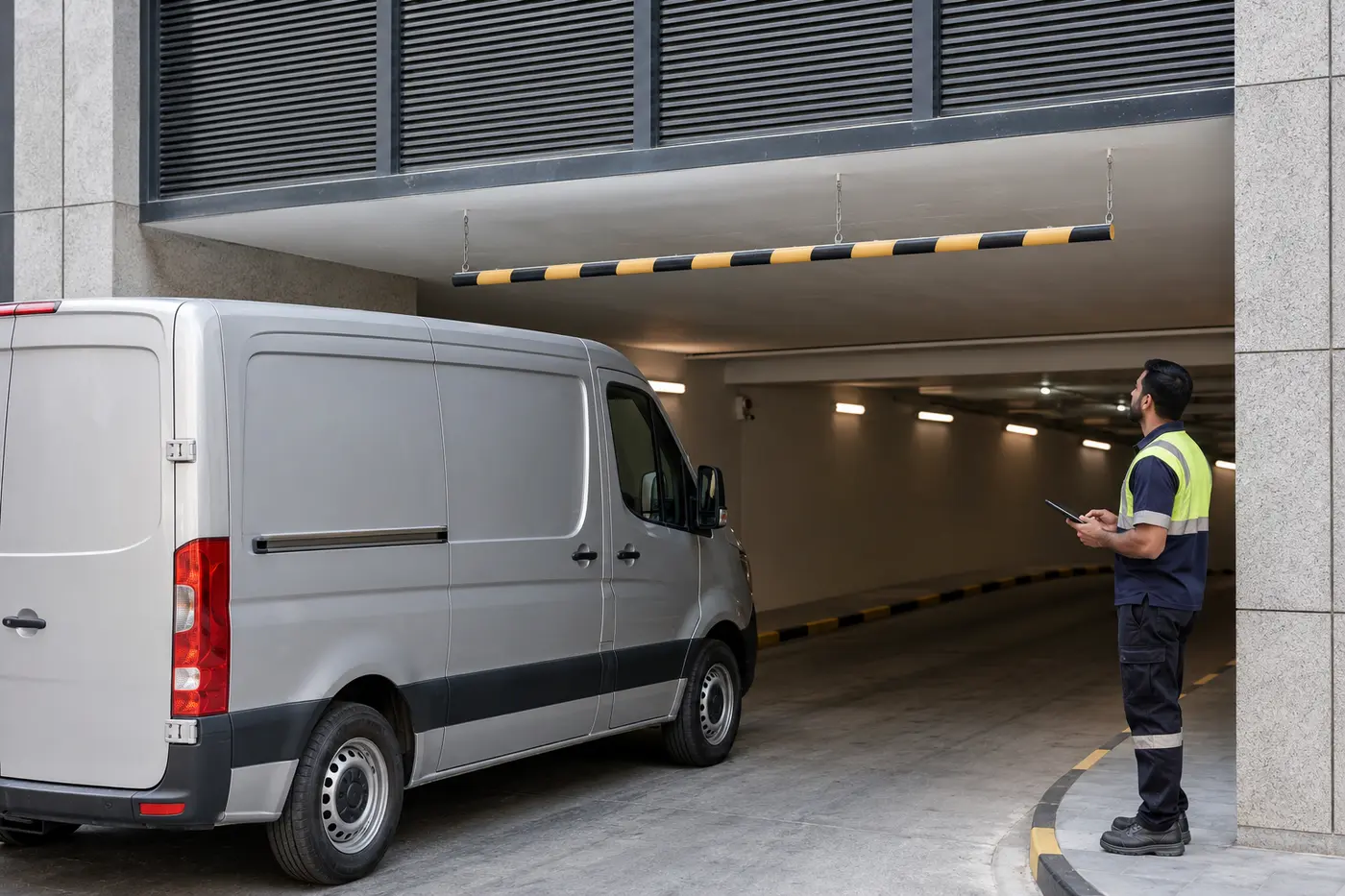
High-roof vans and recovery trucks may not clear a basement entrance. Tight ramps, weight restrictions, loading-dock barriers and narrow service roads can also prevent normal access. Send photos of the entrance, height bar, ramp and van position before dispatch.
If a recovery truck cannot enter, the team must first assess whether the van can be moved safely to an accessible collection point. Do not roll or tow a damaged van through a restricted area without an agreed method.
Important service boundaries
- Hazardous, leaking or legally controlled cargo must be disclosed.
- Passengers cannot remain inside a van while it is being loaded or transported.
- Overloaded vehicles may require unloading before recovery.
- Heavy trucks, buses and vehicles beyond available capacity need a specialist unit.
- Police, site management or road-authority instructions take priority.
- Unsafe accident scenes should be handled only after the area is authorized and made safe.
What affects the van recovery quote
Van recovery pricing cannot be based on distance alone. A correct quote depends on the vehicle, condition, access and loading requirements. Send complete details for a more useful estimate.
Any initial quote may need to change if the vehicle, load, damage or access differs materially from the information supplied.
Related recovery and roadside services
Van recovery is for an immobilized or unsafe-to-drive van. Use these dedicated pages when another intent is primary.
Local recovery and onward transport
Pickup may be arranged from Dubai roads, industrial areas, residential communities, workshops, loading bays and parking facilities where legal and physical access permits. The destination may be a workshop, tyre centre, storage site, business yard or another agreed handover point.
For movement outside Dubai, provide both addresses, the van condition and receiving contact. Inter-emirate transport should be planned as a route and handover job rather than treated as a local tow. Availability and final arrangements are confirmed before dispatch. No local branch is implied in another emirate simply because recovery or transport can be coordinated there.
Van recovery FAQs
Can you recover a long-wheelbase or high-roof van?
Potentially, but the exact model, dimensions, weight, condition and pickup access must be checked first. Send a full side photo and the model details so a suitable available unit can be assessed.
Do I need to unload the van before recovery?
It depends on the load and the available recovery capacity. Heavy, loose, hazardous or poorly distributed cargo must be disclosed. Unloading may be required before the van can be moved safely.
Can a van with a locked or damaged wheel be recovered?
Often it can be assessed for controlled loading, but close photos are essential. Skates, winching or a specialist arrangement may be needed, and severe suspension or axle damage can change the plan.
Can you enter a basement or low-clearance parking area?
Access cannot be assumed. Send the posted height, entrance and ramp photos, and the van position. If a recovery vehicle cannot enter, a safe method of reaching an accessible collection point must be assessed.
How quickly will the recovery truck arrive?
Arrival depends on the verified location, traffic, available suitable equipment, access and the van’s condition. We confirm a realistic dispatch update after reviewing the details rather than promising a fixed time for every job.
Where can the van be taken?
The van can be delivered to an agreed workshop, yard, storage location, home or other receiving point that can accept it. Provide the destination and contact details before dispatch.
Send the van details before the recovery truck moves
Share the live location, make and model, roof height or wheelbase if known, load status, wheel condition, access photos and destination. We will confirm the available recovery approach and quotation factors.