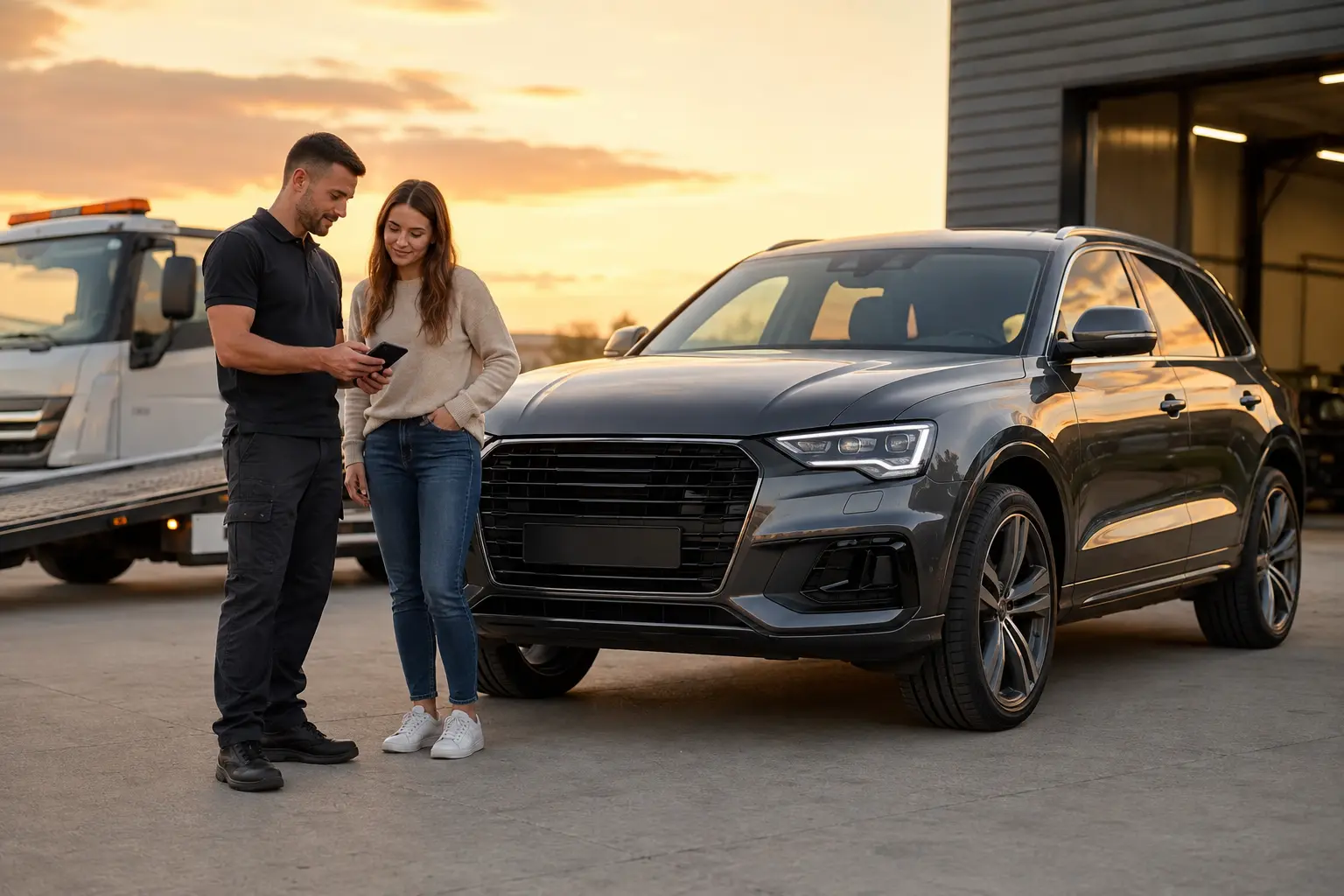
VIP car recovery for vehicles that need a more careful plan
When a luxury, performance, classic or low-clearance vehicle cannot move safely, the first job is not to rush it onto a truck. It is to understand the vehicle’s condition, access, wheel position and destination so the recovery setup can be matched to the actual risk.
A recovery brief that protects the car and avoids surprises
“VIP” should describe the care taken with the recovery decision, not vague extras. A useful brief helps identify whether the car can roll, whether the wheels are locked or turned, whether bodywork sits close to the ground, and whether the pickup point allows a recovery vehicle to approach safely.
Photos or a short video can help the dispatcher understand front and rear clearance, accident damage, a collapsed suspension corner, a puncture, an inaccessible key or a vehicle stuck in park. This information is especially important for cars with long overhangs, carbon-fibre trim, aftermarket body kits, wide tyres or sensitive underbody components.
The condition changes the recovery method
A premium vehicle does not automatically require one universal truck or technique. Dispatch planning should respond to the immobilisation and access risks present at the scene.
Approach angle
Front splitters, long overhangs and lowered suspension make ramp geometry and ground contact the first checks.
Rolling resistance
A car that will not select neutral or has seized or turned wheels may need a different movement plan confirmed before arrival.
Wheel direction
Suspension, steering and loose-bodywork damage must be assessed before any pull or loading attempt.
Truck fit
Basement height, ramp gradient, gate width and turning space may rule out a normal approach and require an alternative plan.
Clearance is checked before movement begins
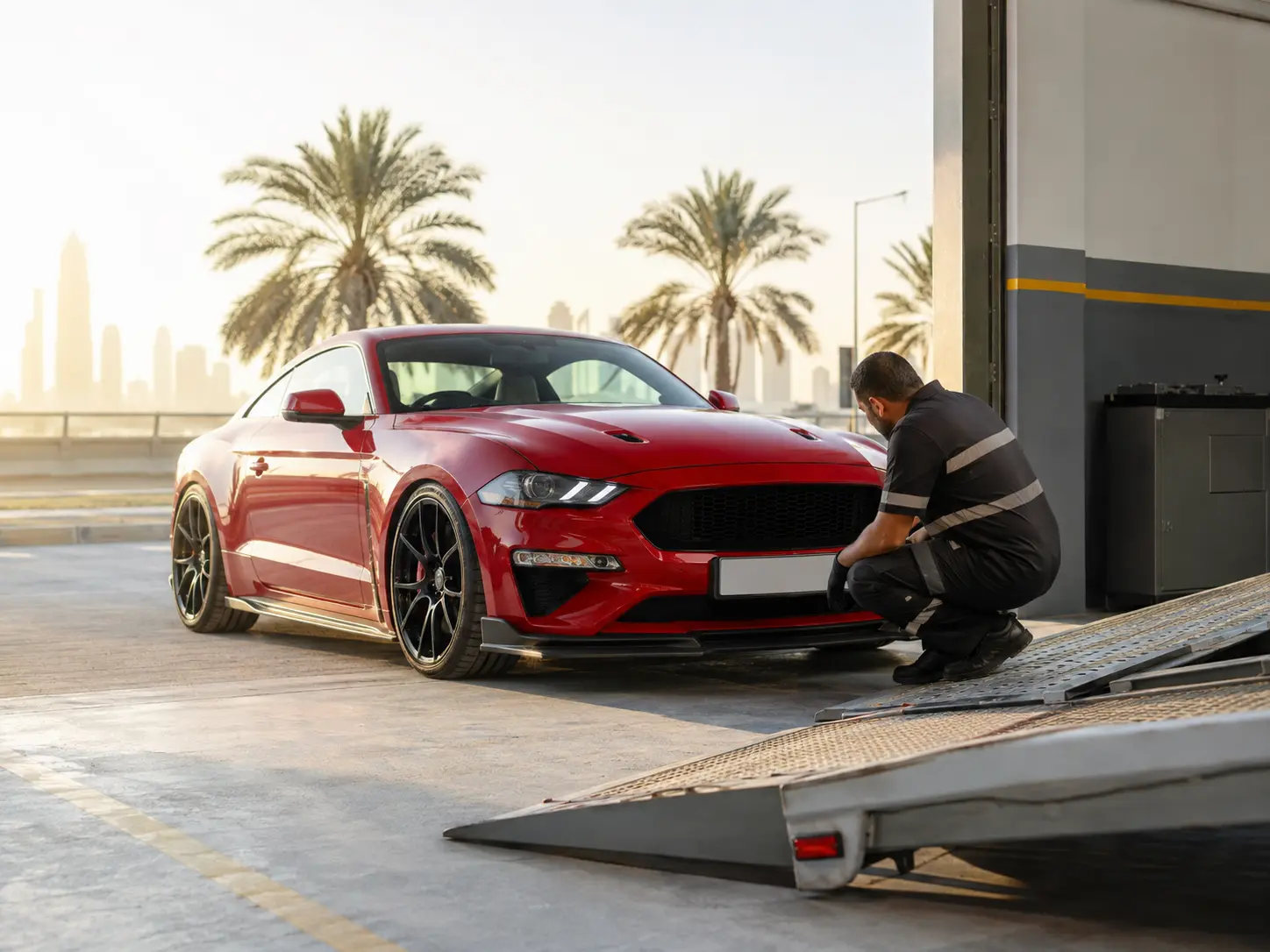
For a low vehicle, the important question is whether the loading path keeps the bumper, splitter, sill and underbody clear. The operator should inspect ride height, wheel direction and the transition between road, ramp and bed before the vehicle is moved.
The exact ramps, bed arrangement and supporting equipment depend on what is available and suitable for the vehicle. We do not promise a particular device on every call. The dispatch conversation is used to confirm the setup before the recovery reaches the scene.
- Confirm the tow or recovery points from reliable vehicle information
- Keep loose trim and damaged panels away from the loading path
- Pause if the vehicle’s angle or wheel position creates contact risk
- Recheck the vehicle after it is positioned for transport
From first message to handover
Describe
Send the location, vehicle, fault, access and destination details.
Assess
Dispatch reviews rolling condition, damage, clearance and truck access.
Recover
The operator verifies the scene again before controlled movement begins.
Handover
The vehicle is delivered to the agreed destination and its condition is checked.
A recovery truck may not fit where the car stopped
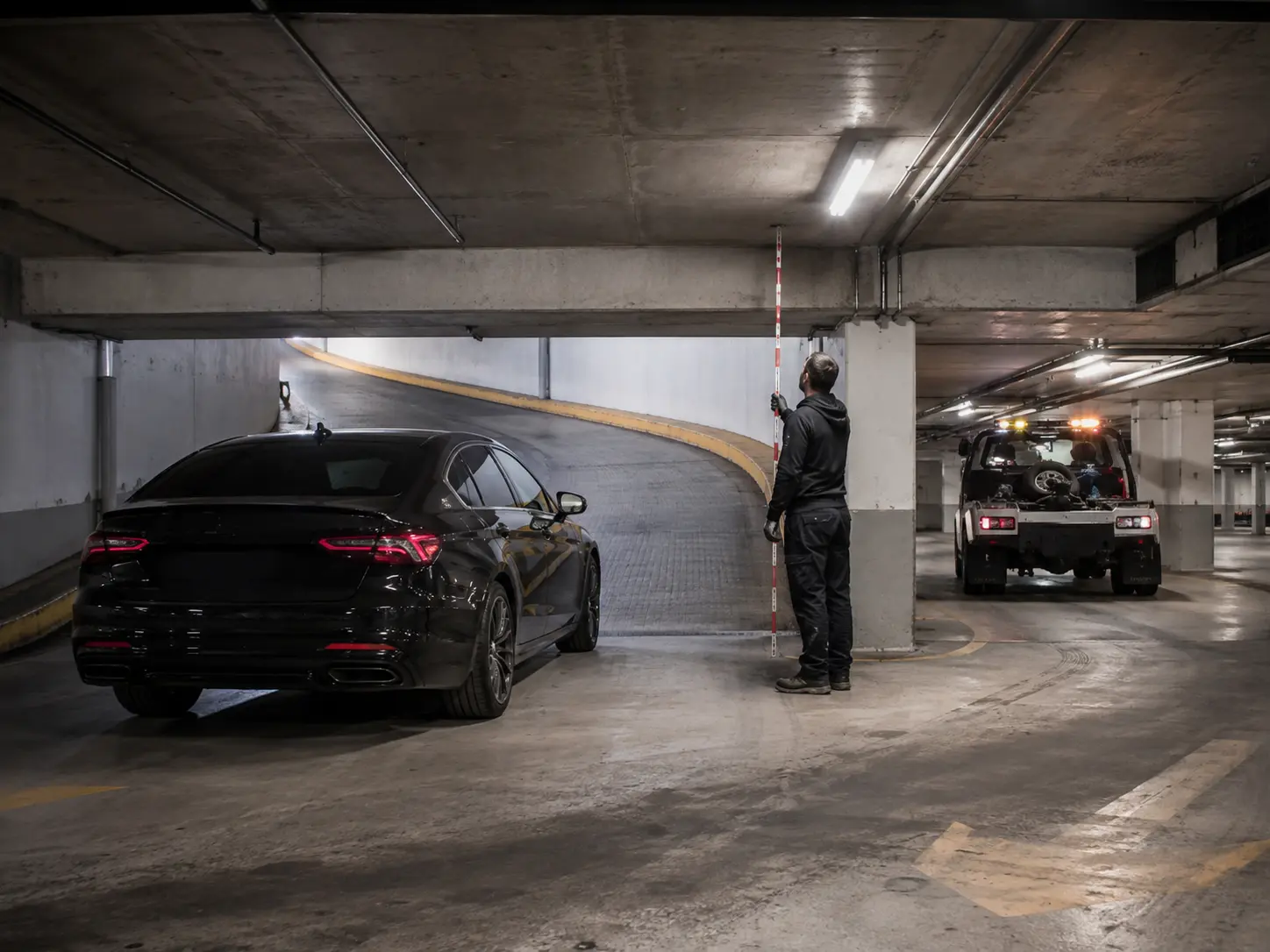
Basements, podium parking, hotel ramps, residential towers and private garages can introduce low ceilings, sharp turns, narrow gates and steep changes in gradient. Sending the height restriction and approach photos early prevents the wrong vehicle from being dispatched.
If direct access is unsuitable, the vehicle may need a staged movement or another method that must be assessed for the specific site. Do not attempt to push a heavy car down a ramp or defeat parking controls without a safe plan and site permission.
Access solutions vary. No basement extraction method is guaranteed until the vehicle and site have been assessed.
Urgent VIP recovery is not planned VIP transport
| Decision | VIP car recovery | VIP vehicle transport |
|---|---|---|
| Primary need | An immobilized or damaged premium vehicle needs to be collected safely. | A movable vehicle needs a planned, high-care journey and handover. |
| Key information | Fault, wheel condition, damage, access and immediate destination. | Schedule, route, vehicle dimensions, collection and delivery requirements. |
| Main uncertainty | Whether the vehicle can roll, steer and load without further risk. | Which planned transport option best matches timing and handling needs. |
| Best next step | Send scene photos and the exact location. | Request a transport assessment in advance. |
Different risks need different decisions
Non-starting or locked-wheel cars
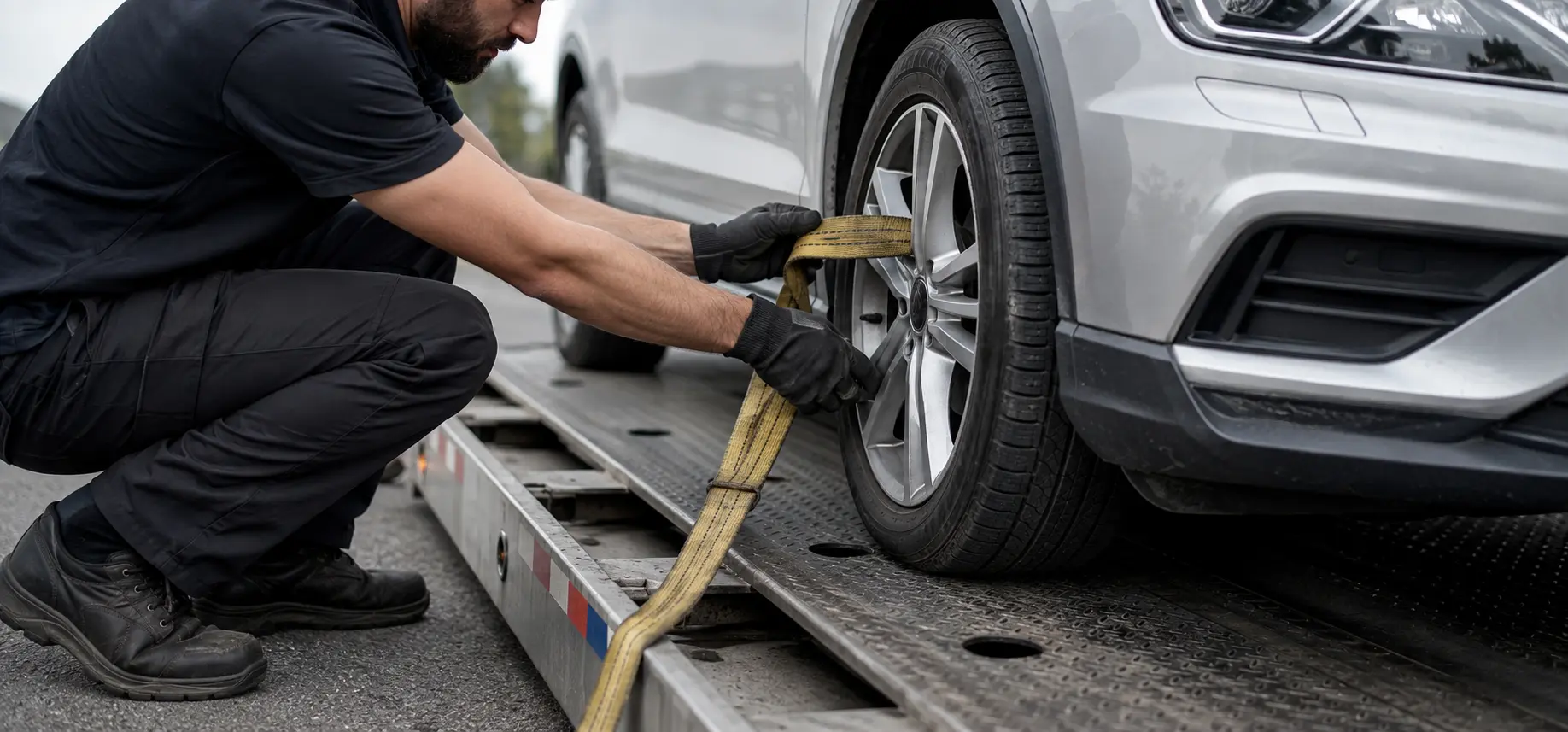
If the vehicle cannot select neutral, the wheels will not roll, the steering is locked or the key is unavailable, say so before dispatch. Dragging or forcing movement can load the tyres, steering or driveline in ways the scene plan should avoid.
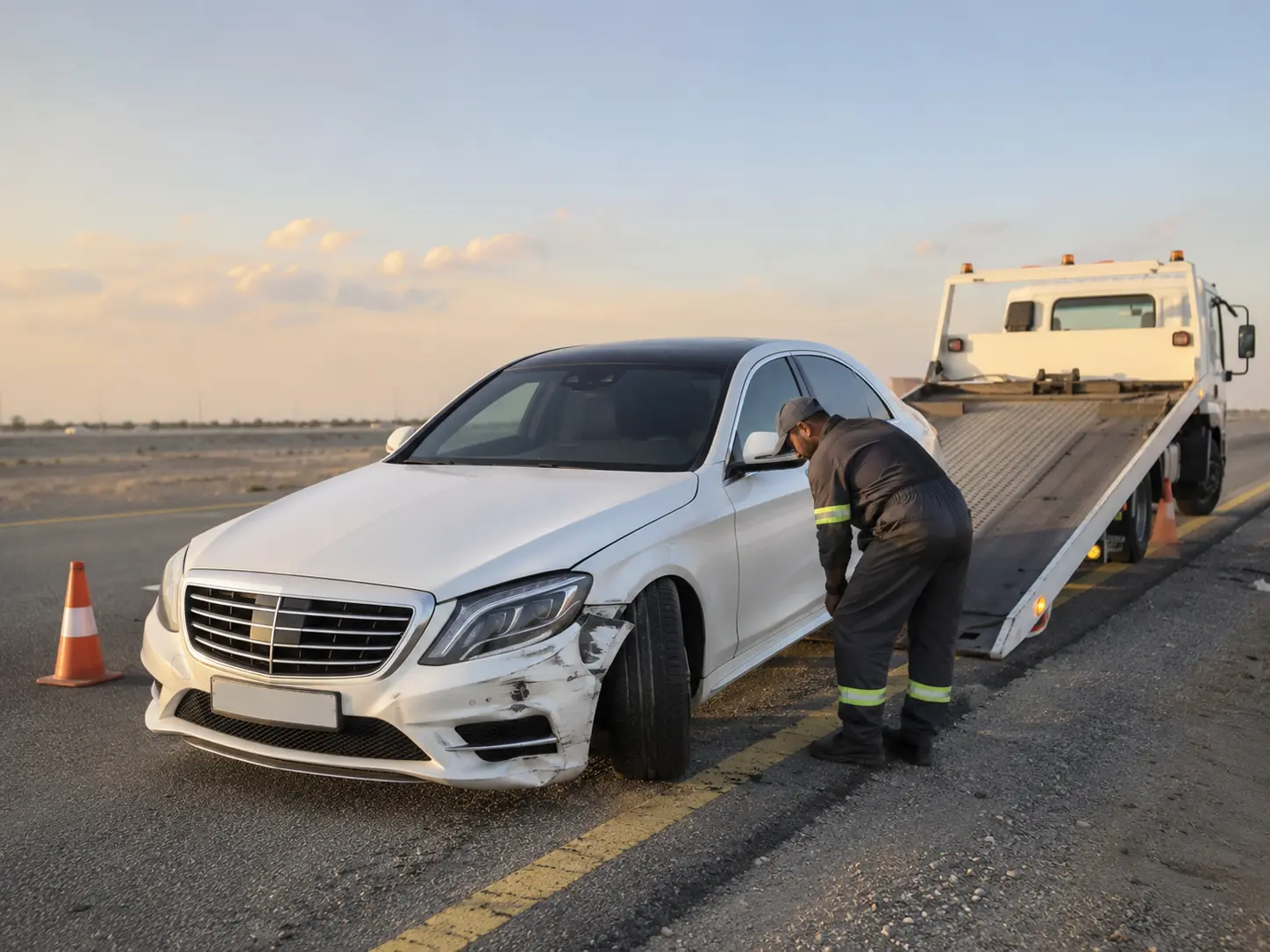
Collision-damaged vehicles
After a collision, visible bumper damage may be less important than wheel angle, suspension condition, leaking fluids or loose parts. For collision-scene handling, see our dedicated accident recovery service.
Give the pickup conditions, not only the emirate
Collection can be discussed for Dubai roads, homes, workshops, hotels, parking facilities and agreed inter-emirate destinations. Availability and arrival expectations depend on the live location, traffic, truck suitability and access at the time of booking.
We do not present a branch at every service-area location. If the vehicle must travel between emirates, share both pins and any delivery-window or workshop-access requirements so the route and quotation can be assessed accurately.
What changes the recovery price
A useful quote depends on the work and access required, not the badge on the bonnet. Send enough information to avoid a low estimate that changes when the truck reaches a more complex scene.
Pickup pin, destination, distance, tolls and traffic conditions.
Rolling, steering, wheel lock, collision and suspension state.
Ride height, long overhangs, splitters and loose bodywork.
Basement height, gates, ramp gradient and turning space.
Truck and handling method confirmed for the stated condition.
Live availability, collection window and destination access.
VIP car recovery questions
What makes this different from ordinary towing?
The service begins with a more detailed assessment of the car’s condition, clearance, wheel movement and access. It is intended for recoveries where the wrong approach could create avoidable contact or handling risk.
Can you recover a car that will not select neutral?
Possibly, but that condition must be shared before dispatch. The suitable movement method depends on the vehicle, wheel position, access and equipment available for the call.
Can a low sports car be loaded without scraping?
The operator assesses ramp transitions, overhangs and ride height before movement. No universal no-contact guarantee can be made without seeing the car and the scene, so send clear side and front photos.
Do you recover vehicles from underground parking?
Basement work depends on height, ramp gradient, gate width, turning room and the vehicle’s condition. Send restriction signs and approach photos so access can be assessed first.
Is VIP recovery the same as VIP vehicle transport?
No. VIP recovery is for a vehicle that is immobilized, damaged or unsafe to drive. VIP vehicle transport is a planned movement for a vehicle that can be collected under scheduled conditions.
What should I do after a collision?
Follow the instructions of the relevant authorities and insurer, keep people away from traffic, and do not move the vehicle when doing so would be unsafe or prohibited. Then share damage and wheel-position photos for recovery planning.
Send the vehicle and scene details
Share your live pin, vehicle model, visible problem, wheel condition, clearance photos and destination. We will use those details to discuss the appropriate recovery setup and current availability.