Salvage and auction vehicle transport
Salvage auction recovery planned around the vehicle condition
Arrange collection for an auction-purchased, damaged or non-running vehicle in Dubai. Send the release window, vehicle condition, pickup access and destination before dispatch so the recovery method can be assessed.
- Release ready
- Condition shared
- Access confirmed
- Destination open
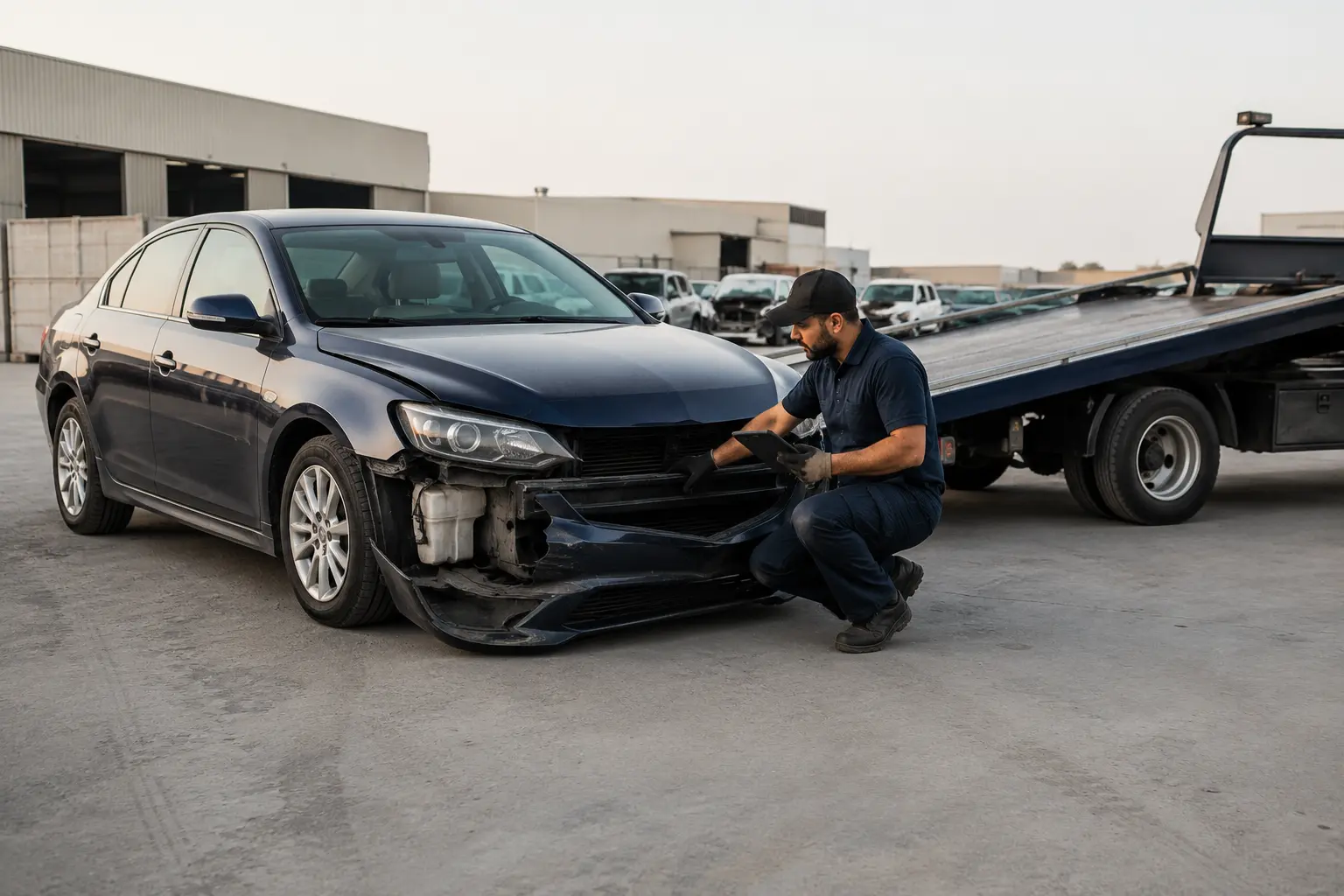
Before the truck moves
Five details prevent a failed collection
Auction yards, storage compounds, workshops and private handover points work differently. A vehicle may be released on paper but still be difficult to move because it has no key, will not select neutral, has a locked wheel, sits low after suspension damage or is blocked by other vehicles.
Send accurate information before the recovery vehicle travels. That allows access, loading angle and destination handover to be considered together rather than discovered at the gate.
- 01
Release authority
Share the lot or yard reference, authorized collector information, collection window and any gate procedure supplied by the facility.
- 02
Vehicle identity
Provide the make, model, colour and a clear way to identify the correct vehicle without relying on a public plate.
- 03
Movement condition
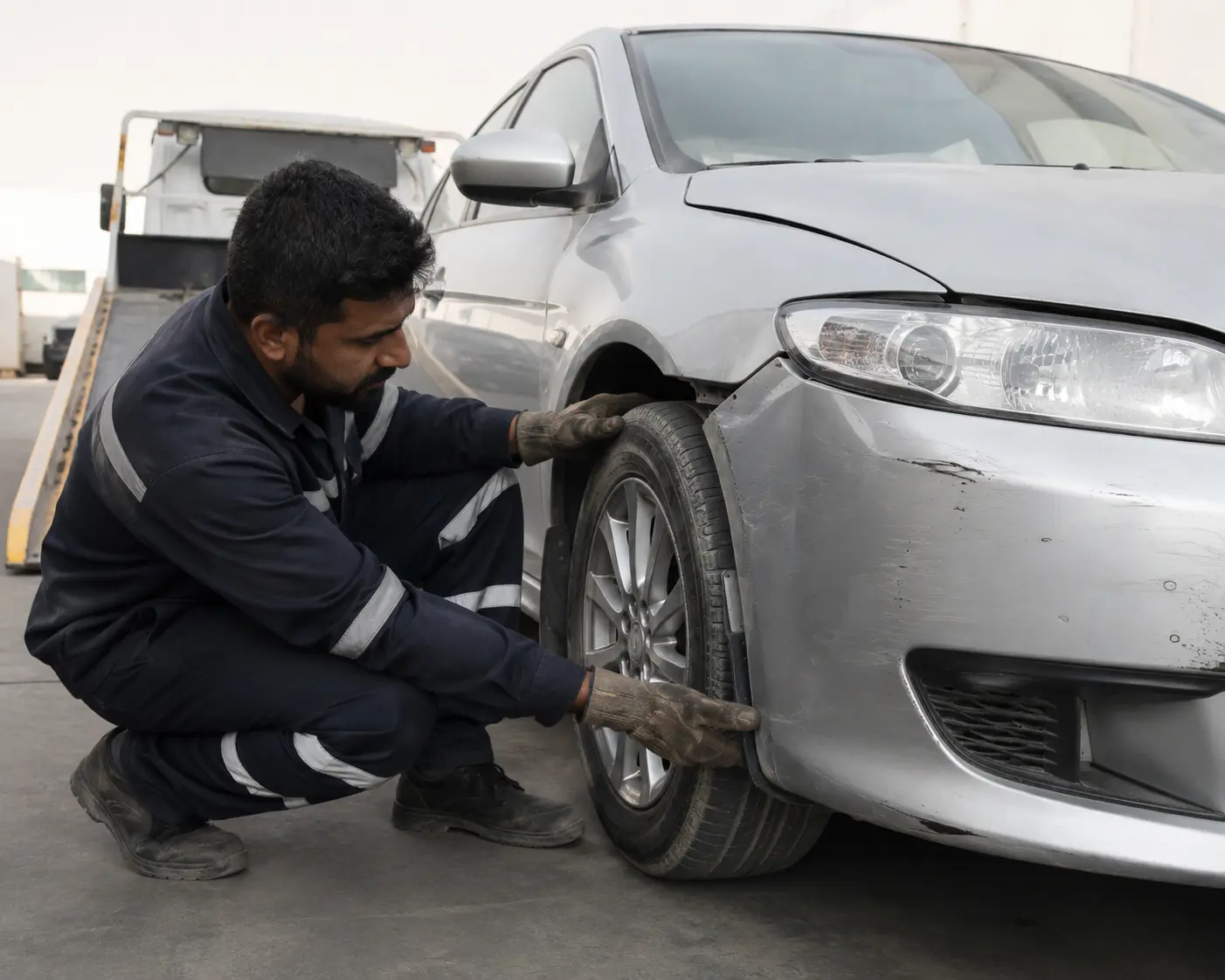
Confirm whether it starts, selects neutral, steers, rolls, has keys and has visible wheel, suspension or underbody damage.
- 04
Pickup access
Explain height restrictions, basement ramps, soft ground, tight lanes, blocked access or whether the yard has loading support.
- 05
Receiving handover
Confirm the workshop, storage site, buyer or seller contact, opening hours and a safe place to unload.
Condition-led planning
The visible damage changes the loading plan
A photo of the whole vehicle is useful, but close views of the affected wheels, suspension, front and rear clearance, loose parts and loading path often determine whether a standard collection is practical.
| Vehicle state | Details to send | Why it matters |
|---|---|---|
| Starts and rolls | Keys, steering, brake response and whether neutral can be selected. | Running does not prove the vehicle is safe to drive. It may still require transport. |
| Non-running | Gear position, electronic parking brake, steering lock and accessible recovery points. | Winching and controlled positioning may be required. |
| Wheel or suspension damage | Affected corner, wheel angle, ground contact and loose components. | A dragging or displaced wheel changes approach angle and support needs. |
| No key or locked wheel | Steering position, transmission state and any yard handling support. | Extra positioning equipment or a different collection plan may be needed. |
| Low or collapsed clearance | Front, side and underbody photos plus ramp and loading-area access. | A suitable flatbed towing plan must protect contact points and loose panels. |
| EV or hybrid damage | Impact area, warning information, visible battery damage, smoke, heat or leakage. | Suspected high-voltage or fire risk needs specialist assessment before movement. |
| Leakage or unstable structure | Clear images of fluid, crushed areas, hanging parts and the ground beneath the vehicle. | Movement may be paused or declined until the risk and legal access are resolved. |
Controlled movement
Winching is only one part of safe loading
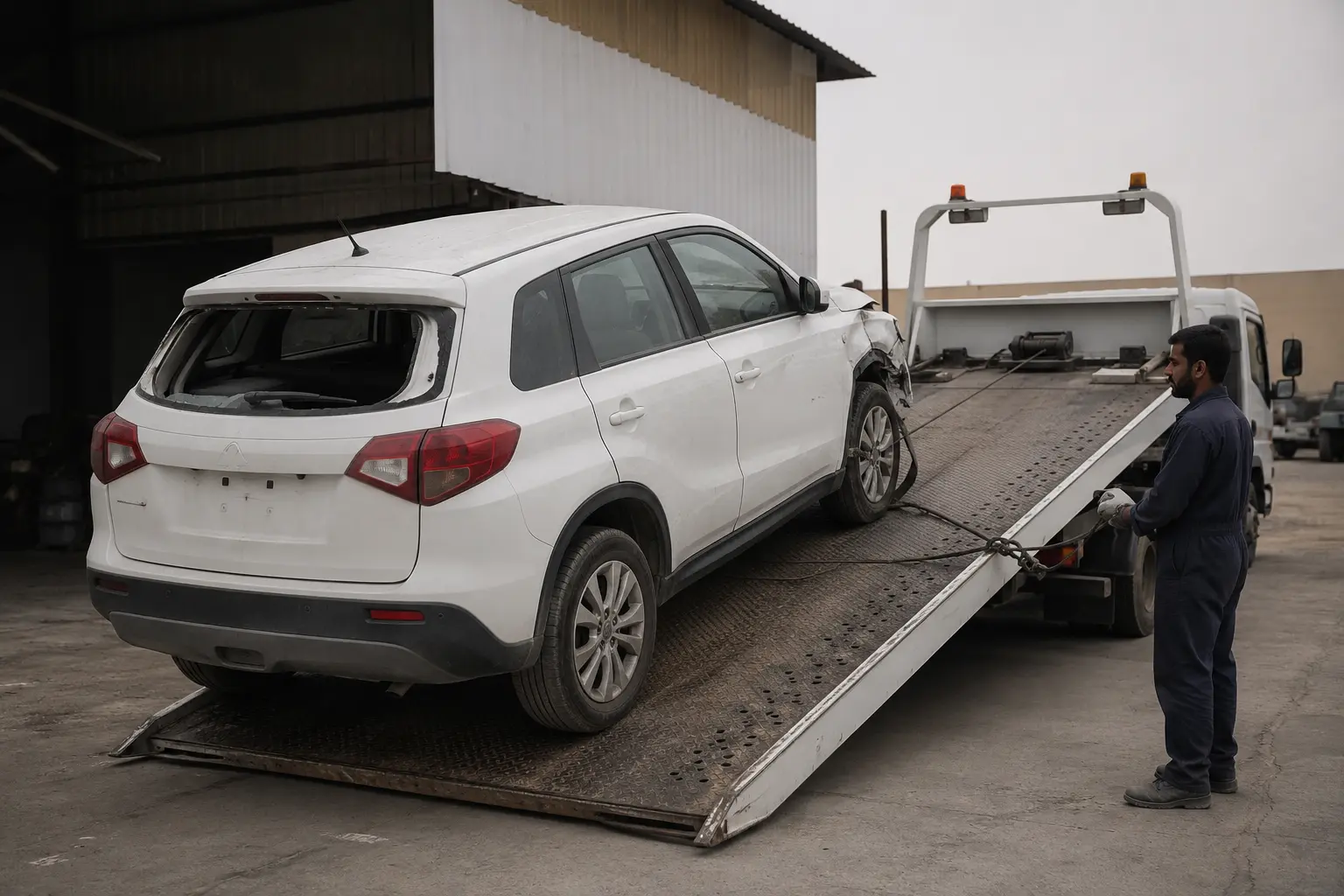
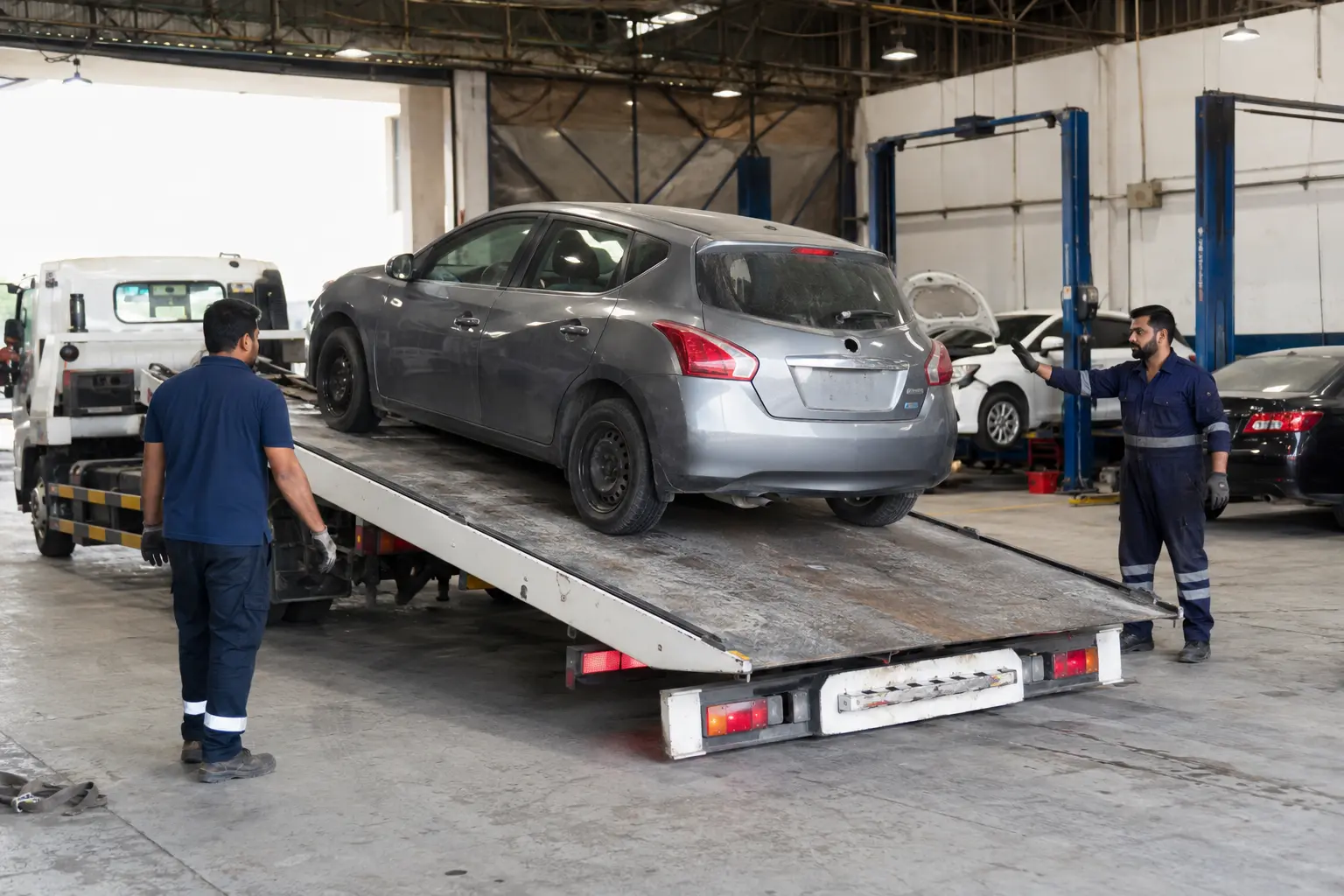
A non-running vehicle still needs a clear pull path, suitable attachment points, controlled ramp alignment and enough space for the recovery vehicle. If a wheel drags or the vehicle cannot steer, the setup must account for its direction of movement instead of forcing it onto the deck.
Loose bumpers, undertrays, glass and body panels should be identified before movement. The recovery operator assesses the visible condition and loading area on arrival. Hidden damage can still change what is possible.
- Clear approach and loading space
- Wheel and steering direction known
- Loose parts identified
- Safe attachment points available
- Destination prepared to unload
Pickup to recipient
A traceable collection has five checkpoints
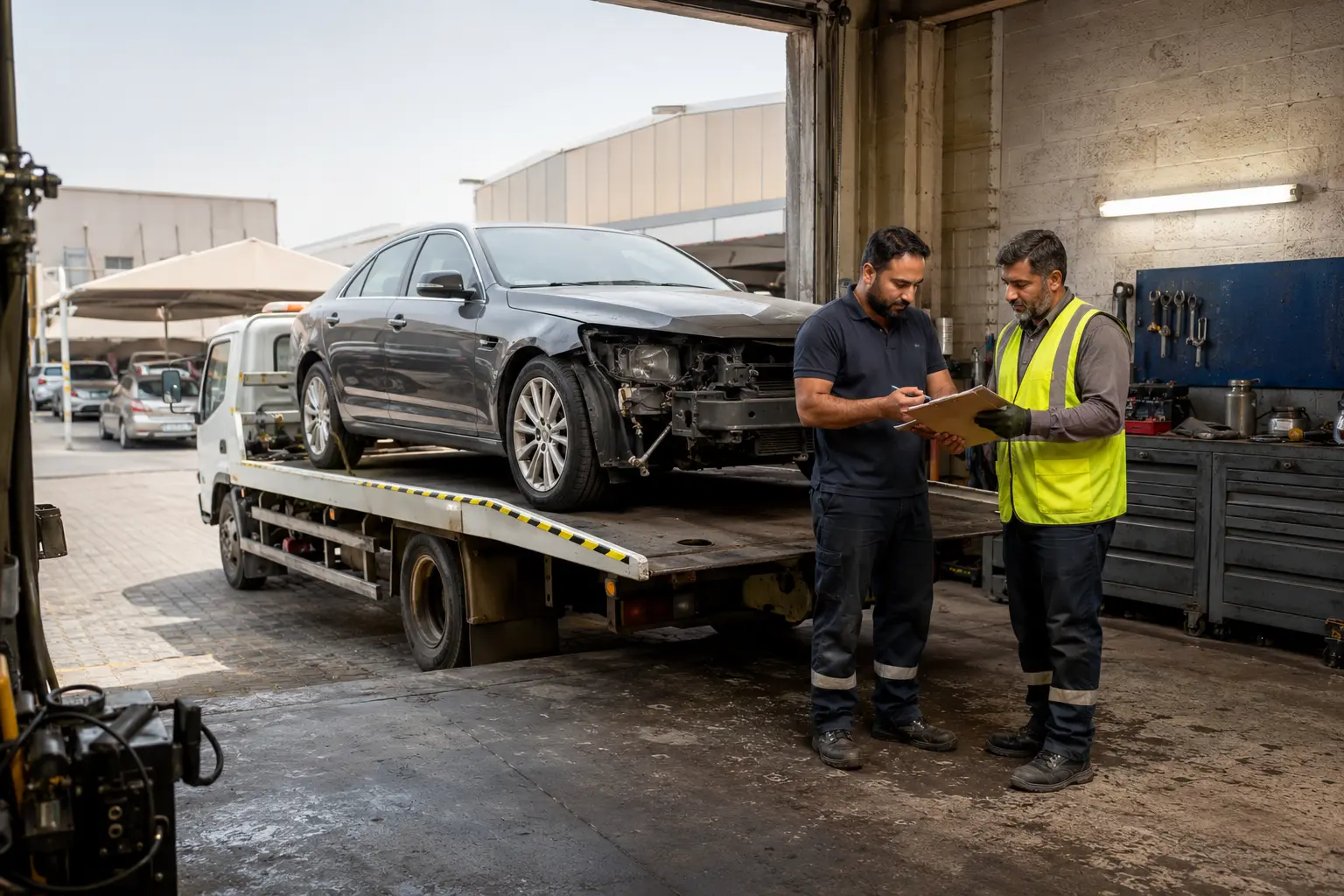
The recovery service moves the vehicle between an authorized release point and the agreed recipient. Auction administration, payment, title, inspection and repair decisions remain separate.
- 01
Collection brief
Pickup reference, condition, access, timing and destination are reviewed before dispatch.
- 02
Release check
The facility controls its own authorization process and must release the correct vehicle.
- 03
Visible condition
Obvious damage, loose parts and movement limitations are observed before loading.
- 04
Secure transport
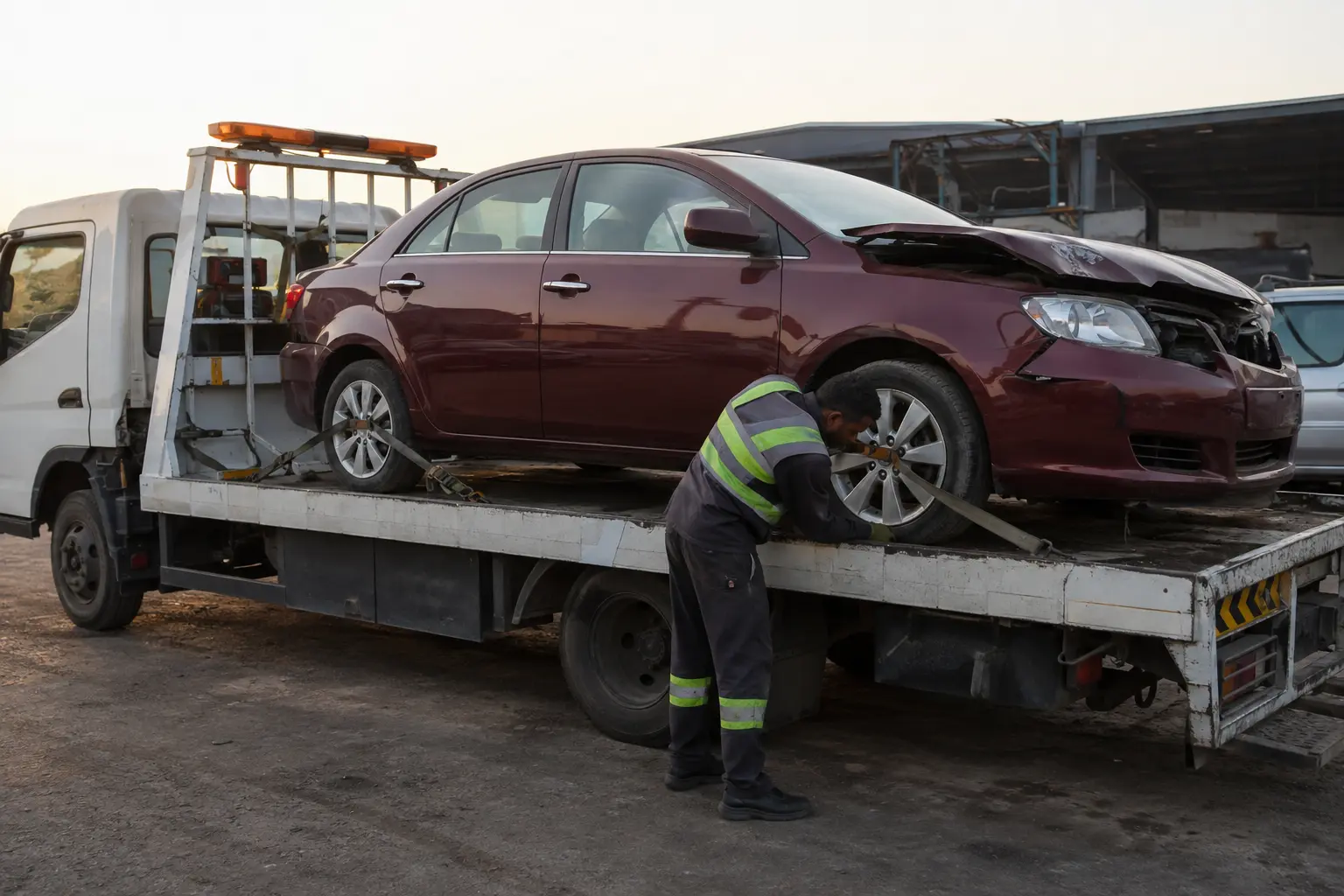
The vehicle is positioned and secured according to the visible condition and selected recovery method.
- 05
Recipient handover
The vehicle is delivered to the named workshop, storage site, buyer or other approved receiver.
Common collection routes
Match the destination to the next decision
Auction yard to workshop
Use when mechanical, body or diagnostic work is planned. Confirm the workshop accepts the vehicle and has space to unload before collection.
Yard to vehicle storage
Use when repairs or ownership decisions are not immediate. Review vehicle storage planning separately, including access and handover conditions.
Buyer or seller handover
Confirm the authorized recipient, accessible unloading point and who will acknowledge the vehicle condition at delivery.
Inter-emirate movement
For a destination outside Dubai, the route, access and receiving hours affect planning. Review inter-emirate towing for the transport scope.
Clear service boundaries
Recovery transport is not an auction or inspection service
This page covers vehicle collection, loading, transport and recipient handover. Car Recovery Dubai UAE does not operate the auction, bid on vehicles, set a value, verify ownership, certify roadworthiness, diagnose hidden damage, approve a repair, clear customs or decide an insurance claim.
For a vehicle at a recent collision scene, arrange accident recovery after people are safe and movement is permitted. Recovery-related information that may support your own insurer is explained under insurance assistance.
Practical answers
Salvage auction recovery questions
Send photos and the collection details when the condition is uncertain. A more accurate brief reduces preventable delays.
Can you collect a vehicle that does not start?
Collection may be possible when the access and vehicle condition support a safe loading plan. Confirm keys, gear position, steering lock, rolling wheels, suspension damage and available space.
What auction documents should be ready?
Use the release information and collector authorization required by the auction or yard. The facility controls its own identity, payment and release rules, so confirm them directly before dispatch.
Can you collect a vehicle without keys?
Possibly, but the steering lock, transmission position, parking brake and wheel movement can change the equipment and space required. Share those details before the truck travels.
Can a damaged EV be transported?
It depends on its visible condition and risk information. Smoke, heat, battery intrusion, warning information or leakage must be reported. Suspected high-voltage or fire risk may require specialist assessment and can prevent normal collection.
Do you inspect or value auction vehicles?
No. Recovery transport is separate from pre-purchase inspection, mechanical diagnosis, valuation, roadworthiness and repair approval.
Where can the vehicle be delivered?
An agreed workshop, storage site, buyer address or another accessible approved destination can be considered. Confirm the receiver, opening hours and safe unloading area.
What affects the transport quotation?
Pickup and destination, vehicle size and condition, access, loading difficulty, keys, wheel movement, clearance, timing and additional handling needs can affect the quotation.
Plan the collection
Send the release window and condition photos
Include the pickup reference, keys, wheel and steering condition, visible damage, access and receiving destination.